









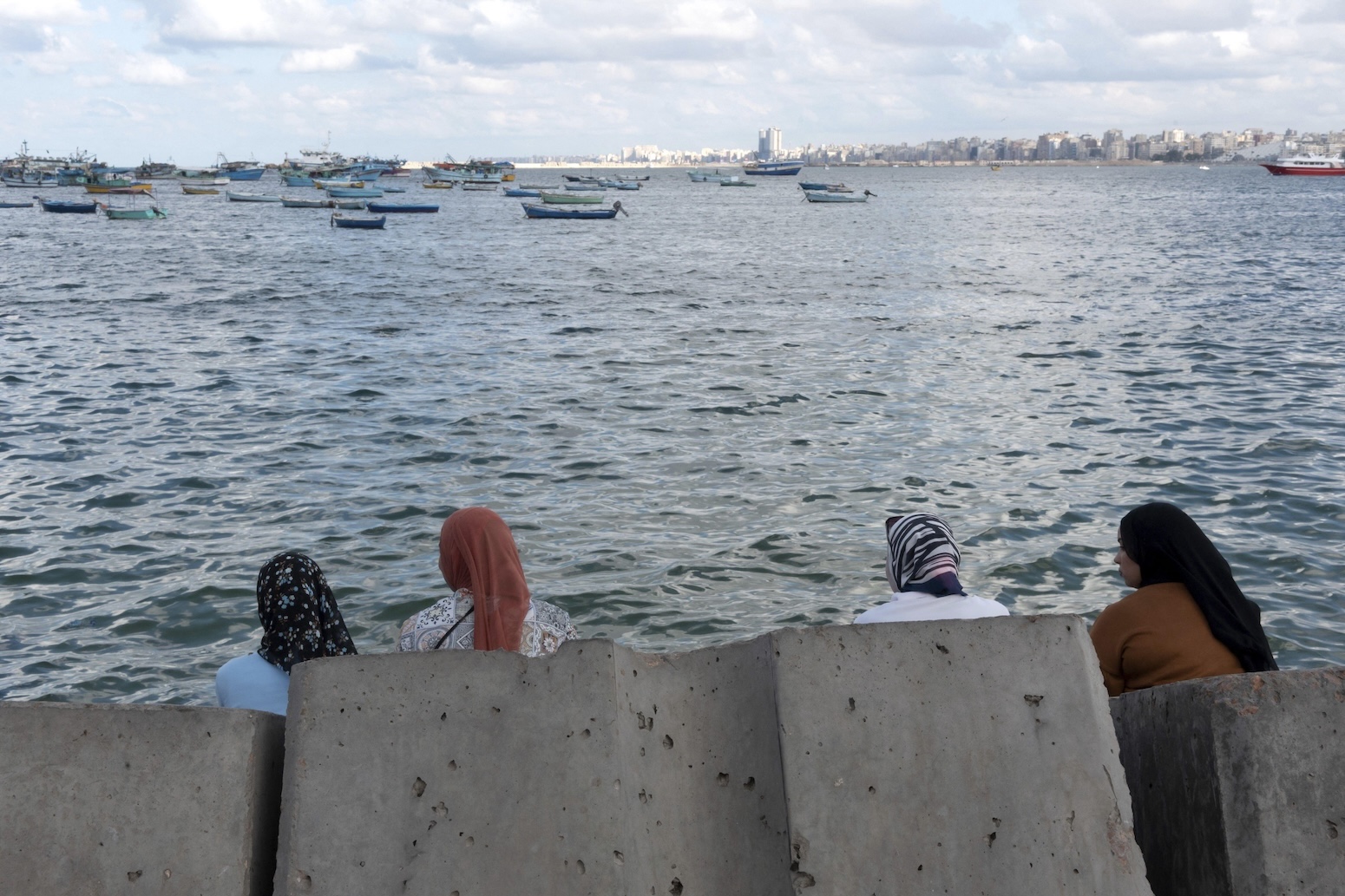
Over 7 Million in Africa’s Coastal Megacities at Risk of Flooding by 2050
Sinking land combined with rising sea levels is projected to increase the flood risk for more than seven million residents in Africa’s coastal megacities by mid-century, as revealed by recent research.
The study, published in Science Advances, utilizes satellite imagery alongside sea level rise forecasts to evaluate flooding risks in 20 of Africa’s most densely populated coastal cities.
According to the findings, under a moderate climate warming scenario, an “extreme sea level event” could threaten approximately one million buildings and expose assets worth $180 billion to flood damage.
Lagos and Alexandria Among Most Vulnerable
Lagos, Nigeria’s capital, and Alexandria, Egypt, emerge as the cities most susceptible to flooding risks in the analysis.
In these two urban centers alone, an estimated five million individuals and assets totaling $150 billion could face flooding threats by 2050.
Understanding Subsidence and Its Impact
Human activities, such as excessive groundwater extraction and fossil fuel drilling, contribute to a phenomenon known as “subsidence,” where the ground sinks. Additionally, seismic and volcanic activities can lead to vertical land movement, further complicating the effects of rising sea levels.
The research team analyzed over 4,000 satellite images of Africa’s coastline to assess the rates of land subsidence and uplift across various regions.
They identified Lagos and Alexandria as “subsidence hotspots,” with sinking rates recorded at 5.2 mm and 6.3 mm per year, respectively. These rates are comparable to some of the highest subsidence figures documented in Southeast Asian megacities like Jakarta and Manila.
Flood Exposure Projections and Urban Growth
The researchers integrated these subsidence estimates with sea level rise predictions from the Intergovernmental Panel on Climate Change’s sixth assessment report, applying three different emissions scenarios to evaluate regional sea level changes along the African coastline.
Using population data, building footprints, and GDP per capita from 2020, the study calculated the potential exposure of each city to flooding events throughout the 21st century, assuming no changes to the urban landscape.
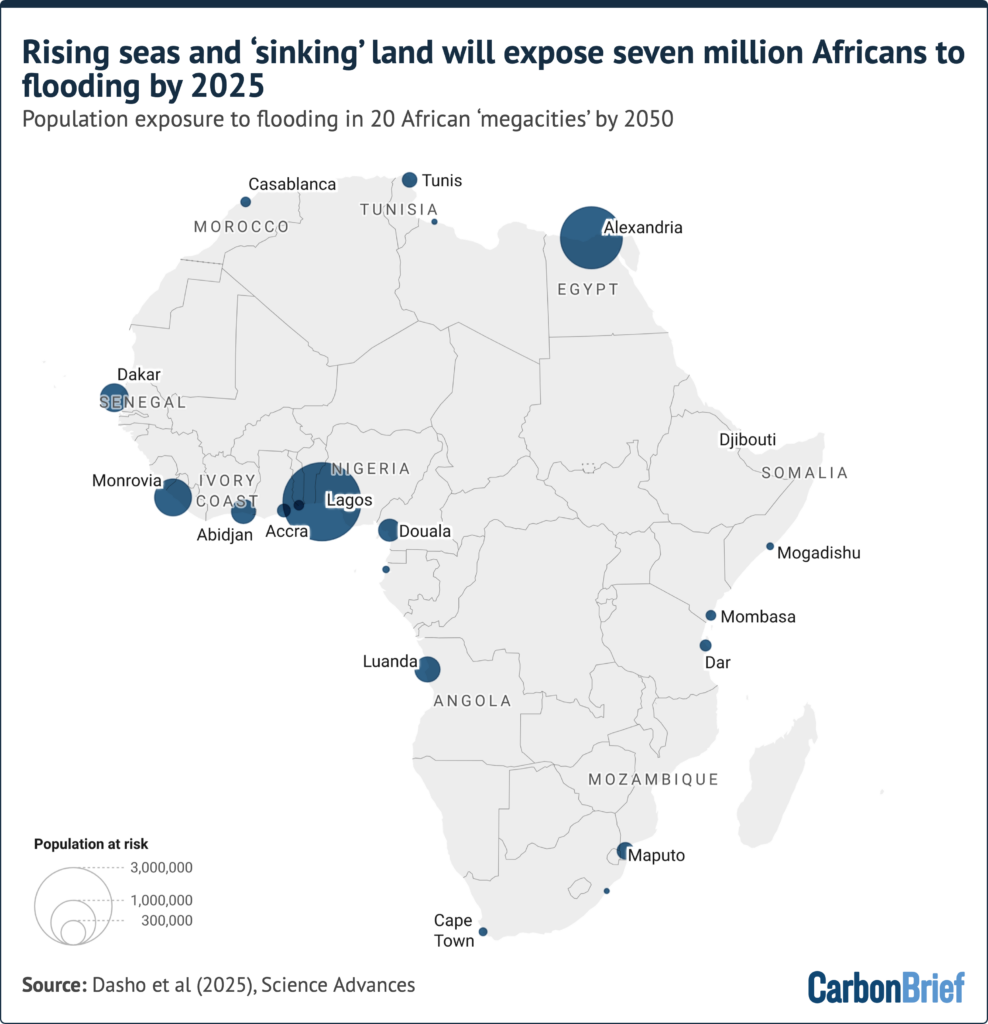
While Lagos and Alexandria face the highest risks, cities including Djibouti City, Mogadishu, and Tripoli are expected to experience minimal economic exposure due to their smaller populations and infrastructure.
Future Projections and Limitations of the Study
Oluwaseyi Dasho, the lead author and PhD student at Virginia Tech, emphasized that the analysis maintains constant population and infrastructure data from 2020 to isolate the impacts of climate change and land movement on flood exposure. He noted potential variations in estimates based on urban migration patterns over the coming decades.
Africa is currently the fastest urbanizing continent, with urban populations projected to double from 700 million to 1.4 billion by 2050. Dasho highlighted that the flood model used in the study assumes no coastal defenses are in place, presenting a worst-case scenario.
The study also points out that subsidence in African coastal cities has historically been under-monitored, primarily due to a lack of localized data. The authors propose that their satellite-based methodology could be applied to other data-scarce coastal regions in the Global South.
Dasho, O., et al (2026), Sinking cities: Latent flood risk in Africa’s coastal megacities, Science Advances, doi:10.1126/sciadv.aeh6538









Discussion about this post