









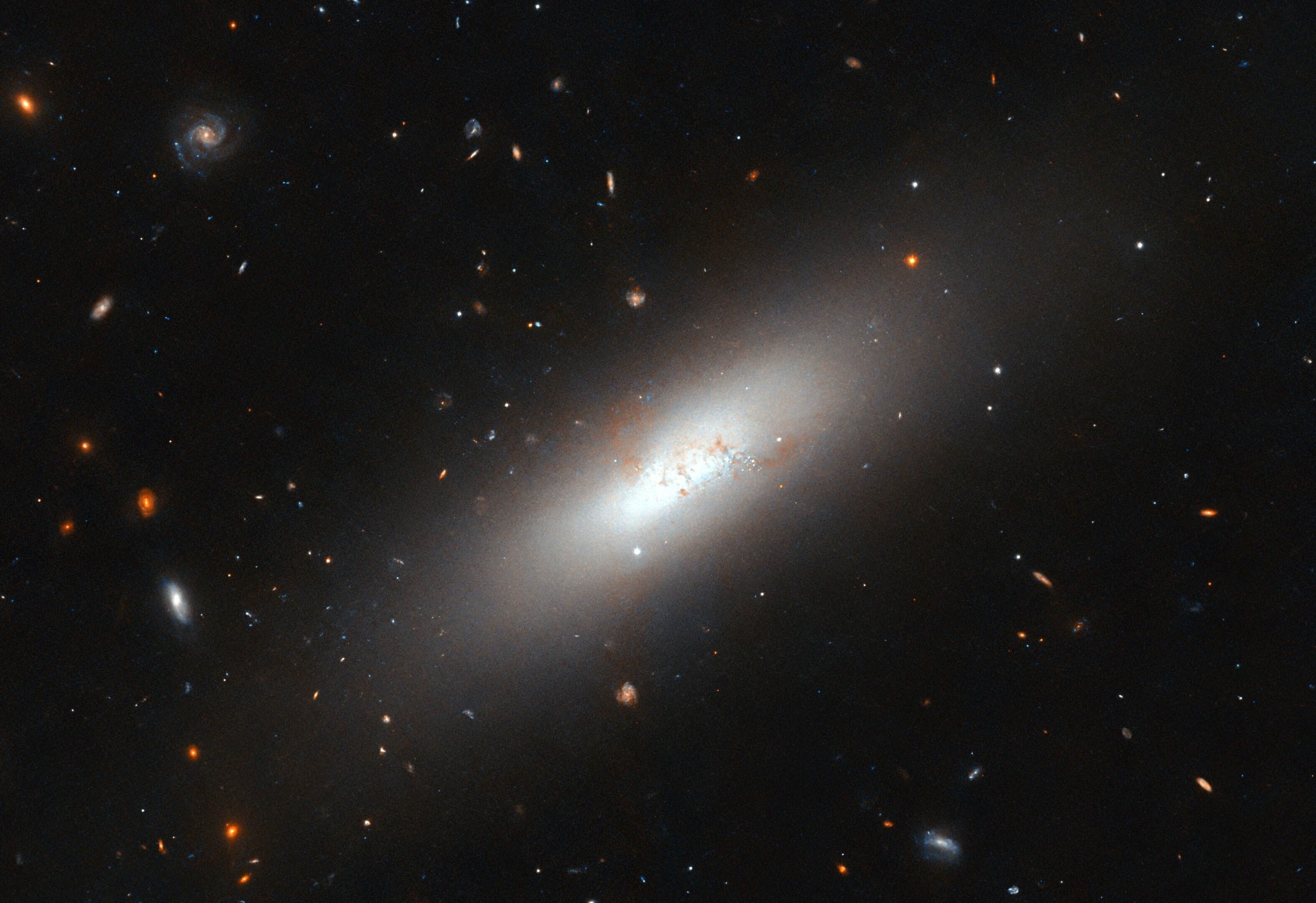
This Hubble Telescope image features IC 3430, a dwarf elliptical galaxy in the Virgo constellation. Despite its lack of distinctive structural features, IC 3430 shows signs of recent star formation in its core, an unusual characteristic for its galaxy type, attributed to the effects of ram pressure in the Virgo cluster. Credit: ESA/Hubble & NASA, M. Sun
IC 3430, a dwarf elliptical galaxy in the Virgo cluster, stands out due to its core of hot blue stars, indicative of recent star formation—a rare feature for its kind, likely caused by its movement through the cluster.
This majestic 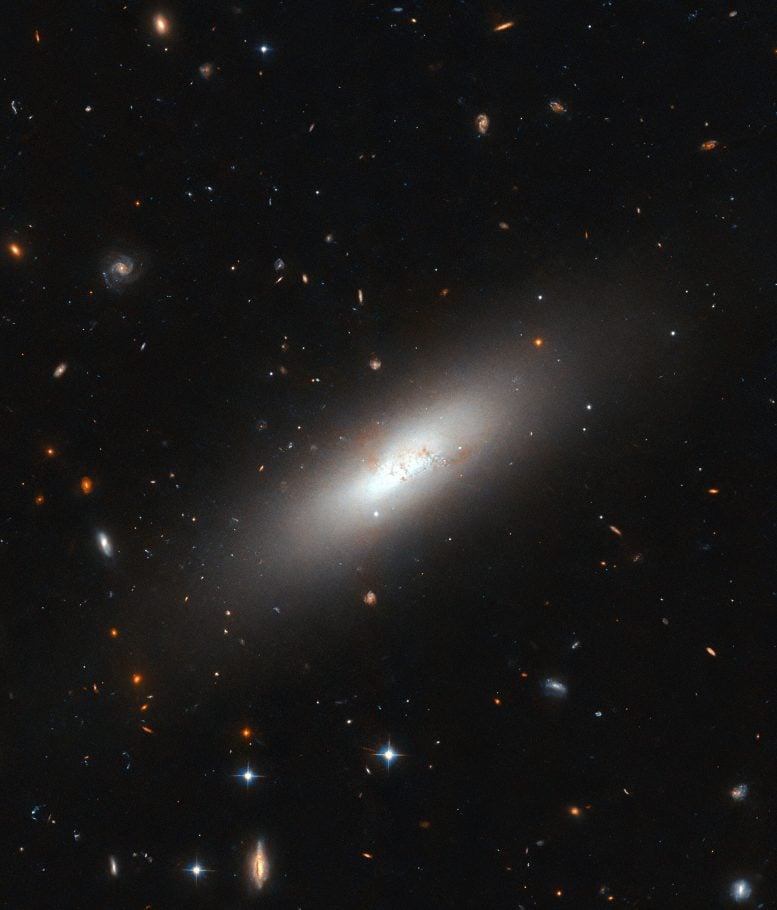
Hubble’s full, uncropped view of IC 3430. Credit: ESA/Hubble & NASA, M. Sun
Dwarf galaxies are really just galaxies with not many stars, usually fewer than a billion, but that is often enough for them to reproduce in miniature the same forms as larger galaxies. There are dwarf elliptical galaxies like IC 3430, dwarf irregular galaxies, dwarf spheroidal galaxies, and even dwarf spiral galaxies! The so-called Magellanic spiral is a distinct type of dwarf galaxy, too, the best example being the well-known dwarf galaxies that are the Magellanic Clouds.









Discussion about this post