





First Lady Melania Trump to Host Peace Talks at the White House
WASHINGTON — On November 5, First Lady Melania Trump will facilitate a significant meeting at the White House, bringing together representatives from both Russia and Ukraine. The discussions will center on establishing a localized cease-fire in Ukraine’s southern Kherson region, with both parties confirming their attendance.
This meeting follows a six-day cease-fire in and around the Russian-occupied city of Oleshky. Reports indicate that Melania Trump played a crucial role in brokering this agreement, which aimed to facilitate humanitarian aid deliveries and the safe evacuation of vulnerable civilians.
Ukraine’s delegation will feature David Arakhamia, leader of President Volodymyr Zelenskyy’s Servant of the People faction in Parliament, and Dmytro Lubinets, the nation’s human rights ombudsman. Russia is expected to send Kremlin envoy Kirill Dmitriev, who heads the Russian Direct Investment Fund, along with Yana Lantratova, Russia’s human rights commissioner.
The announcement comes as diplomatic efforts intensify, with Russia confirming trilateral talks involving Moscow, Kyiv, and Washington set to occur in Abu Dhabi from November 10 to 11. Kremlin spokesman Dmitry Peskov revealed that Vladimir Medinsky, a long-time aide to President Putin, will lead the Russian delegation.
Local Cease-Fire in Oleshky: A Humanitarian Breakthrough
The cease-fire negotiated in Oleshky from October 27 to November 2 was primarily designed to facilitate humanitarian aid and the evacuation of at-risk civilians. Melania Trump announced on October 23 that she had contributed to this arrangement after discussing the dire humanitarian conditions in Oleshky with both Russian and Ukrainian leaders.
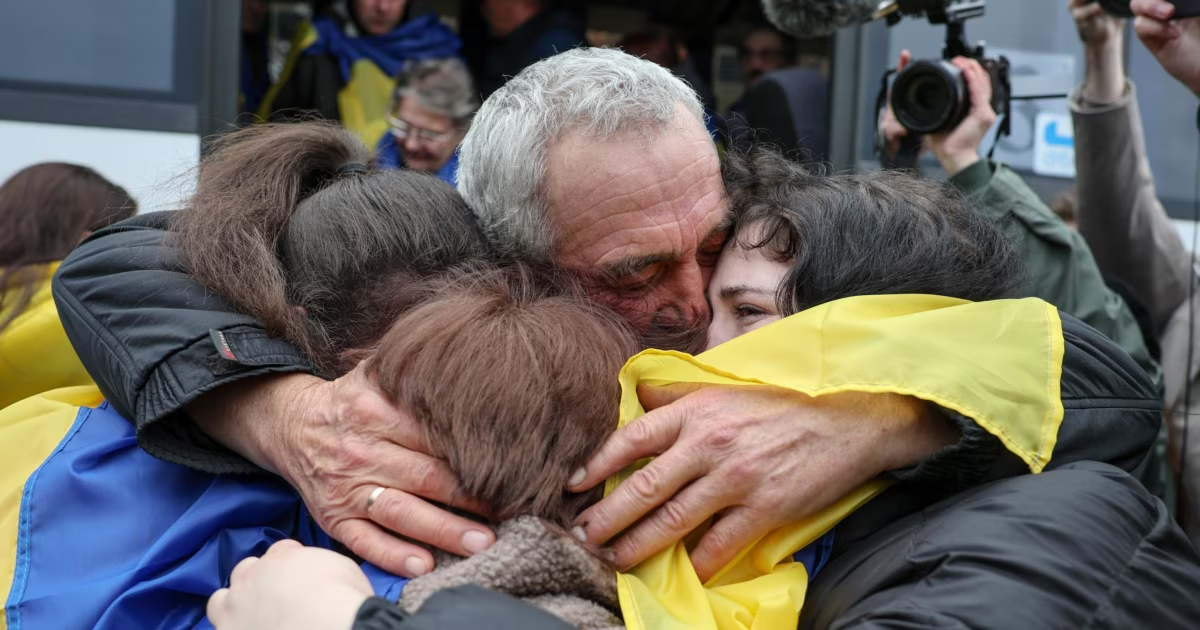
According to her office, the initiative allowed the delivery of essential supplies and enabled nearly 800 individuals to return to Ukrainian-controlled territories. The humanitarian situation in Oleshky had worsened significantly, with Ukrainian Foreign Minister Andriy Sybiha reporting in September that residents were resorting to eating grass amidst severe shortages of food, medical supplies, and clean water.
The city, situated on the eastern bank of the Dnieper River in the occupied Kherson region, had a prewar population of approximately 24,000, but many have been displaced due to ongoing conflict.
Despite the cease-fire, Ukrainian officials have accused Russian forces of taking advantage of the temporary halt to strengthen their military positions in the region. Eugene Goncharov, director of policy at the American Coalition for Ukraine, acknowledged the cease-fire as a sign that Russia could agree to localized pauses in hostilities when it chooses, but he advised against high expectations for a broader resolution.
“It’s crucial to remember that Russia can end this war at any time and chooses not to,” he stated, expressing hope that this initiative might mark a departure from past patterns of behavior.
As evacuations from Oleshky continued on October 30, the Kremlin cautioned that the local cease-fire should not be viewed as indicative of a wider peace settlement process in Ukraine. Moscow reaffirmed its demand for a comprehensive resolution, including full control over Ukrainian territories that its forces have yet to secure through military means.
Careful Optimism for Future Discussions
Matthew Boyse, a senior fellow at the Hudson Institute, remarked that Russia could leverage the cease-fire initiative to propose further localized pauses in exchange for substantial concessions from Ukraine. While critical discussions regarding postwar security arrangements and de-escalation are anticipated, Boyse expressed skepticism regarding the potential for an agreement given the significant gaps between both sides.
“The issues may be on the agenda, but the divisions are so deep that it’s hard to see how they could find common ground at this moment,” he commented.
William Taylor, a former U.S. ambassador to Ukraine, noted that while the Oleshky cease-fire could serve as a foundation for negotiations, meaningful progress hinges on President Putin’s willingness to endorse a more extensive cease-fire.
Both the U.S. and Ukraine favor a cease-fire, but it remains uncertain whether Moscow is ready to make such a commitment. Taylor argued that once a political agreement is achieved, military experts could then iron out the technical details, such as monitoring systems and protocols to address violations.
“The hard part is getting Putin to agree to a cease-fire,” he emphasized.
Amid these cautious hopes, international efforts to promote peace continue. The European Commission is scheduled to convene U.S., Ukrainian, and European representatives in Brussels on November 4, with participation from delegations from France, Germany, Britain, and NATO, as well as the World Bank.
Additionally, another meeting of the Coalition of the Willing, dedicated to supporting Ukraine against Russian aggression, will take place on November 19. U.S. Secretary of State Marco Rubio is also anticipated to attend a G7 foreign ministers’ meeting from November 9 to 10 in Marseille, France, where the situation in Ukraine will be a central topic of discussion.






Discussion about this post