









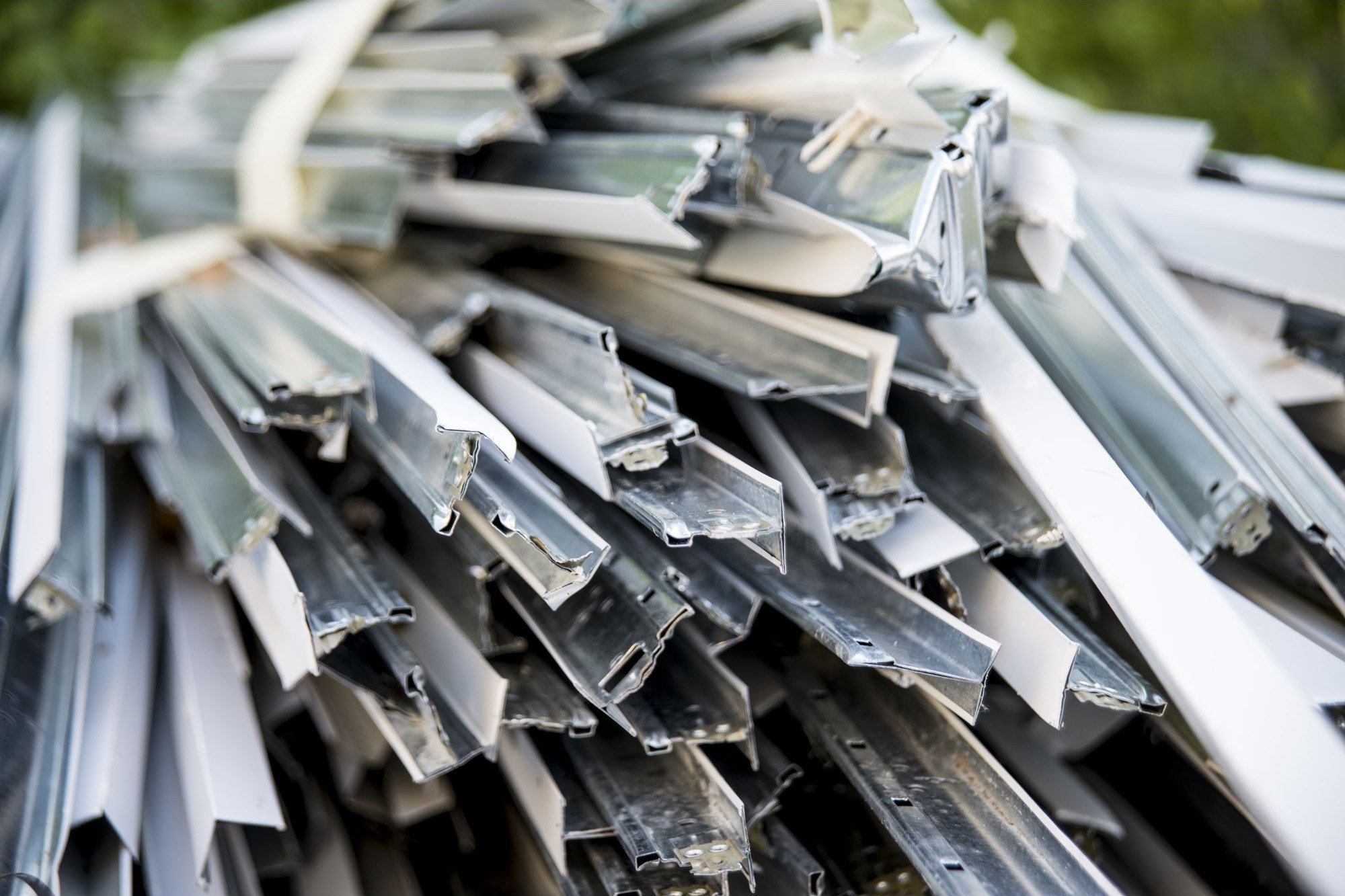
New steel recycling technology from the University of Toronto could revolutionize the industry by removing impurities electrochemically, fostering higher-grade production and aiding in global sustainability efforts.
Engineering professor Gisele Azimi and her research team at the University of Toronto have developed a novel electrochemical method to extract contaminants like copper from steel scrap.
Researchers at the University of Toronto’s engineering department have developed a novel steel recycling technique that could help decarbonize various manufacturing sectors and promote a circular steel economy. The approach is detailed in a recent study published in Resources, Conservation & Recycling, and was co-authored by Jaesuk (Jay) Paeng, William Judge, and Professor Gisele Azimi.
It introduces an innovative oxysulfide electrolyte for electrorefining, an alternative way of removing copper and carbon impurities from molten steel. The process also generates liquid iron and sulfur as by-products.
“Our study is the first reported instance of electrochemically removing copper from steel and reducing impurities to below 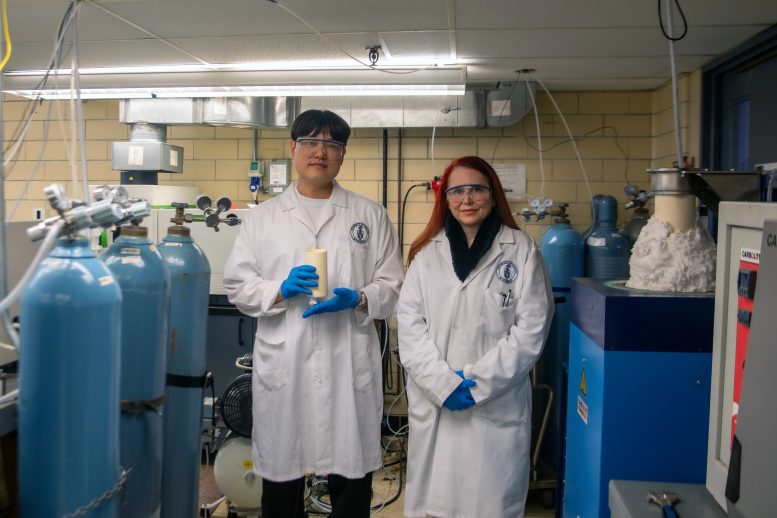
From left to right: University of Toronto PhD candidate Jaesuk (Jay) Paeng stands next to Professor Gisele Azimi and holds the team’s newly designed electrochemical cell that can withstand temperatures up to 1600 degrees Celsius while electrochemically removing contaminants from steel using slag-based electrolyte. Credit: Safa Jinje / University of Toronto Engineering
Traditional steel recycling methods use an electric arc furnace to melt down scrap metal. Since it is difficult to physically separate copper material from scrap before melting, the element is also present in the recycled steel products.
“The main problem with secondary steel production is that the scrap being recycled may be contaminated with other elements, including copper,” says Azimi. “The concentration of copper adds up as you add more scrap metals to be recycled, and when it goes above 0.1 weight percentage (wt%) in the final steel product, it will be detrimental to the properties of steel.”
Advantages of the New Method
Copper cannot be removed from molten steel scrap using the traditional electric arc furnace steelmaking practice, so this limits the secondary steel market to producing lower-quality steel product, such as reinforcing bars used in the construction industry.
“Our method can expand the secondary steel market into different industries,” says Paeng. “It has the potential to be used to create higher-grade products such as galvanized cold rolled coil used in the automotive sector, or steel sheets for deep drawing, used in the transport sector.”
To remove copper from iron to below 0.1 wt%, the team had to first design an electrochemical cell that could withstand temperatures up to 1600 degrees DOI: 10.1016/j.resconrec.2024.107654









Discussion about this post