
• Home
  • Insight
  • Blog
  • Business
  • Entertainment
  • Health
  • Politics
  • Shop
    • Gift Shop
    • Value Shop
    • Store
    • Bargain Shop
    • Discount
  • Sports
  • Tech
  • Travel
  • USA
  • Video
  • World
    • Asia
    • Africa
    • South America
    • North America
    • Europe
    • Oceania
Thursday, October 22, 2026
No Result
View All Result
Subscribe Now
  • Home
  • Insight
  • Blog
  • Business
  • Entertainment
  • Health
  • Politics
  • Shop
    • Gift Shop
    • Value Shop
    • Store
    • Bargain Shop
    • Discount
  • Sports
  • Tech
  • Travel
  • USA

    Kansas Senate rivals clash over Trump, party loyalty in heated debate

    Is Rabies Making a Comeback?

    Kohen Wiley’s Family Says Investigators Didn’t Contact Them Before Concluding Cops Did No Wrong

    Peralta, Caminero, Diaz lead Rays to win over Guardians and a trip to the World Series

    What “Once Upon a Time in Harlem” can teach us about arguing over Black art

    4 dead, 39 injured in explosion at Canadian military training base

    Texas Man Found with Pipe Bombs, Guns, Three Illegal Aliens near Border

    Two players to bet on Sunday

    Arcadia surrogacy mansion mom previously fled U.S., prosecutors allege

  • Video
  • World
    • Asia
    • Africa
    • South America
    • North America
    • Europe
    • Oceania
The Insight Post
  • Home
  • Insight
  • Blog
  • Business
  • Entertainment
  • Health
  • Politics
  • Shop
    • Gift Shop
    • Value Shop
    • Store
    • Bargain Shop
    • Discount
  • Sports
  • Tech
  • Travel
  • USA

    Kansas Senate rivals clash over Trump, party loyalty in heated debate

    Is Rabies Making a Comeback?

    Kohen Wiley’s Family Says Investigators Didn’t Contact Them Before Concluding Cops Did No Wrong

    Peralta, Caminero, Diaz lead Rays to win over Guardians and a trip to the World Series

    What “Once Upon a Time in Harlem” can teach us about arguing over Black art

    4 dead, 39 injured in explosion at Canadian military training base

    Texas Man Found with Pipe Bombs, Guns, Three Illegal Aliens near Border

    Two players to bet on Sunday

    Arcadia surrogacy mansion mom previously fled U.S., prosecutors allege

  • Video
  • World
    • Asia
    • Africa
    • South America
    • North America
    • Europe
    • Oceania
No Result
View All Result
No Result
View All Result
Home Science

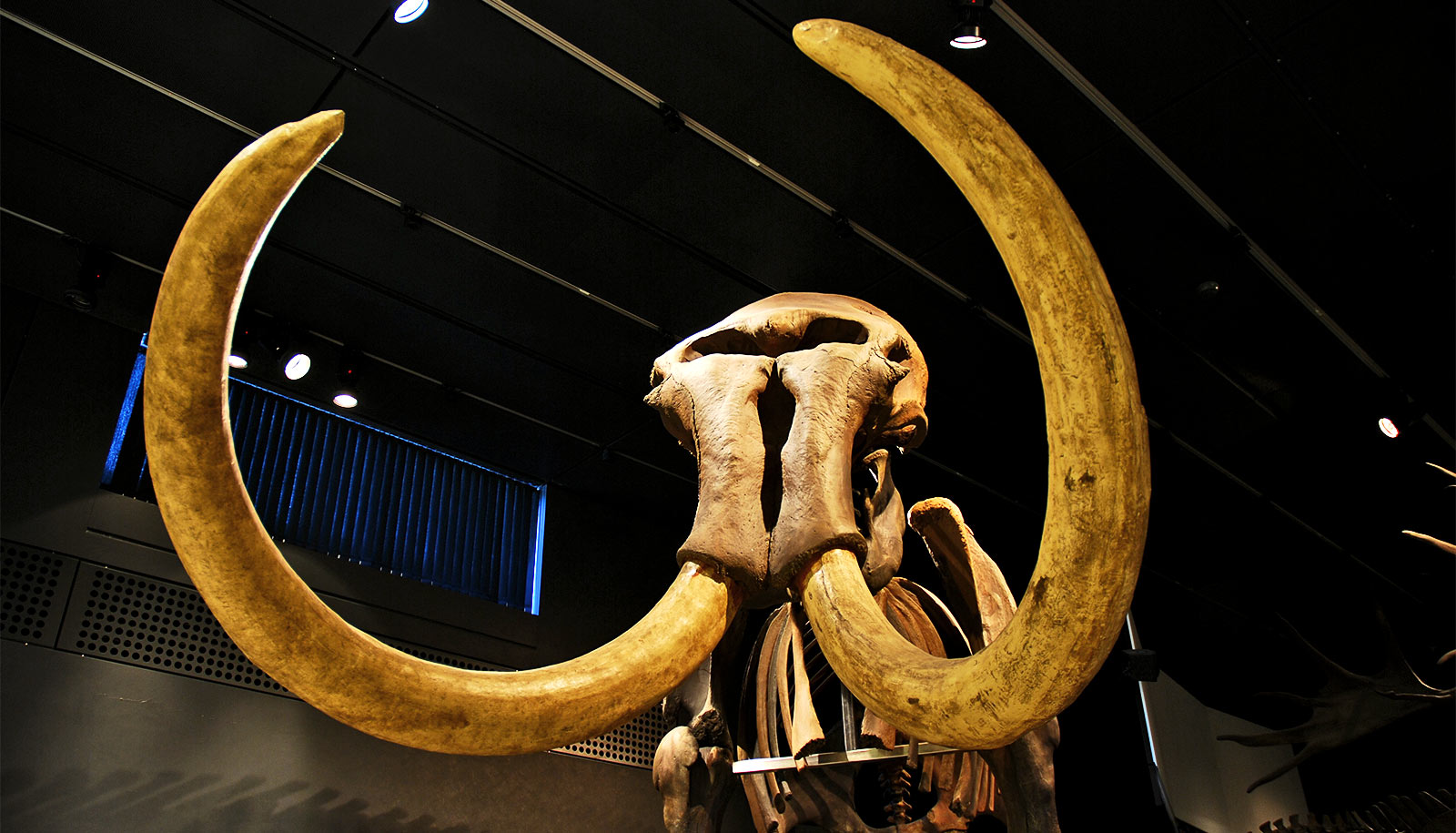
People didn’t kill Ice Age mammoths like in the movies

by Theinsightpost
August 27, 2024
in Science
0 0
0
People didn’t kill Ice Age mammoths like in the movies

Share this
Article

You are free to share this article under the Attribution 4.0 International license.


To kill mammoths in the Ice Age, people used planted pikes, not throwing spears, researchers say.

They say the findings might help resolve the debate about Clovis points and reshape how we think about hunting some 13,000 years ago.

How did early humans use sharpened rocks to bring down megafauna 13,000 years ago? Did they throw spears tipped with carefully crafted, razor-sharp rocks called Clovis points? Did they surround and jab mammoths and mastodons? Or did they scavenge wounded animals, using Clovis points as a versatile tool to harvest meat and bones for food and supplies?

University of California, Berkeley archaeologists say the answer might be none of the above.

Instead, the researchers say humans may have braced the butt of their pointed spears against the ground and angled the weapon upward in a way that would impale a charging animal. The force would have driven the spear deeper into the predator’s body, unleashing a more damaging blow than even the strongest prehistoric hunters would have been capable of on their own.

Drawing upon multiple sources of writings and artwork, a team of archaeologists reviewed historical evidence from around the world about people hunting with planted spears.

They also ran the first experimental study of stone weapons that focused on pike hunting techniques, revealing how spears react to the simulated force of an approaching animal. Once the sharpened rock pierced the flesh and activated its engineered mounting system, they say, the spear tip functioned like a modern day hollow-point bullet and could inflict serious wounds to mastodons, bison, and saber-toothed cats.

“This ancient Native American design was an amazing innovation in hunting strategies,” says Scott Byram, a research associate with Berkeley’s Archaeological Research Facility and first-author of a paper on the topic in the journal PLOS ONE. “This distinctive Indigenous technology is providing a window into hunting and survival techniques used for millennia throughout much of the world.”

The historical review and experiment may help solve a puzzle that has fueled decades of debate in archaeology circles: How did communities in North America actually use Clovis points, which are among the most frequently unearthed items from the Ice Age?

Named for the town of Clovis, New Mexico, where the shaped stones were first recovered nearly a century ago, Clovis points were shaped from rocks, such as chert, flint or jasper. They range from the size of a person’s thumb to that of a midsize iPhone and have a distinct, razor-sharp edge and fluted indentations on both sides of their base. Thousands of them have been recovered across the US—some have even been unearthed within preserved mammoth skeletons.

They’ve also been a pop culture plot point. Characters in the video game Far Cry Primal use spears tipped with stone points to ambush mastodons. The movie 10,000 BC uses a similar spear to hunt mammoths. Scholars and hobbyists reconstruct Clovis points—and some even document on YouTube the process of building them and using them to hunt bison.

Those depictions make for a good story. But they likely fail to consider the realities of life in the Ice Age, says Byram and his coauthor, Jun Sunseri, a UC Berkeley associate professor of anthropology.

Clovis points are often the only recovered part of a spear. The intricately designed bone shafts at the end of the weapon are sometimes found, but the wood at the base of the spear and the pine pitch and lacing that help make them function as a complete system have been lost to time.

Plus, research silos limit that kind of systems thinking about prehistoric weaponry, Sunseri says. And if stone specialists aren’t experts in bone, they might not see the full picture.

“You have to look beyond the simple artifact,” he says. “One of the things that’s key here is that we’re looking at this as an engineered system that requires multiple kinds of sub-specialties within our field and other fields.”

Building tools as strong, effective systems was likely a priority for communities 13,000 years ago. The tools needed to be resilient. The people had a limited number of suitable rocks to work with while traversing the land. They might go hundreds of miles without access to the right kind of long, straight poles from which to fashion a spear. So it stands to reason they wouldn’t want to risk throwing or destroying their tools without knowing if they’d even land the animal, says Byram, who mined archival records, spanning anthropology to art to Greek history, to trace the arc of planted pikes as weapons.

“People who are doing metal military artifact analysis know all about it because it was used for stopping horses in warfare,” Byram says. “But prior to that, and in other contexts with boar hunting or bear hunting, it wasn’t very well known. It’s a theme that comes back in literature quite a bit. But for whatever reason, it hasn’t been talked about too much in anthropology.”

To evaluate their pike hypothesis, the researchers built a test platform measuring the force a spear system could withstand before the point snapped and/or the shaft expanded. Their low-tech, static version of an animal attack using a braced, replica Clovis point spear allowed them to test how different spears reached their breaking points and how the expansion system responded.

It was based on prior experiments where researchers fired stone-tipped spears into clay and ballistics gel—something that might feel like a pinprick to a 9-ton mammoth.

“The kind of energy that you can generate with the human arm is nothing like the kind of energy generated by a charging animal. It’s an order of magnitude different,” Sunseri says. “These spears were engineered to do what they’re doing to protect the user.”

The experiment put to the test something Byram had mulled for decades. When he was in graduate school and analyzing prehistoric stone tools, he crafted replica Clovis points and fashioned spears using traditional techniques. He remembered thinking how time-intensive a process it was to invest in a stone Clovis point—and how important it would be for the point to function effectively.

“It just started to make sense to me that it actually had a different purpose than some of the other tools,” Byram says. “Unlike some of the notched arrowheads, it was a more substantial weapon. And it was probably also used defensively.”

Conversations around a campfire early in the pandemic between Sunseri, a zooarchaeologist who learned from local communities during his time in Africa, and Kent Lightfoot, a Berkeley anthropology professor emeritus, prompted them to dig into the mystery. Through talks with his VhaVenda mentors, Sunseri learned how the engineering that went into the butt of some spears was just as critical as the work that went into the points.

“The sophisticated Clovis technology that developed independently in North America is testimony to the ingenuity and skills that early Indigenous people employed in their cohabitation of the ancient landscape with now-extinct megafauna,” says Lightfoot, a co-author of the study.

In the coming months, the team plans to further test its theory by building something akin to a replica mammoth. Using a type of slide or pendulum, they hope to simulate what an attack might have looked like as a planted Clovis-tipped pike made impact with a massive, fast-moving mammal.

“Sometimes in archaeology, the pieces just start fitting together like they seem to now with Clovis technology, and this puts pike hunting front and center with extinct megafauna,” Byram says. “It opens up a whole new way of looking at how people lived among these incredible animals during much of human history.”

Source: UC Berkeley

ShareTweetSend
Previous Post

UK’s Starmer warns of “painful” October budget to tackle public finances

Next Post

Ancient tombs with vibrant wall paintings open to public in southern Israel

Related News

Science

Mysterious Star Pattern in Famous Van Gogh Painting Solves a Century-Old Debate : ScienceAlert

October 22, 2026
Science

Sleeping mice cleared amyloid twice as fast as awake ones in a 2013 Rochester study, while a 2024 Imperial College London team found brain dye clearance about a quarter lower in sleeping mice

October 21, 2026
Science

The Physics Behind Tesla’s Flying Roadster

October 20, 2026
Science

Can AI predict whether you’ll die from cancer from just an image of your face?

October 19, 2026
Next Post
Ancient tombs with vibrant wall paintings open to public in southern Israel

Ancient tombs with vibrant wall paintings open to public in southern Israel

Discussion about this post

Subscribe To Our Newsletters

    Customer Support


    1251 Wilcrest Drive
    Houston, Texas
    77042 USA
    Call-832.795.1420
    e-mail – news@theinsightpost.com

    Subscribe To Our Newsletters

      Categories

      • Africa
      • Africa-East
      • African Sports
      • American Sports
      • Arts
      • Asia
      • Australia
      • Business
      • Business Asia
      • Business- Africa
      • Canada
      • Defense
      • Education
      • Egypt
      • Energy
      • Entertainment
      • Europe
      • European Soccer
      • Finance
      • Germany
      • Ghana
      • Health
      • Insight
      • International
      • Investing
      • Japan
      • Latest Headlines
      • Life & Living
      • Markets
      • Mobile
      • Movies
      • New Zealand
      • Nigeria
      • Politics
      • Scholarships
      • Science
      • South Africa
      • South America
      • Sports
      • Tech
      • Travel
      • UK
      • USA
      • Weather
      • World
      No Result
      View All Result

      Recent News

      Utah senior defensive lineman accused of rape, sharing videos of incident on social media

      October 22, 2026

      Mysterious Star Pattern in Famous Van Gogh Painting Solves a Century-Old Debate : ScienceAlert

      October 22, 2026

      To Import or Build? Southeast Asia’s Rolling Stock Dilemma – The Diplomat

      October 22, 2026

      Pope Leo XIV won't need further lung cancer treatment, Vatican says

      October 22, 2026
      • Home
      • Advertise With Us
      • About Us
      • Corporate
      • Consumer Rewards
      • Forum
      • Privacy Policy
      • Social Trends

      Theinsightpost ©2026 | All Rights Reserved. Theinsightpost is an Elnegy LLC company, registered in Texas, USA

      Welcome Back!

      Login to your account below

      Forgotten Password?

      Retrieve your password

      Please enter your username or email address to reset your password.

      Log In

      Add New Playlist

      We are using cookies to give you the best experience on our website.

      You can find out more about which cookies we are using or switch them off in .

      No Result
      View All Result
      • Home
      • Insight
      • Blog
      • Business
      • Entertainment
      • Health
      • Politics
      • Shop
        • Gift Shop
        • Value Shop
        • Store
        • Bargain Shop
        • Discount
      • Sports
      • Tech
      • Travel
      • USA
      • Video
      • World
        • Asia
        • Africa
        • South America
        • North America
        • Europe
        • Oceania

      Theinsightpost ©2026 | All Rights Reserved. Theinsightpost is an Elnegy LLC company, registered in Texas, USA

      The Insight Post
      Powered by  GDPR Cookie Compliance
      Privacy Overview

      This website uses cookies so that we can provide you with the best user experience possible. Cookie information is stored in your browser and performs functions such as recognising you when you return to our website and helping our team to understand which sections of the website you find most interesting and useful.

      Strictly Necessary Cookies

      Strictly Necessary Cookie should be enabled at all times so that we can save your preferences for cookie settings.

      Cookie Policy

      More information about our Cookie Policy

      Clear examples do more than decorate an explanation: they show how an idea behaves under recognizable conditions. In education and software documentation alike, strong illustrations begin with a defined goal, then reveal the steps, assumptions, and result without unnecessary detail. A practical test example should state the input, expected output, and boundary condition, because these elements show whether a rule works beyond the simplest case. Including a contrasting case also helps readers distinguish a valid application from a tempting but incorrect one, while concise notes explain why the outcomes differ. When examples are updated with current data and checked against the underlying rule, they remain useful across classrooms, product guides, and professional training.
      Bij toegang tot Belgische casino’s via een tablet kunnen spelers accountgegevens, spelvoorwaarden en betaalopties overzichtelijk raadplegen, terwijl informatie over casinos zonder cruks aanvullende context biedt bij het beoordelen van beschikbare toegangsregels. Een stabiele mobiele verbinding en goed leesbare beveiligingsfuncties zijn daarbij belangrijk voor leeftijdscontrole, accountbeheer en verantwoord spelen.