
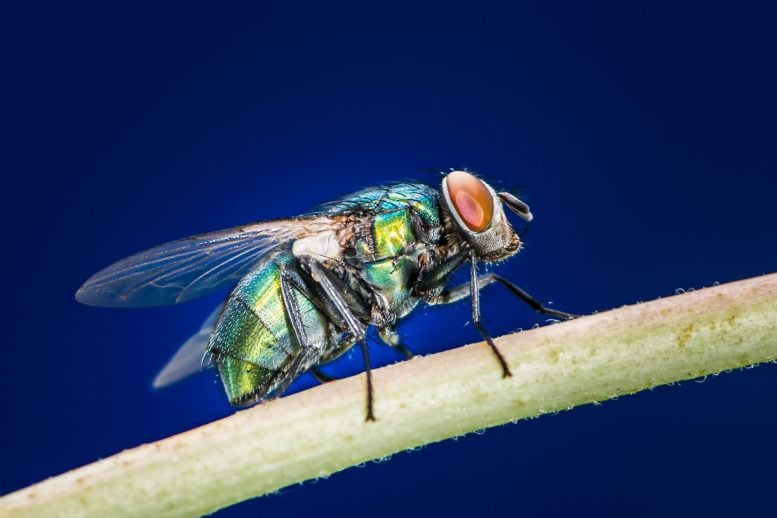
Researchers at Kyushu University discovered that blowflies in southern Japan carry the bird flu virus, potentially introducing a new route of transmission. Their findings, which highlight the significant implications for poultry farming and public health, suggest that controlling these insects could be crucial in preventing further outbreaks.
A recent study conducted in a wild bird colony in southern Japan indicates that blowflies could be a possible vector for the transmission of bird flu.
Researchers at Kyushu University have found that blowflies, which are highly attracted to decaying flesh and feces, are carriers of the bird flu 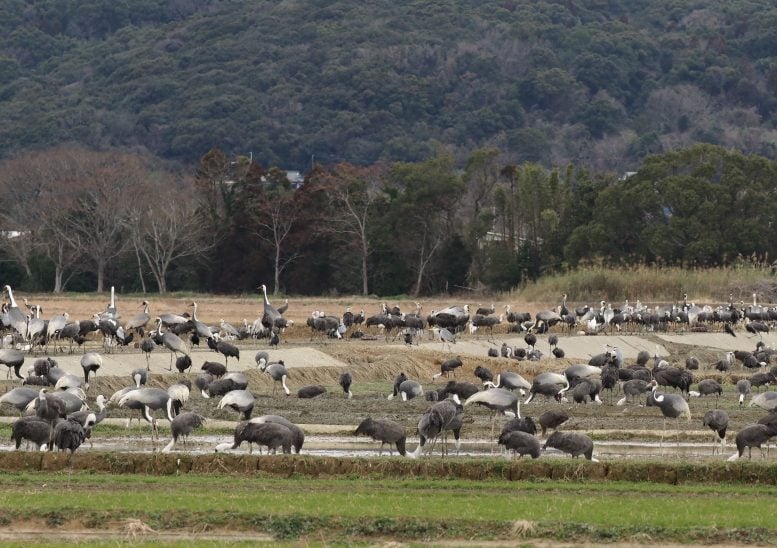
In winter, thousands of cranes migrate to Izumi city in Southern Japan. During winter 2022-2023, 1600 cranes out of colony of 10000 cranes died from bird flu. Credit: Ryosuke Fujita, Kyushu University
“Bird flu has been causing substantial damage to wildlife and the poultry industry, and also holds great risk for humans who work closely with livestock. It’s therefore vital to understand how the virus spreads and its potential routes of transmission to control and prevent outbreaks,” explains first author Associate Professor Ryosuke Fujita of Kyushu University’s Faculty of Agriculture.
In this research, the scientists studied a wild crane colony in Izumi city, Kagoshima Prefecture, in southern Japan. In winter, the prime season for bird flu, thousands of cranes migrate to this area, with their dense numbers making them vulnerable to infection. During winter 2022-2023, 1600 cranes out of a colony of 10000 cranes died from bird flu.
“We were notified about the cranes being infected and we had to act quickly,” says Fujita.
Blowfly Role in Virus Transmission
Along with his colleagues, he set traps at different locations around Izumi city to collect blowflies. “We were particularly interested in one 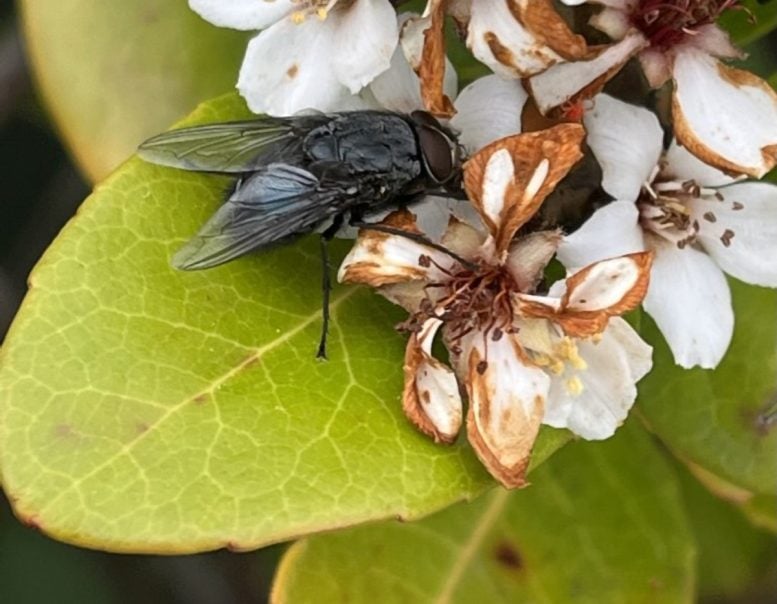
Blowflies, a family of flies strongly attracted to decaying flesh and feces, are carrying the bird flu virus in southern Japan, highlighting a potential new route of bird flu transmission. Image captured from Kyushu University’s Biodiversity Conservation Zone. Credit: Ryosuke Fujita, Kyushu University