
Strategic Snapshot: U.S.–PRC Tech Rivalry
Under General Secretary Xi Jinping, the Chinese Communist Party (CCP) has made technology competition the focus of its long-term struggle against the West. The 15th Five-Year Plan (2026–2030) has codified the fusion of national planning, security strategy, and technological control under Xi’s direct command. The plan, whose early chapters are dedicated to building a modern industrial system, accelerating tech self-reliance and cultivating new productive forces, and deepening informatization and intelligentization, highlights a range of priority high-tech sectors. These include artificial intelligence (AI), quantum, biotechnology, connected devices and the Internet of Things (IoT), robotics, and open-source technologies, among others. The Party believes that seizing the “commanding heights” in these areas is critical to ensuring long-term dominance (Xinhua, March 13).
Xi has directed the Party-state system to advance a whole-of-nation approach to promoting strategic sectors. This is seen in the mechanisms embedded in the Party’s seven national development strategies, of which the military–civil fusion development strategy the most important, coordinating the system to diffuse innovation throughout the pillars of the Party’s power. It also involves boosting competitiveness through securing supply chains, promoting innovation, and ensuring that critical technologies remain in reliable hands. “Reverse constrainment,” or the selective weaponization of trade, has emerged as one tactic to adapt to the competitive international environment; but the Party deploys a variety of other tools in pursuit of supply chain sovereignty, technological dominance, and ultimately victory in international technological competition.
Looking forward to 2030, Xi is preparing the People’s Republic of China (PRC) for sustained confrontation. State investment, flexible regulatory environments, and courting foreign capital support reliable supply chains. “Command innovation,” or state investment in targeted sectors, serves the Party’s goal of global technological dominance. The CCP hopes that these strategies, combined with its weaponization of trade dependencies, will create the conditions necessary for victory in U.S.–PRC competition.
Selected Jamestown Analysis:
- A Five-Year Plan for Managed Confrontation, November 3, 2025, Matthew Johnson.
- PRC Shift Signals ‘Reverse Constrainment’, October 17, 2025, Matthew Johnson.
- ‘Command Innovation’ Model Builds Momentum: Engineering Capital for Strategic Rivalry, June 30, 2025, Matthew Johnson.
- Strategic Snapshot: China’s AI Ambitions, May 6, 2025.
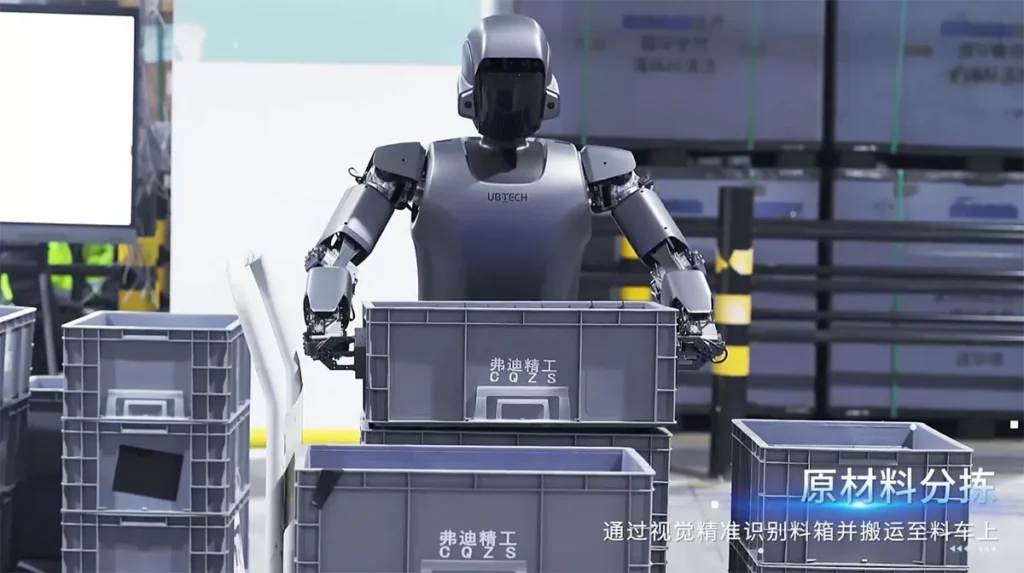
A humanoid robot, developed by Shenzhen-based UBTech, operating in a BYD factory. (Source: CnEVPost)
Strategic Industries
- PRC robotics firms use Nvidia’s AI platforms to build their own products. This reduces innovation time as Chinese developers do not need to build foundational infrastructure from scratch. Leading Chinese AI models, such as DeepSeek’s, may have also been trained using Nvidia processors, as reflected by increases in shipments to Singapore following U.S. export controls. PRC robotics firms also import 90 percent of the machine tools they use. Most come from Japan, with Germany also featuring prominently. Rather than cultivating reliance, usage of Nvidia and other external materials feeds the PRC’s technological advancements, accelerating development.
- Robotics and AI developments are intended to serve as revolutionary economic forces. The Robotics+ Action Plan incentivizes adoption in manufacturing, healthcare, logistics, and education, and the AI+ Action Plan encourages AI use in similar priority areas, including “global cooperation,” which alludes to the Party’s system of tightening its control both at home and abroad. Likewise, Party promotion of artificial general intelligence (AGI) is seen as creating “dynamism” for “new-type industrialization” (新型工业化).
- In certain industries, such as smart devices, the PRC’s development directives have prioritized standards-setting. Setting technical standards gives Chinese technical ecosystems an advantage in the long-term, as changing existing standards is expensive, and this transition would impose higher costs on consumers. Digital Silk Road diplomacy supplements state-driven investment to export products and establish technical norms around the world.
Selected Jamestown Analysis:
- AGI Has Quietly Become Central to Beijing’s AI Strategy, October 1, 2025, Matthew Johnson.
- ‘AI +’ Initiatives Multiply After Years of Experimentation, September 21, 2025, Arran Hope.
- DeepSeek’s Background Raises Multiple Concerns, June 7, 2025, Matthew Gabriel Cazel Brazil.
- Encircling the West: The PRC Gains Ground in Legacy Chips, May 16, 2025, Sunny Cheung.
- New Gains in PRC Robotics Software & Hardware, October 17, 2025, Sunny Cheung.
- Embodied Intelligence: The PRC’s Whole-of-Nation Push into Robotics, August 9, 2025, Sunny Cheung.
- Hefei’s Fusion Sector Drives New Approach to Development, February 6, 2026, Shijie Wang.
- Corruptible Connections: CCP Ties and Smart Device Dangers, September 19, 2025, Matthew Gabriel Cazel Brazil.
- Smart Device Empire: Beijing’s Expansion Through Everyday Digital Infrastructure, July 25, 2025, Matthew Johnson.
- Smart Device Empire, Part 2: Policy Underpins PRC’s Global IoT Ambitions, August 7, 2025, Matthew Johnson.
- PRC Consolidates Pharmaceutical Supply Chain Dominance, September 19, 2025, Daniel Burke.
- Open-Source Technology and PRC National Strategy: Part I, May 10, 2024, Sunny Cheung.
- Open-Source Technology and PRC National Strategy: Part II, May 24, 2024, Sunny Cheung.
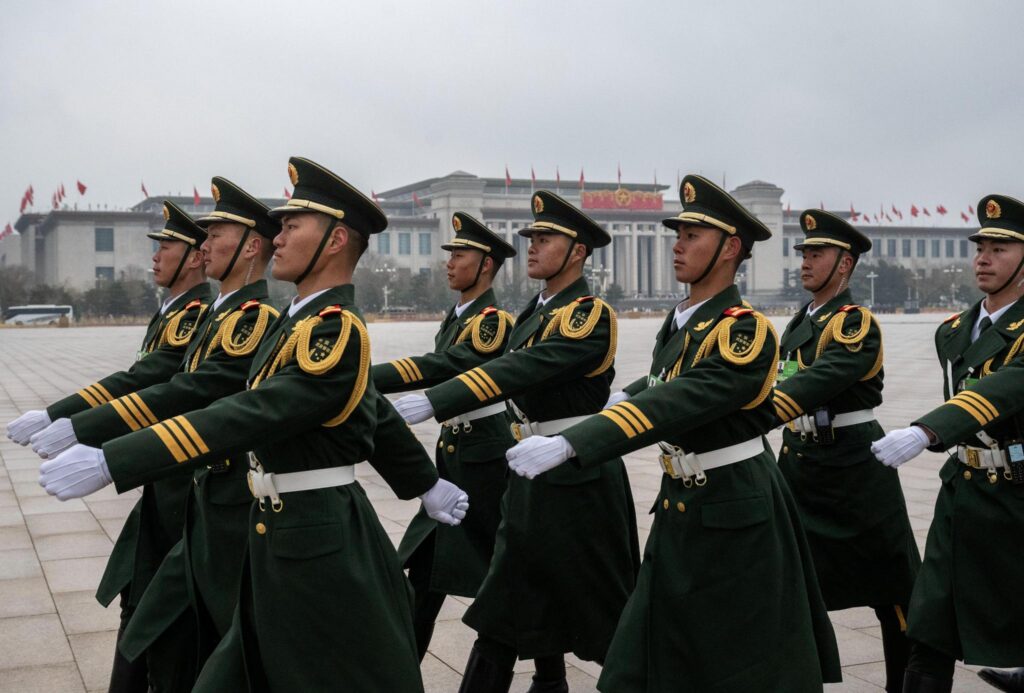
Members of the People’s Liberation Army in Tiananmen Square after the opening session of the Chinese People’s Political Consultative Conference (CPPCC). (Source: Kevin Frayer/Getty Images)
PLA and Military–Civil Fusion
- Under the Party’s military-civil fusion development strategy, technological development is inseparable from military advancement. With Party guidance, the People’s Liberation Army (PLA) has started to adopt DeepSeek’s AI models, which are well-suited for use in unmanned systems. The PLA’s interest in AI applications also covers decision-making, intelligence, and cognitive and psychological warfare.
- The robotics ecosystem is overseen by a new technical committee composed of military-industrial representatives and those affiliated with PLA-linked research centers. This committee is best understood as a strategic coordination mechanism which will promote industrial development while ensuring alignment with military interests.
- Xi has promoted officials with military-industrial backgrounds to key roles in state economic planning and execution, ensuring that technological competitiveness serves military goals. In recent years, rhetoric around military-civil fusion has been extended from “innovation” toward “industry.” Xi’s personnel management formalized this shift.
Selected Jamestown Analysis:
- DeepSeek Use in PRC Military and Public Security Systems, October 27, 2025, Sunny Cheung and Kai-shing Lau.
- New Military–Civil Fusion Body for PRC Robotics Ecosystem, December 18, 2025, Sunny Cheung.
- Xi Jinping Has Further Boosted the Military-Industrial Group of China, June 7, 2025, Arthur Ding and K. Tristan Tang.
- Xi Seeks to Reinvigorate Military-Civilian Integration, April 14, 2023, Arthur Ding and K. Tristan Tang.
- PRC Adapts Meta’s Llama for Military and Security AI Applications, November 1, 2024, Sunny Cheung.
- CNP Part II: Seven National Development Strategies, September 26, 2025, Erik R. Quam.
- Red Genes: Assessing WuXi AppTec’s Ties to the Party-Army-State in China, February 9, 2024, Sunny Cheung, Arran Hope, Peter Mattis.
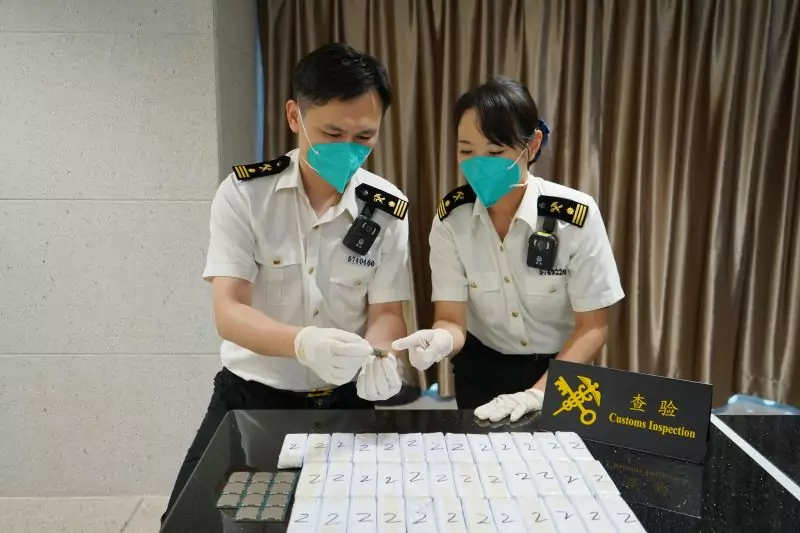
Customs officials inspect 306 CPUs that a traveler had attempted to smuggle into the People’s Republic of China. (Source: Gongbei Customs)
Technology Transfer and Global Partnerships
- The PRC continues to exploit technology transfers to fuel its development but has diversified its approach in the wake of U.S. export controls. These tactics include a resurgence in smuggling, as well as a rise in trade diversion, talent attraction, and the use of offshore innovation bases.
- Offshore innovation bases are hubs for science and technology innovation located across the PRC, which act as recruiting pools for international talent and as incubators for start-ups. They serve as a means to connect PRC researchers with global counterparts, which facilitates technology transfer. Similar risks emerge from PRC partnerships with overseas research institutions, where Chinese researchers have access to embargoed technology and resources, such as advanced semiconductors.
- Regulated dual-use technology from the United States has been purchased by Chinese companies acting as intermediaries for military end-users. The transfer of U.S. military and dual-use technology to the PRC is also executed by attracting U.S. military-linked talent, which can be achieved legally and transparently.
Selected Jamestown Analysis:
- The Shapeshifting Evolution of Chinese Technology Acquisition, June 7, 2025, Matt Brazil.
- PRC-UAE Collaboration and US Technology Transfer Concerns in Abu Dhabi, August 15, 2024, Cheryl Yu.
- MBZUAI Partners With US Tech, Collaborates With PLA Scientists, September 6, 2024, Cheryl Yu.
- Scientist at Forefront of US Army Research Selected to Lead PRC’s Strategic Chip Production Line, August 8, 2024, Sunny Cheung.
- Innovation Without Borders: The PRC’s Use of Offshore Bases, June 7, 2025, Cheryl Yu.
- PRC Use of Middlemen to Circumvent U.S. Government Export Controls: The Case of Suzhou Rebes Electronic, July 12, 2024, Matthew Bruzzese.
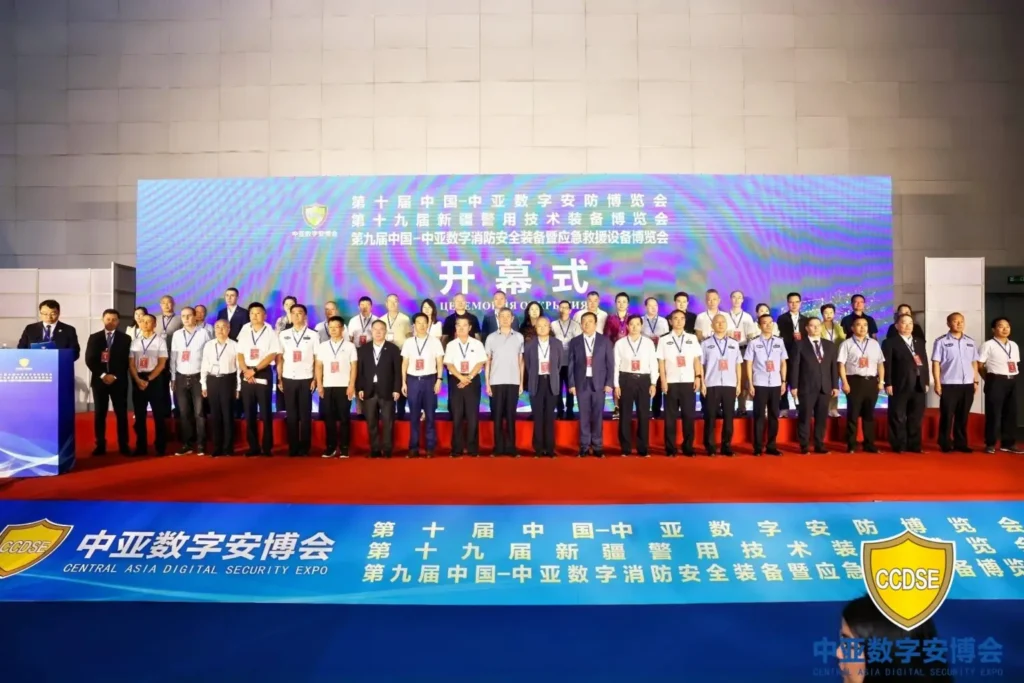
The opening ceremony of the 2024 Central Asia Digital Security Expo. (Source: CIAAE)
Censorship, Surveillance, and Information Manipulation
- Consumer smart TVs provide a platform for consistent access to millions of homes in the United States. Hisense, a state-owned enterprise (SOE), controls the entire software stack of approximately 30 million TVs across 180 countries. At this scale, aggregated behavioral data provides a huge intelligence, surveillance, and manipulation asset.
- Chinese private firms enhance surveillance and censorship capabilities for authoritarian countries abroad. The same company that built the architecture for Beijing’s “Great Firewall” is now operating on behalf of government clients across the Digital Silk Road, such as in Ethiopia, Pakistan, Myanmar, and Kazakhstan. The PRC also monitors these partners’ networks through hacking contractors, such as iS00n (安洵资讯).
- Technological advancements also enable surveillance within the PRC’s borders. DeepSeek is seen as an effective tool to integrate and analyze data for public security functions, and the platform censors topics sensitive to the CCP. Beyond AI, technology firms have met in the Xinjiang Uyghur Autonomous Region (XUAR) for security industry expos to promote their products amid the CCP’s campaign of repression.
Selected Jamestown Analysis:
- Technical Analysis Reveals Connected Smart TV Security Risks, February 20, 2026, John Costello.
- Internet Censorship Tools Exported Along Belt and Road, December 6, 2025, Athena Tong and Yun-Ting Cai.
- DeepSeek’s Background Raises Multiple Concerns, June 7, 2025, Matthew Gabriel Cazel Brazil.
- DeepSeek Use in PRC Military and Public Security Systems, October 27, 2025, Sunny Cheung and Kai-shing Lau.
- State Goals, Private Tools: Digital Sovereignty and Surveillance Along the Belt and Road, December 20, 2024, Che Chang, Lian Huang, and Athena Tong.
- Xinjiang Security Expo Reflects the Limits of U.S. Sanctions, June 19, 2025, Jonah Reisboard.


Discussion about this post