







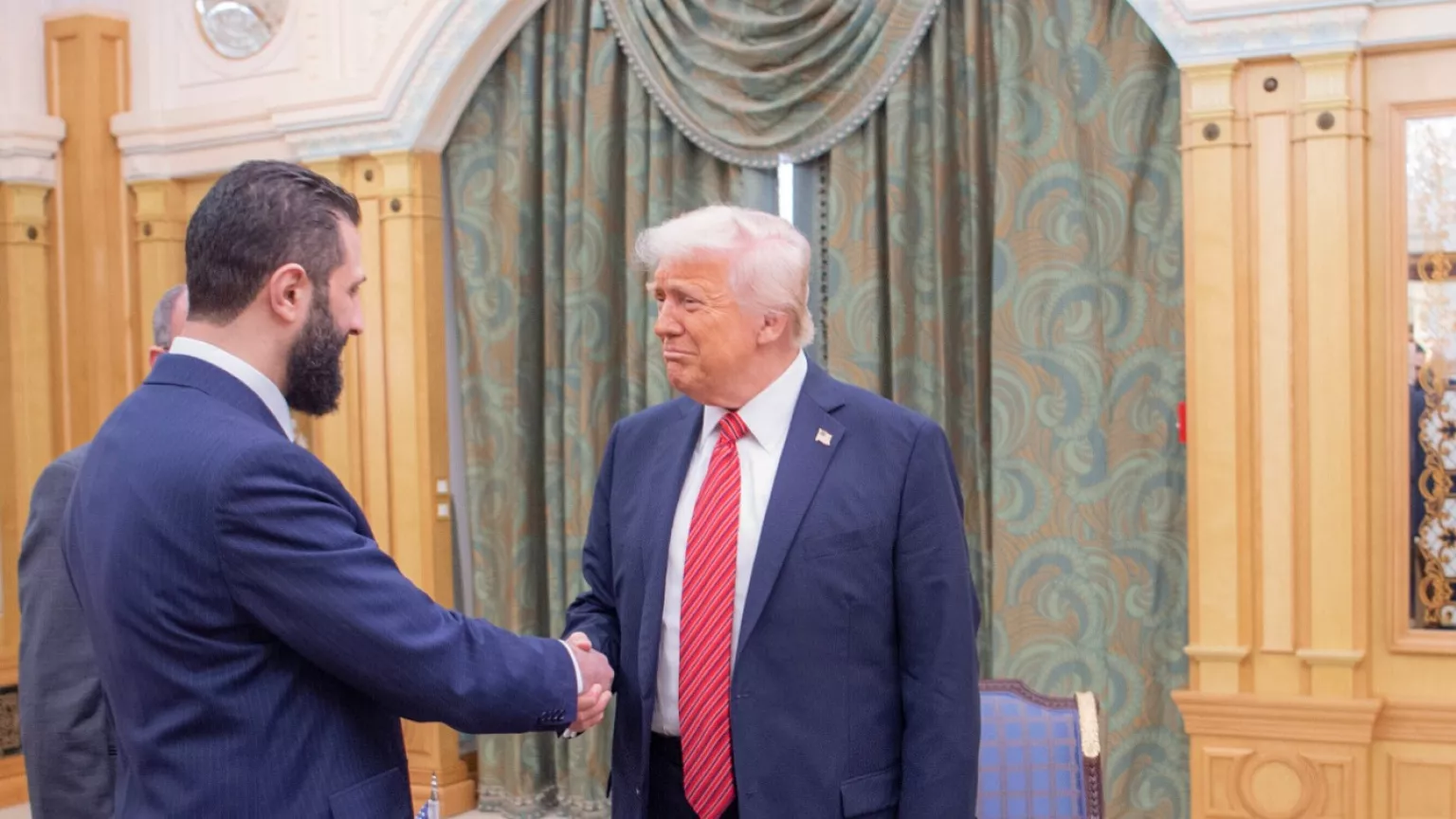
In a move signaling a possible shift in United States foreign policy toward Syria, U.S. President Donald Trump met with Syria’s interim president Ahmed Al-Sharaa in RiyadhRiyadh on Wednesday 14 May, the first encounter between U.S. and Syrian leaders in over two decades.
The meeting, held on the sidelines of a Gulf Cooperation Council (GCC) summit, also included Saudi Crown Prince Mohammed bin Salman and Turkish President Recep Tayyip Erdogan, who joined via video call.
It comes months after Al-Sharaa, previously known as the leader of the insurgent group Hayat Tahrir al-Sham (HTS), seized power following the collapse of the Assad regime.
Trump announced that the U.S. would lift long-standing sanctions on Syria on Tuesday 13 May, a decision hailed by Saudi Arabia but criticized by Israel. Trump described the move as a step toward offering “a chance at peace” for the war-torn nation.
Al-Sharaa’s rise marks the end of over five decades of Assad family rule. In January 2025, his HTS-led offensive stormed Damascus, swiftly toppling the regime.
While controversial, his interim leadership has garnered support from several states such as Egypt and Saudi Arabia, who see him as a counterweight to Iranian influence in Syria.
The civil war in Syria, which erupted in 2011 following widespread anti-government protests, , has killed hundreds of thousands and displaced millions. The conflict has reshaped the region, fueling one of the largest refugee crises in modern history, devastating infrastructure, and drawing in a range of international interventions.
The United States first imposed sanctions on Syria in 1979, designating it a state sponsor of terrorism. Additional sanctions were introduced throughout the civil war that began in 2011, largely in response to human rights violations under the Assad regime.









Discussion about this post