









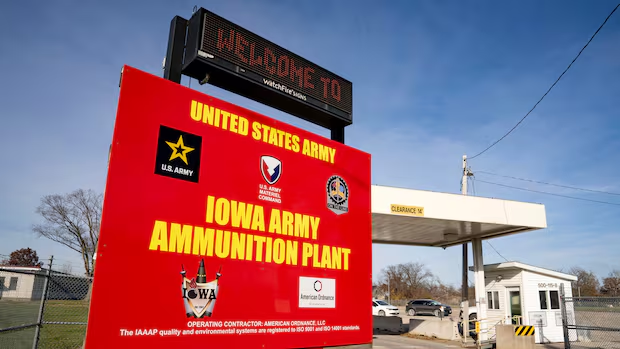
U.S. Army to Proceed with Controlled Detonation of Toxic Explosives in Iowa
The U.S. Army has announced plans to detonate 68 barrels of a hazardous lead explosive in Iowa this week, utilizing emergency legal powers that allow it to circumvent a court order aimed at blocking the controversial operation. This decision comes following a filing made by the Trump administration in court over the weekend.
Court Order and Emergency Measures
Last Thursday, the U.S. Court of Appeals for the 8th Circuit temporarily suspended the detonation by freezing the Army’s environmental permit after environmental organizations filed a lawsuit to halt the operation. However, the government stated in its filing on Saturday that the Army intends to proceed without a permit by citing an emergency exception for munitions and explosives under federal environmental protection laws.
Timing and Safety Concerns
Federal authorities have indicated that the detonation must occur within a short timeframe due to concerns that falling temperatures could destabilize the material, leading to an uncontrolled explosion. The U.S. Justice Department emphasized the necessity of a controlled detonation to mitigate the risk of a more significant public safety threat.
Local Community Backlash
The Army had previously delayed the detonation of the degraded lead azide, a substance used in military munitions, following public outcry from residents and farmers in the vicinity of Middletown, Iowa. Initially, federal officials indicated that the detonation would occur by Tuesday, but the Army later updated its plans to Wednesday to ensure favorable weather conditions and proper safety measures.
Health Risks of Lead Exposure
The Army has not disclosed specific details regarding the timing of the detonation, but it has warned that lead exposure can lead to serious health issues, particularly in children, including damage to the brain and nervous system. Environmental advocacy groups, including the Iowa Environmental Council and the Sierra Club, are concerned that the detonation could release a toxic plume of lead dust capable of traveling up to 160 kilometers, depending on weather conditions.
Call for Transparency and Precautions
Kerri Johannsen, Senior Director of Policy and Programs at the Iowa Environmental Council, expressed the need for the Army to provide further information about the detonation timing, potential plume trajectory, and recommended precautions for residents. She emphasized the lack of communication, stating that many community members, including state officials, were not adequately informed.
Recommendations for Local Farmers
The Iowa Department of Agriculture and Land Stewardship has advised nearby cattle farmers to move livestock, feed, and equipment indoors or relocate them. However, many farmers have reported that keeping livestock indoors is impractical.
Army’s Justification for Controlled Detonation
Acting Secretary of the Army Adam Telle declared on Thursday that after consultations with the U.S. Environmental Protection Agency, the decision to conduct a controlled detonation was deemed the safest option for public health. The Army has also urged residents to avoid the area during the detonation and to take precautions such as closing windows and doors and shutting off air systems that may draw in outside air. After the event, residents are advised to wet-clean surfaces that children may touch to eliminate any lead dust.
Community Concerns Persist
Local resident Jeremy Atwater stated his intention to leave the area due to fears that the plume would drift towards his community. “Anything but the bomb,” he remarked, highlighting the anxiety surrounding the detonation.









Discussion about this post