


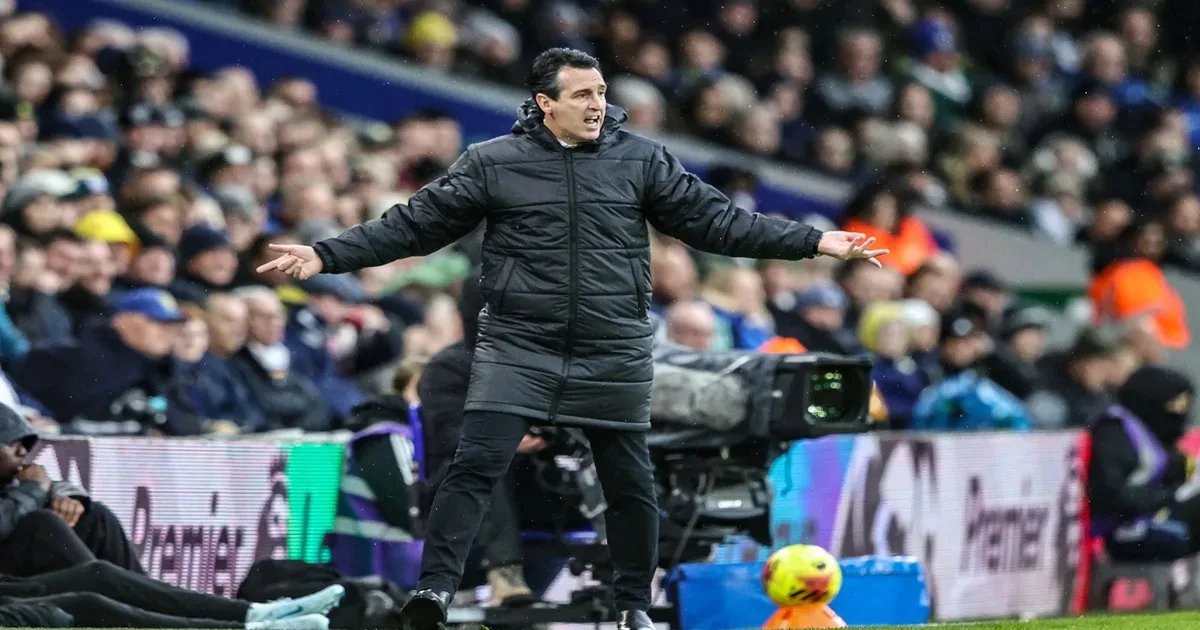
Aston Villa’s Remarkable Journey Under Unai Emery
Aston Villa recently clinched the UEFA Europa League title in 2026, marking the club’s first major trophy in 44 years. The team’s manager, Unai Emery, celebrated his fifth victory in this prestigious competition, joining the ranks of distinguished coaches such as Carlo Ancelotti, Jose Mourinho, and Giovanni Trapattoni. Remarkably, Emery’s expertise in the Europa League includes an unmatched three consecutive wins with Sevilla from 2013 to 2016, interspersed with a final loss while managing Arsenal in the 2018/19 season and a subsequent victory with Villarreal in 2020/21.
Emery’s strategic acumen goes beyond tactical intelligence; it shines through his ability to optimize player performance within financial restrictions. Under his leadership, Sevilla, Villarreal, and Aston Villa have all achieved success without the lavish budgets typically associated with super-clubs. His current endeavor with Aston Villa epitomizes a careful blend of calculated risks rather than reckless spending, utilizing a sustainable transfer strategy built on a network of football connections, culminating in securing multi-talented players.
Transforming Aston Villa’s Transfer Strategy
Emery’s remarkable balancing act of competing in both domestic and European tournaments is supported by his collaborative partnerships, particularly with sporting director Ramón Monchi at Sevilla. In 2023, they joined forces again at Aston Villa, where Monchi emphasized his philosophy: “I don’t believe there is any secret to my work; there are no magic formulas.” His extensive scouting network, which once involved monitoring ten games every weekend with a team of 20 scouts, has laid the groundwork for successful talent acquisitions.
However, Monchi’s departure in September 2025 due to financial regulations introduced turbulence in Villa’s transfer strategies. He was succeeded by Roberto Olabe, Emery’s long-time associate known for his remarkable track record at Real Sociedad, where he cultivated young talents like Martín Zubimendi and mentored prominent coaches. Olabe aims to refine Villa’s focus on talent development rather than an immediate win-at-all-cost strategy.
Olabe’s ambition to integrate emerging talents and competitors into the squad underscores a new chapter for Aston Villa. He remarked, “I love the talent, but I love to try to be champions,” reinforcing the club’s goal of building a sustainable competitive model in the Champions League.
Aston Villa’s Rebuilding Phase: Melding Quality and Potential
Key Emerging Talents
- George Hemmings (19) – Aston Villa Academy: A versatile winger known for his unpredictability, Hemmings has shown flashes of brilliance in starting matches but his youth reflects inconsistency in performance. Rating: 3/5
- Ibrahim Mbaye (18) – Paris Saint-Germain: Acquired for approximately £47.1m, Mbaye’s explosive ability makes him an essential addition who has the potential to evolve into a key player. Rating: 3/5
- Johan Manzambi (20) – Freiburg: Costing around £51m, Manzambi showcases constant attacking threat and has proven himself on the international stage. Rating: 4/5
High-Quality Underperformers
- Alejandro Garnacho (22) – Chelsea: Despite his previous accolades at Manchester United, Garnacho has struggled with consistency. Rating: 2/5
- Aaron Wan-Bissaka – West Ham: On a loan deal, Wan-Bissaka provides valuable experience and is expected to enhance Villa’s defense. Rating: 4/5
- Matteo Ruggeri (24) – Atletico Madrid: Although Ruggeri has shown promise, his inconsistency raises concerns about his ability to perform consistently in the Premier League. Rating: 3/5
- Nicolas Jackson (formerly of Chelsea): Having joined for about £65m, Jackson is anticipated to thrive as Villa’s main striker, given his previous connection with Emery. Rating: 5/5
Predictive Analytics: Assessing Aston Villa’s Prospects
Emery employs a controlled style of play, often utilizing a 4-2-3-1 formation during attack and a 4-4-2 defensive setup. His tactical versatility has yielded impressive results, notably a perfect record in their initial Champions League matches this season. Villa currently ranks second in the league phase table, trailing only Paris Saint-Germain.
Despite early setbacks against formidable opponents, Villa has bounced back, recently defeating Manchester City, the current Premier League leaders. However, injuries to key players such as Amadou Onana and two fullbacks have hampered their progress, contributing to a negative Expected Goals Difference (xGD).
Statistical analyses predict that, with fewer injuries and improved squad depth, Aston Villa could secure a top-six finish in the league. Emery’s tactical flexibility and experience in European competitions will be crucial as they aim to disrupt the dominance of traditional super-clubs.
Should Emery successfully elevate his players’ performances, Aston Villa may well be on the path to realizing their ambitions on both domestic and European fronts.







Discussion about this post