
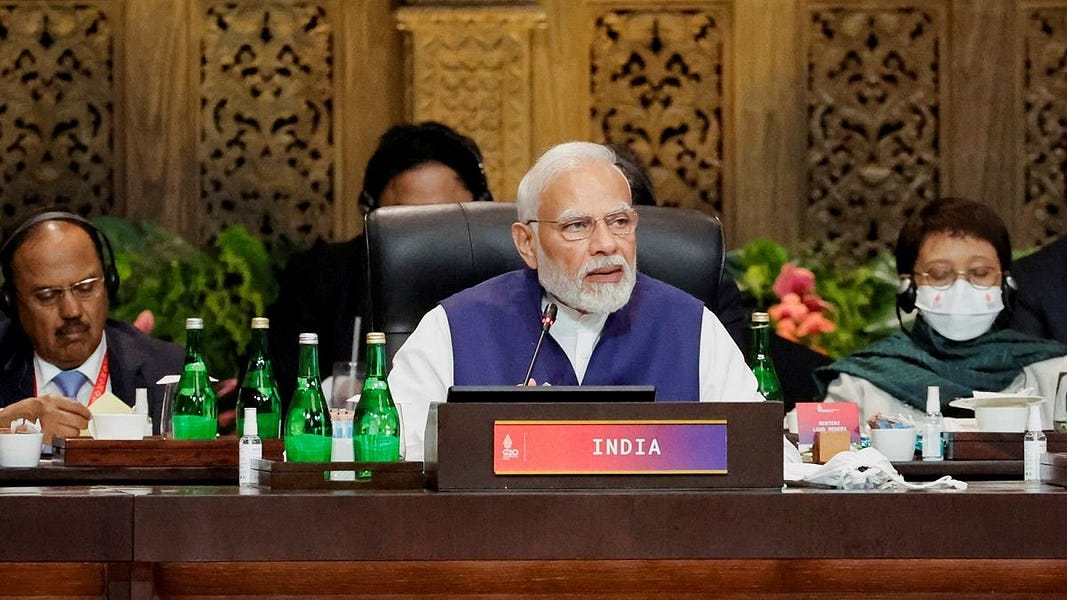
and its claims that corruption, including crony capitalism, has been curbed.
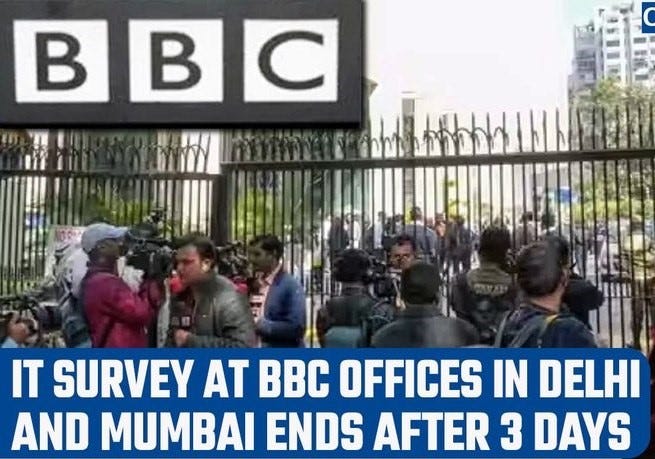
On February 14, Modi scored what looked like the biggest own-goal of his prime ministership when a three-day raid by tax authorities – euphemistically called a “survey” – began on the BBC’s offices in Delhi and Mumbai. The raids are seen as retaliation for a two-part BBC series, “India: The Modi Question” broadcast last month, which focused on maltreatment of Muslims under Modi’s rule, first as Gujarat state chief minister and then prime minister.
The raids were the latest of a series of attacks on media that do not toe the government line. Computers and mobile phones were seized and the BBC said that some staff “faced lengthy questioning” and were “required to stay overnight” in their offices.
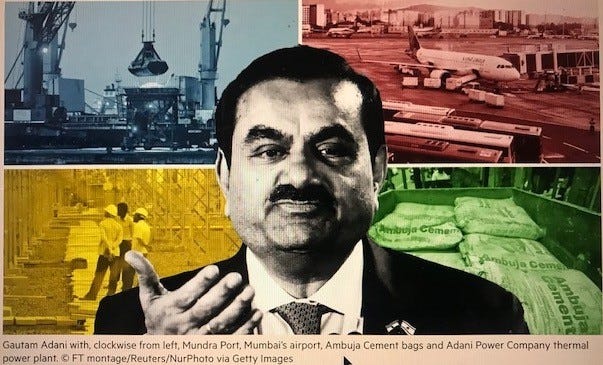
At the same time, a corporate scandal surrounding the massive business empire built while Modi has been in power by Gautam Adani, a close ally and supporter and one of Asia’s richest men, has continued to unfold. This has followed a US “short seller” financial research firm’s allegations, which are denied, of massive debt linked to stock manipulation and fraud.
George Sores, the 92-year-old financier who has criticized Modi in the past, said yesterday that Adani’s troubles would “significantly weaken Modi’s stranglehold on India’s federal government” by “opening the door” to a democratic revival in the country. That led to a furious reaction from government ministers because Soros was, in effect, forecasting that an Adani-linked corruption scandal would unseat Modi’s BJP government at next year’s general election.
But the week has not turned out so disastrously for Modi.
On February 17, the finance ministry announced that it had found tax discrepancies at an unnamed media house, clearly the BBC. A ministry statement said that declared income and profits were “not commensurate with the scale of operations in India.. The findings “indicate that tax has not been paid on certain remittances which have not been disclosed as income in India by the foreign entities of the group.” That turned what looked like a revenge attack into a tax-dodging case, though it is not yet possible to assess the validity of the charge.
Many foreign companies in India have for decades faced allegations of transfer pricing and it looks as if the BBC, which says it is cooperating with the inquiries, is in for lengthy harassment by the tax authorities, watched over by Modi and his powerful home minister Amit Shah.
Defending the raids, a BJP spokesperson said earlier this week that the BBC “has become the most Bhrasht Bakwaas (corrupt and rubbish) corporation” and alleged that it had a history of working with “malice against India.”
Other politicians have linked the BBC films and the Adani scandal, along with the Soros comments, as evidence of a coordinated attack on Modi and his government, possibly embracing the opposition Congress Party where Soros is reported to have connections.
That looks far-fetched, especially over the BBC series, which I have heard was commissioned more than two years ago after an editorial meeting decided that it was “time we did something on Modi.” The films took an unusually long to appear on TV screens and were only broadcast in the UK – subsequent viewing was mostly on YouTube, which the government tried noisily to block and instead increased public and media attention.
Modi and Shah probably calculated that the BBC raids would matter little after an initial flurry of headlines in India and in the foreign media.
They were right to the extent that, respected though the BBC has been for decades, the raids will have been scarcely noticed away from the political and liberal bubble of Delhi and other leading centers.
There has been little public criticism by foreign governments. Anxious not to confront Modi, a US spokesman merely repeated support for a free press, while the UK dodged the issue. There will inevitably be many in these and other countries who are appalled by attacks on the media, but there will be no lasting damage to diplomatic relationships.
Tax raids have been used by Indian governments for decades as a way of threatening opponents and others who have fallen from favor. Under the Modi government, however, they have become more sinister because they are frequently aimed at curbing media freedom.
BBC’s past troubles
The BBC has been in trouble before, though it has never been raided. It had to shut its operations first between 1970 and 1972 after it broadcast two negative documentaries, and again in 1975 when Mark Tully, its widely respected correspondent, was expelled along with other media reporters during prime minister Indira Gandhi’s two-year State of Emergency.
In 2017, the BBC was banned from filming in India’s national wildlife parks for five years after a film on Kaziranga reserve in Assam, famed for having the world’s largest population of one-horned rhinoceroses, was condemned for doing “irreparable damage to India’s reputation.”
After the recent BBC series, I have heard that the government banned filming of five projects that had been sanctioned. It seemed that might have been the end of the affair unless the BBC broadcast anything else controversial. “The BBC will be closely watched,” a government official told me three weeks ago, albeit without indicating that would include tax issues as well as broadcasts.
Adani scandal
The scandal surrounding Gautam Adani has been an accident waiting to happen for years. Adani comes from Modi’s home state of Gujarat and has been supporting his political friend for decades. A first-generation entrepreneur, he began importing polymers in the 1980s and expanded into coal.
The business began to develop when Modi became Gujarat chief minister in 2002 and has grown exponentially since he became prime minister – in the past five years, it has risen in value by 2,500 percent with dominant positions in ports, airports, electricity coal, and growing stakes in areas ranging from defense equipment manufacture to solar energy and farming. A leading television channel (NDTV) was bought last year – allegedly to quieten the channel’s criticism of the Modi government. Net worth touched US$127 billion before the report led to a crash and a US$120 billion decline in market value.
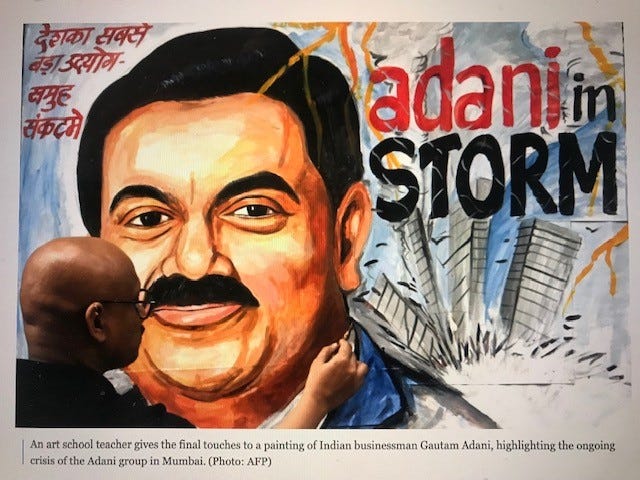
Ministers insist that the growth has been achieved legitimately with tendered contracts and without any favoritism. That is not seen as credible, though it is not unusual for those close to friendly politicians to benefit in power, both nationally and in individual states. The difference with Adani is the astronomic speed of his expansion and the lack of any attempt to distance himself from Modi, nor any apparent attempt to cultivate links with other political parties.
By contrast, for example, the Ambani family that controls Reliance Industries, one of India’s two or three biggest groups, has risen through two generations, carefully spreading links across political parties, individual ministers, and bureaucrats.
Crony capitalism is widely condemned, but it is tolerated as part of daily life at all levels of the Indian economy. Adani’s closeness to Modi could however pose the sort of problems for the prime minister forecast by Soros if fresh links emerge later this year of specific major corruption.
Media focus
Inquiries looking for such links will probably focus attention abroad, including Australia where Adani has controversial coal mines, and on defense equipment ventures. Foreign reports alleging corruption have in the past fueled media coverage in India. The Financial Times in particular, which has been reporting on Adani daily, has a track record of relentlessly pursuing high-profile suspect companies.
Adani has been fighting back this week in order to stem the slide in company shares and rebuild investor confidence. He is reported to have halved the group’s 40 percent annual revenue growth target, delaying fresh capital expenditure, and to have told advisers he plans to improve oversight of the private family companies that control his business empire. A financial controller would be appointed to bring the sort of oversight required in publicly quoted companies to his various trusts and privately held business.
Because of his exclusive Modi link, it has been assumed that Adani would thrive while his patron was in power but that he would become vulnerable when Modi eventually went. Few of his companies are scrutinized by stock market analysts and those in India are wary of being overly critical.
The Hindenburg report has accelerated that process and the question now is whether Adani can overcome the crisis – and, if he can’t, at what point Modi will decide that he has to desert his friend in order to survive politically.
With the BBC raids unearthing tax allegations, and with Adani making positive moves on investor confidence, the week has finished better for Modi than seemed likely. But there are more than 50 weeks till the general election!
John Elliott is Asia Sentinel’s South Asia correspondent. He blogs at Riding the Elephant.


Discussion about this post