






Tragic Losses in Ukrainian Village Following Russian Strikes
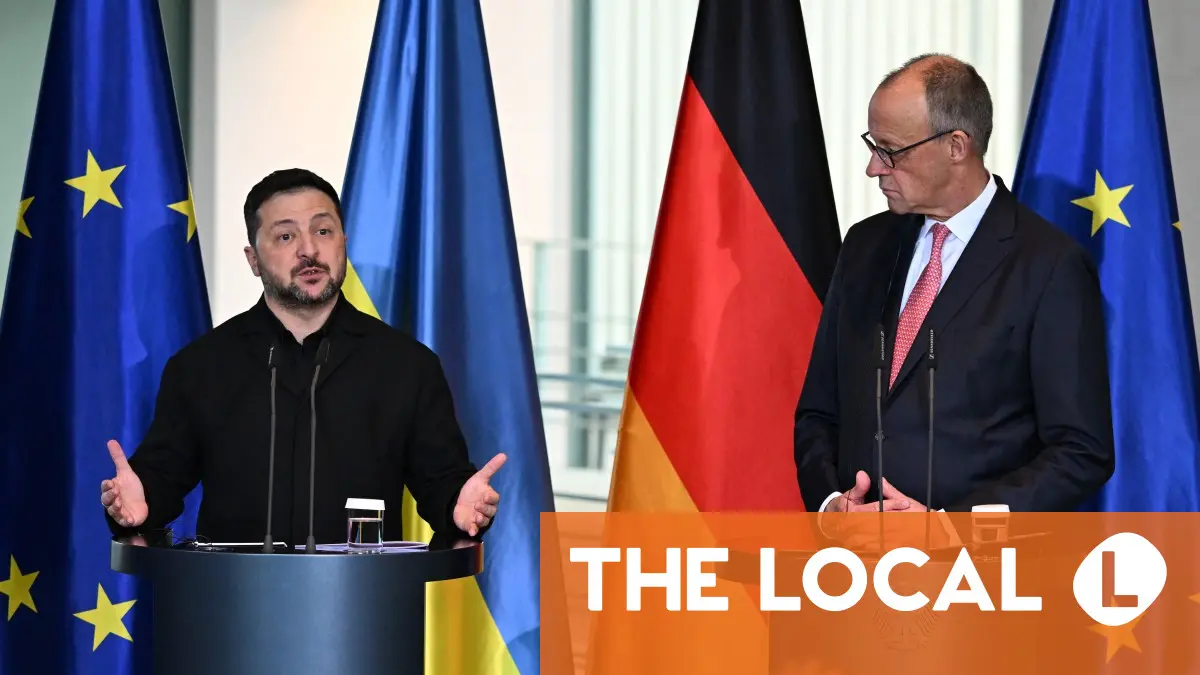
In one of the deadliest assaults of the ongoing conflict, President Volodymyr Zelensky announced on Tuesday in Berlin that thirty-three individuals were killed and over fifty others may be trapped beneath the rubble after a series of Russian missile strikes targeted a Ukrainian village.
Intensified Attacks Following Ceasefire Breakdown
The bombardment occurred just days after a ceasefire in the Kherson region, which had briefly facilitated humanitarian missions. This renewed aggression has dashed hopes for significant progress in upcoming negotiations led by the United States, scheduled for next week in Abu Dhabi.
Rescue operations are currently underway in the southeastern village of Komyshuvakha, where Russian forces targeted a building previously used for aid distribution. Zelensky condemned this strike, labeling it one of the largest mass killings attributed to Russian actions during the conflict.
Humanitarian Crisis Deepens
“A single strike resulted in 33 fatalities, with five individuals rescued and over 50 more possibly trapped under the debris,” Zelensky articulated while visiting the German capital. The attack on Komyshuvakha occurred shortly after a noticeable lull in hostilities, raising concerns about the future of peace talks.
Additional assaults were reported, including a strike on a hospital in Kharkiv that resulted in numerous injuries, as Ukrainian authorities confirmed further casualties across the nation.
Upcoming Negotiations in Abu Dhabi
Despite the recent escalation, Zelensky, alongside representatives from Moscow and Washington, is set to resume negotiations in Abu Dhabi on November 10-11. This marks the first dialogue involving the three parties since February, as Zelensky expressed hopes for a potential meeting with Russian President Vladimir Putin.
“We are optimistic that these discussions will pave the way for a trilateral summit involving leaders,” he remarked, underscoring his persistence in seeking a face-to-face dialogue with Putin, who has been reluctant to engage directly.
Global Reactions and Call for Ceasefire
German Chancellor Friedrich Merz, speaking alongside Zelensky, conveyed skepticism about Russia’s willingness to genuinely engage in negotiations aimed at a ceasefire and subsequent peace agreement, stating, “I do not see that happening so far.” He emphasized the necessity for Ukraine to be included in discussions at international platforms, particularly if they involve addressing the conflict’s resolution.
Concerns have been raised regarding U.S. President Donald Trump’s alleged closer ties with Moscow. Merz stated that if Trump invites Putin to the G20 summit in Miami, Zelensky should also be in attendance. “If Ukraine’s situation is to be discussed, Ukraine’s president deserves a seat at the table,” he asserted.
Future Prospects and Military Support
Last week’s ceasefire had provided a glimmer of hope, but Zelensky disclosed that Russia responded with increased violence rather than extending the ceasefire. “We offered to prolong and broaden the ceasefire, but this resulted in renewed shelling and attacks,” he noted.
In a significant development, U.S. negotiators are scheduled to meet with European and NATO officials in Brussels, involving representatives from multiple nations, including Ukraine, the U.S., France, Germany, and the World Bank.
On the military front, Britain and France announced that roughly 2,800 troops from ten European nations will conduct military drills in Poland this month, aimed at bolstering support for Ukraine. This new multinational force could be deployed once a ceasefire is achieved.
Polish Prime Minister Donald Tusk also reported that his country successfully thwarted a potential provocation on the border with Russia’s Kaliningrad exclave overnight, highlighting the ongoing tensions in the region.








Discussion about this post