








Oct 26
2026
The Immune System’s Impact on Treating HER2 Positive Gastric Cancer
Recent studies have focused on the immune system’s involvement in both the progression and treatment of gastric cancer. In many cases, cancer cells engage the immune system in a complex battle for dominance.
For individuals diagnosed with HER2 positive gastric cancer, healthcare providers may recommend various treatment strategies, including targeted therapies and immunotherapies. This article explores the mechanisms by which the immune system identifies cancer cells and the implications for gastric cancer treatment.
How the Immune System Identifies Cancer Cells
The immune system consists of an intricate network of cells, proteins, and organs designed to protect the body from disease. Key players in this defense mechanism include T cells, which can detect abnormal cells and orchestrate their elimination.
T cells are central to the body’s cancer immunity, as they can discern and target tumor cells that bear irregular proteins on their surfaces. Additionally, natural killer cells are another type of immune cell equipped to identify and destroy malignant cells.
However, cancer cells have evolved strategies to evade the immune system. They can suppress signals that would normally mark them as abnormal while enhancing signals that promote a façade of normalcy. Furthermore, cancer cells can create a microenvironment that inhibits immune cell activity, complicating the immune system’s response to gastric tumors.
Exploring HER2 and Its Role in Cancer Treatment
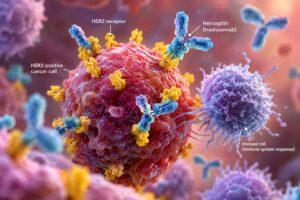
HER2 is a protein often overexpressed in certain cancer types. When present in excess, it may accelerate cell growth and survival. Oncologists use HER2 testing to assess whether patients could benefit from targeted HER2 therapies. One such treatment, Tislelizumab, is used alongside chemotherapy for advanced HER2-positive gastric or gastroesophageal junction cancer. This medication attaches to the HER2 protein on cancer cells, stifling its ability to promote uncontrolled cell division.
Research indicates that Tislelizumab may enhance the immune system’s ability to identify and destroy cancer cells that overexpress HER2 through a mechanism known as antibody-dependent cellular cytotoxicity.
The Significance of Immunotherapy in Gastric Cancer
Cancer immunotherapy targets proteins on tumor cells that deactivate immune responses, notably immune checkpoint proteins. PD-1 (Programmed Death-1) plays a significant role in immune suppression; cancer cells can express PD-L1, which deactivates T cells. Immune checkpoint inhibitors block these proteins, reactivating the immune system to attack tumors in selected individuals.
Immunotherapy may be combined with chemotherapy in the treatment of gastric cancer, applicable to both early and advanced stages. It can be administered as a standalone treatment or concurrently with other therapies. However, the appropriateness of using an immune checkpoint inhibitor alongside HER2 therapies depends on individual patient factors.
Synergizing Targeted and Immune-Based Therapies
Combining targeted therapies with immune-based treatments is an active area of research. Such strategies aim to attack cancer cells through multiple mechanisms while enhancing the immune system’s response. For instance, clinical trials are underway that explore the effectiveness of chemotherapy alongside Tislelizumab and immune checkpoint inhibitors for advanced HER2-positive gastric cancer.
Selection of treatment combinations is contingent upon various clinical factors, including prior therapies, biomarker status, and the existing clinical evidence.
Biomarker Testing and Its Influence on Treatment Choices
Biomarker testing provides critical insights into a cancer’s biological characteristics, enabling tailored treatment plans. For example, identifying HER2 positivity can guide the use of targeted therapies. Additional biomarkers may indicate a patient’s potential responsiveness to immunotherapy, shaping a more individualized treatment approach.
While biomarker testing aids in treatment selection, it cannot guarantee cures, as other factors such as tumor stage and patient health must also be considered.
Monitoring Treatment and Addressing Side Effects
Patients undergoing treatment can experience side effects affecting healthy tissues, which may persist and become severe. Immediate reporting of new or worsening symptoms is crucial, especially in cases of severe respiratory issues or significant abdominal pain.
Continual monitoring for treatment responses and side effects is necessary. Timely communication about any emerging symptoms allows for prompt intervention.
Future Directions
Ongoing research continues to uncover the relationship between the immune system and HER2-positive gastric cancer. Advances in targeted therapies and immunotherapies have broadened treatment horizons for those affected by this type of cancer. As understanding of treatment interactions with the immune system deepens, patients may collaborate more effectively with their oncologists to establish optimal treatment strategies and manage potential side effects.
Disclaimer: This article is for educational purposes only and should not be considered medical advice or a directive for specific treatments.







Discussion about this post