
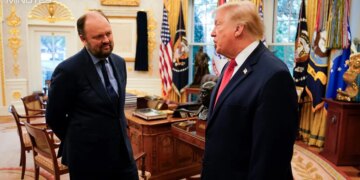









Gadi Eisenkot tasked by President Isaac Herzog with government formation.

Article content
JERUSALEM — Benjamin Netanyahu continues his role as Israel’s prime minister, but the new parliament’s less favorable dynamics could pose significant challenges ahead.
On Sunday, Gadi Eisenkot, a former military general advocating a centrist approach, received the directive from President Isaac Herzog to work towards forming a new government. This challenge is complicated as neither Eisenkot nor Netanyahu holds a commanding majority in the parliament.
Netanyahu, who has been Israel’s longest-serving prime minister, will remain in his role as caretaker until the new government is sworn in. However, the newly constituted 120-member parliament is poised to exert pressure on him.
Political analyst Assaf Shapira at the Israel Democracy Institute stated that the absence of a fresh government does not limit the Knesset’s authority.
Eisenkot has cautioned military leaders that Netanyahu lacks a mandate to initiate further military aggression against Iran, framing this not merely as a legal caution, but as a significant political statement given Netanyahu’s continued control over national security.
In the recent elections, Netanyahu’s political coalition has diminished to 53 seats, a notable decrease from the previous 68. Meanwhile, Eisenkot’s opposition bloc accounts for 48 seats. An unprecedented 19 representatives from Arab-majority parties—who are staunch adversaries of Netanyahu’s governance—also occupy seats in the new parliament, though it’s uncertain if Eisenkot intends to collaborate with them.
Potential Actions Against Netanyahu
One pivotal commitment among the opposition is the establishment of an inquiry commission to investigate security lapses that led to the catastrophic Hamas attack on October 7, 2023, which resulted in unprecedented casualties for Israel. While Netanyahu denies any personal responsibilities, his administration has resisted efforts to create a national independent commission, favoring a review led by politically appointed officials.
Even in the absence of a fully formed government, the parliament may prioritize forming a special committee to assess the attacks, setting the groundwork for an eventual commission of inquiry, according to Shapira.
Legislative Reforms
The new legislature may swiftly move to overturn certain highly contentious laws established during Netanyahu’s tenure, including his controversial judicial reform initiatives. These reforms sparked widespread protests, with concerns about Israel’s democratic stability surfacing again after the Hamas incident captured public attention.
Proposals for repeal include laws that curtailed the Supreme Court’s powers and facilitated the removal of the attorney general. Furthermore, discussions may revisit exemptions for ultra-Orthodox Jews from mandatory military service, a point of contention amid a strained military.
Electing a New Speaker
The incoming parliament’s first major confrontation will revolve around electing a new Speaker. Amir Ohana, a steadfast ally of Netanyahu from the Likud Party, currently holds this position. Parliamentary procedure allows the Speaker’s election to occur during the inaugural session, necessitating it before the new administration is officially installed.
Resistance emerged last Thursday when various parties within Eisenkot’s coalition urged that a successor be appointed at the opening session, which Shapira noted is typically expected. Ohana maintained that it is customary to finalize the Speaker election only when a new government takes office.
Key opposition figure Naftali Bennett has pledged to act promptly to assert the bloc’s agenda, claiming, “We will take control of the Knesset as quickly as possible.”







Discussion about this post