







AI Revolutionizing Logistics and Supply Chain Management
As customer expectations for next-day delivery rise, alongside increasing fuel and labor costs, the logistics industry faces significant challenges. A single port delay can have cascading effects throughout the entire supply chain. To tackle these issues, logistics teams are increasingly turning to artificial intelligence (AI). The AI market in logistics and supply chain management was estimated at $20.1 billion in 2024, with projections indicating it could soar to $196.6 billion by 2034, reflecting an impressive annual growth rate of 25.9% GMI.
This article serves as a comprehensive guide for companies planning and budgeting for 2027. It outlines 15 compelling use cases of AI currently in operation, supplemented by real-world examples. Additionally, it offers insights into upcoming trends, challenges, and actionable steps to get started.
15 AI Use Cases in Logistics
1. AI Route Optimization
Advanced routing algorithms assess traffic conditions, delivery schedules, vehicle capacities, and stop density for optimal route planning. They can also adapt routes dynamically as conditions evolve throughout the day.
In practice: UPS’s ORION system was designed to eliminate approximately 100 million miles and save about 10 million gallons of fuel annually, resulting in over $300 million in savings UPS.
2. AI Demand Forecasting
Machine learning models analyze sales history, seasonality, promotions, and local events to accurately predict product demand at specific locations. Improved forecasting directly influences stock levels, labor allocation, and transportation planning.
In practice: Walmart employs a proprietary neural network to forecast future demand, drawing insights from past trends, planned events, and both global and local influences Supply Chain Dive.
3. Inventory Optimization
AI can establish reorder points and safety stock levels for individual SKUs across locations, suggesting proactive stock movements to prevent shortages while avoiding excess inventory.
In practice: Walmart utilizes AI to provide a unified view of inventory across various facilities, enhancing decision-making Supply Chain Dive.
4. Warehouse Robotics and AI Picking
Autonomous mobile robots (AMRs) assist pickers by transporting goods or optimizing pick paths, all coordinated through AI algorithms to ensure efficiency.
In practice: DHL Supply Chain achieved over 500 million picks using LocusBots across 35 sites, with the most recent 100 million picks completed in just 154 days DHL. Amazon operates over a million robots and expects its DeepFleet AI to enhance robot travel efficiency by 10% Digital Commerce 360.
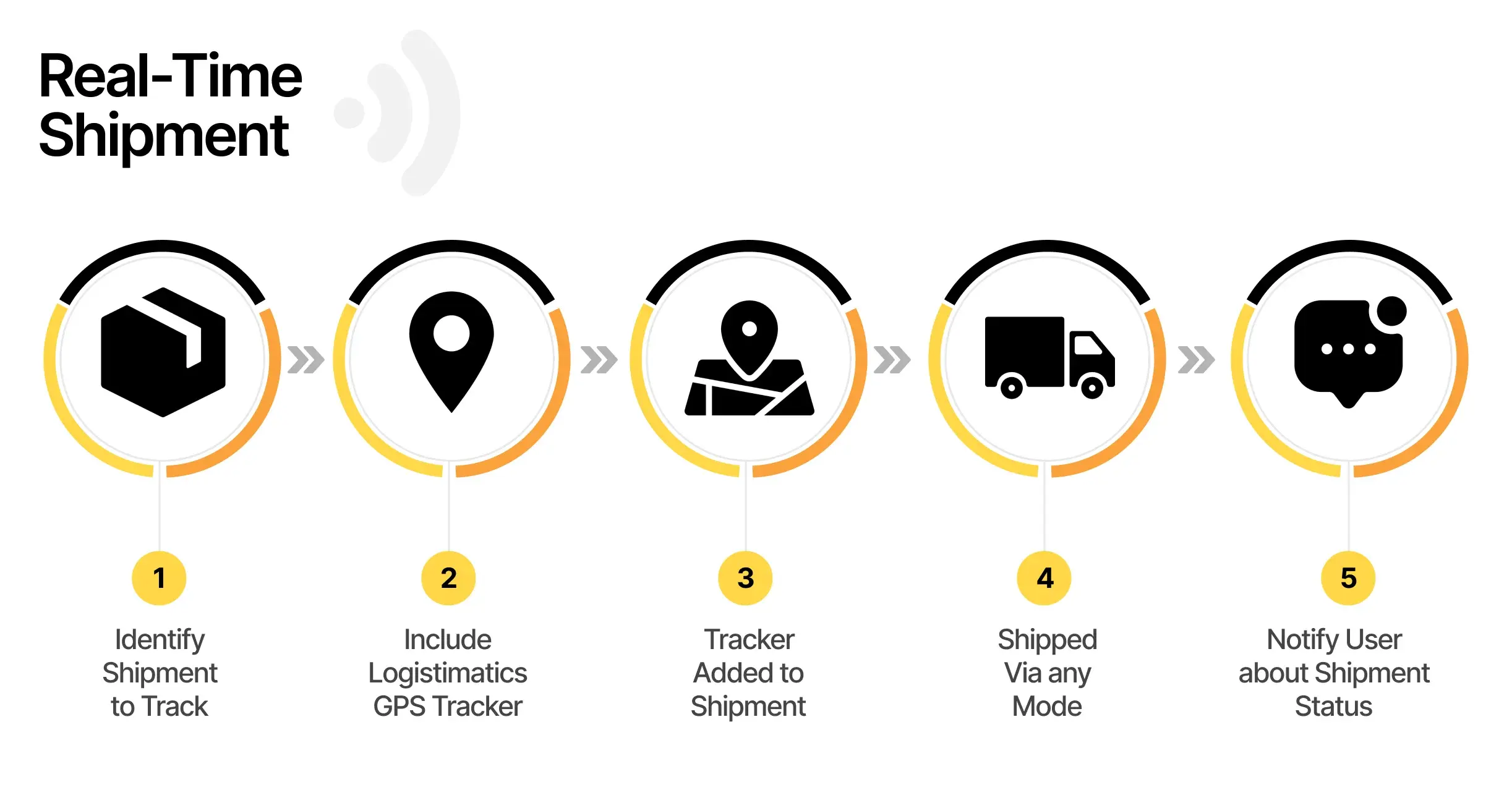
5. Real-Time Shipment Tracking and ETA Prediction
AI algorithms utilize GPS data, carrier updates, port information, and weather conditions to offer more accurate arrival time predictions, enabling teams to manage potential delays proactively.
6. Predictive Maintenance for Fleets and Equipment
By analyzing sensor data from vehicles and equipment, AI identifies wear and tear before breakdowns occur, allowing for maintenance to be scheduled during non-operational hours.
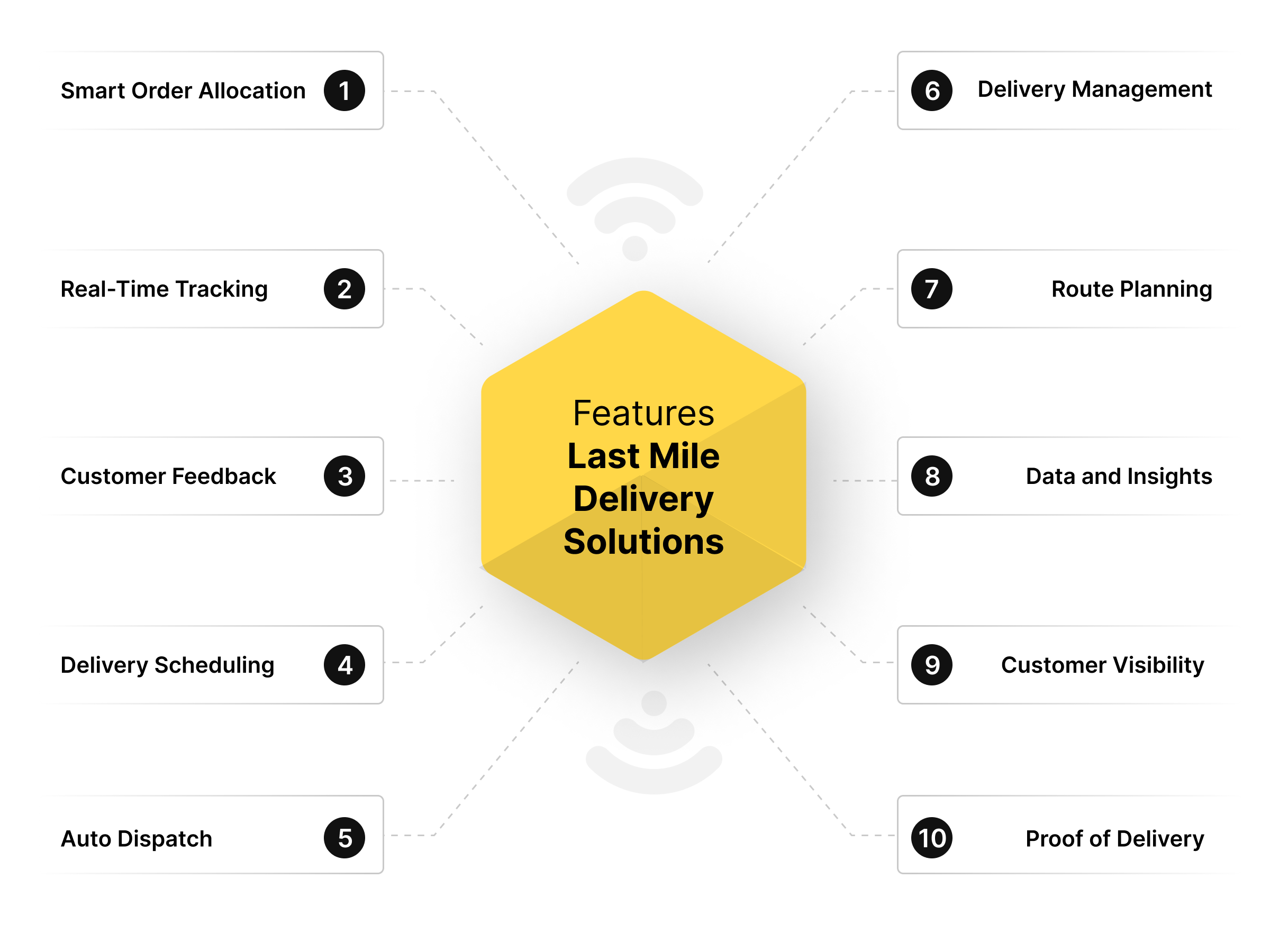
7. Last-Mile Delivery Optimization
The last mile often carries the highest costs in delivery. AI plays a crucial role in clustering orders, selecting delivery slots, assigning drivers, and predicting which deliveries may fail, thereby optimizing operational efficiency.
8. Freight Matching and Load Planning
AI facilitates efficient load matching with available carriers, minimizing empty miles while determining optimal loading strategies for trailers and containers.
9. Freight Rate Prediction and Dynamic Pricing
AI models forecast fluctuating market rates based on fuel prices and seasonal trends, enabling shippers to make timely bookings and helping carriers adjust their pricing strategies.
10. AI Document Processing
AI efficiently processes various logistics documents such as bills of lading and invoices, reducing manual data entry through automated reading and extraction of key information.
11. Cold Chain Monitoring
In sensitive sectors like food and pharmaceuticals, AI continuously monitors the conditions within storage containers, alerting teams before spoilage occurs.
In practice: Maersk’s Captain Peter assistant allows clients to track critical conditions such as temperature and humidity in real time Maersk.
12. Computer Vision for Inspection and Damage Detection
AI-powered cameras assess inbound goods for quality, label accuracy, and physical damage, automating what was once a manual inspection process.
In practice: Walmart leverages computer vision technology to ensure the quality of incoming products, including detecting spoiled produce Supply Chain Dive.
13. Supply Chain Risk and Disruption Monitoring
AI continuously scans a variety of data sources to flag potential disruptions, providing recommendations for alternative strategies.
In practice: During congestion at the Panama Canal, Walmart utilized AI to identify alternative ports and routes Supply Chain Dive.
14. Freight Audit and Fraud Detection
Anomaly detection systems review invoices and transactions to identify instances of duplicate billing or fraudulent activities prior to payment.
15. AI Customer Service for Shipment Queries
AI-driven customer service tools address common shipment inquiries, providing real-time updates based on live tracking data while escalating complex issues to human agents when necessary.
In practice: UPS integrates AI-powered customer support to manage approximately 98% of inquiries by the end of 2026 Nasdaq.
What to Expect in 2027
By 2027, the landscape of AI in logistics will evolve from merely predicting issues to actively responding to them. Gartner forecasts that spending on supply chain software employing agentic AI technology will climb from under $2 billion in 2025 to $53 billion by 2030. It is projected that 60% of companies utilizing this software will integrate agentic features by 2030, up from just 5% in 2025 Gartner. Here’s what to prepare for:
- Agentic AI Becomes Integral: Expect AI to manage complete tasks, such as rebooking delayed shipments or reconciling invoices, requiring human oversight only for critical steps.
- Autonomous Trucking Scales Up: The use of driverless freight is rapidly expanding. In early 2026, Aurora successfully completed a 1,000-mile journey with driverless technology TechSpot.
- Digital Twins Become Standard: Companies like UPS are incorporating digital twins to model potential disruptions for better operational planning Nasdaq.
- Generative AI for Documentation: AI-powered language models will improve efficiencies in drafting and reading contractual documents.
Additionally, the workforce will be affected. Gartner’s survey indicates that 55% of supply chain leaders expect agentic AI to reduce the need for entry-level hiring Gartner.
Challenges to Prepare For
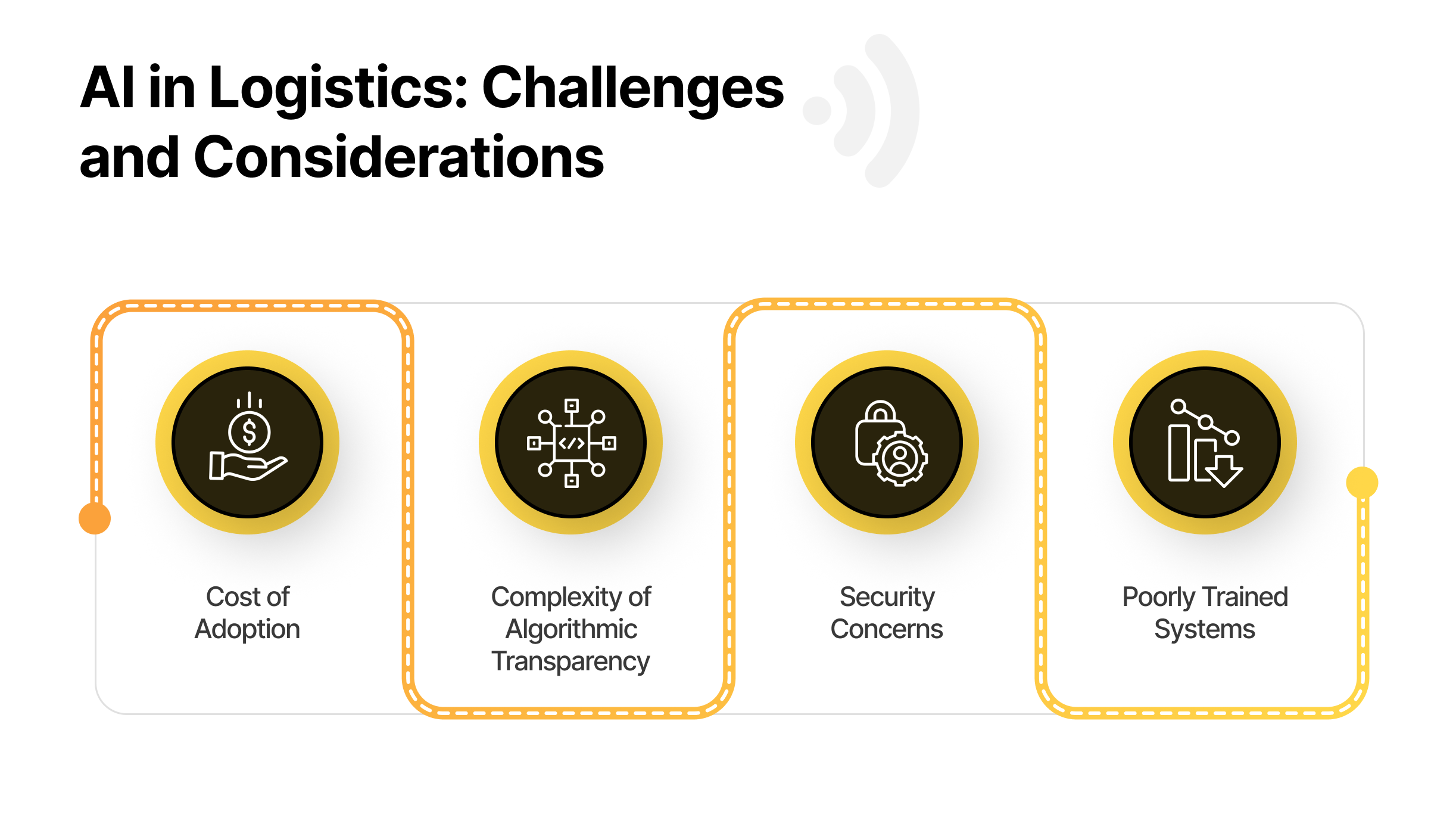
Many AI initiatives in logistics falter primarily due to issues related to data quality and system integration rather than the technology itself.
- Integration with Existing Systems: AI must interact effectively with existing transportation management, warehouse management, and enterprise resource planning systems.
- Inconsistent Data: Shipment, inventory, and carrier data often reside in disparate systems with varying formats, resulting in unreliable predictions if not properly managed.
- Initial Investment: The costs associated with software licenses, integration efforts, and skilled labor can be significant, warranting a focus on easily measurable use cases for initial projects.
- Explainability: Decision-makers need clear rationales for AI recommendations to build trust in its capabilities.
- Security and Compliance: Increased connectivity may raise vulnerability risks; stringent controls are necessary for sensitive data.
- Adoption Barriers: Engaging employees in the integration process will be crucial; without buy-in and training, advanced tools may remain underutilized.
Steps to Get Started
- Identify a High-Cost Issue: Focus on problems like late deliveries or excessive manual paperwork and quantify their financial impact.
- Assess Your Data: Ensure you possess at least a year of reliable historical data on the identified area and understand its storage.
- Conduct a Focused Pilot: Test a controlled approach with one lane, one warehouse, or one document type over an 8 to 12-week period.
- Integrate with Daily Operations: Ensure innovations are incorporated into existing tools to avoid the need for separate dashboards.
- Scale Successes: Following a successful pilot, expand to other areas, gradually transitioning to new use cases.
How Markovate Can Assist
Markovate specializes in custom AI solutions tailored to logistics teams’ specific needs. Our approach focuses on integrating seamlessly with existing TMS, WMS, and ERP systems rather than offering generic products.
- Route and Fleet Optimization: Minimize unnecessary miles and fuel consumption.
- Enhanced Demand Forecasting and Inventory Planning: Mitigate stockouts and reduce holding costs.
- Automated Document Processing: Streamline the handling of bills of lading, invoices, and customs forms.
- AI Agents: Manage exceptions, carrier inquiries, and customer queries efficiently.
Interested in identifying where AI can maximize efficiency in your operations? Engage with Markovate’s AI team for an initial focused pilot or to explore our consulting services.
Frequently Asked Questions
How is AI utilized in logistics?
AI is employed for route planning, demand prediction, inventory management, warehouse automation, shipment tracking, document processing, and customer service. Initial implementations often focus on routing, forecasting, or document handling due to their measurable ROI.
What is a notable example of AI in logistics?
UPS’s ORION routing system is a prominent example, designed to save approximately 100 million miles and over $300 million annually.
What are the costs associated with AI implementation in logistics?
Costs can vary widely based on project scope and required integrations. Starting with a focused pilot is more cost-effective than full deployment while proving the return on investment.
What AI trends in logistics can we expect for 2027?
Emerging trends include the heightened use of agentic AI, scaling of autonomous trucking services, digital twins for operational planning, and generative AI for administrative tasks.
What is agentic AI in logistics?
Agentic AI performs complete tasks autonomously rather than just making predictions. For instance, it can proactively manage delayed shipments by identifying new carriers and notifying customers.
Will AI replace jobs in logistics?
AI is likely to take over repetitive tasks such as data entry and scheduling, shifting human roles towards exception handling and decision-making, though many expect a reduction in entry-level hiring opportunities.









Discussion about this post