


Environmental Assessments Raise Questions about Paper Straws
Recent findings from South Korea indicate that paper straws, often promoted as an eco-friendly option, may pose a more significant pollution-related health risk compared to traditional plastic straws. The assessment was commissioned by the South Korean Ministry of Climate, Energy, and Environment and conducted by the Korean Society for Life Cycle Assessment.
Study Findings and Health Impact Estimates
The research involved a comprehensive comparison of various straw types—paper, conventional plastic, biodegradable plastic, and bio-based polyethylene (bio-PE)—to evaluate their impacts on human health and the environment throughout their lifecycle, from production to disposal.
According to South Korean reports, paper straws exhibited a cancer-related harm score that was 6.33 times higher than that of conventional plastic straws. This estimate reflects the pollution created during the production and disposal processes rather than the potential health risks associated with chemical exposure from using the straws.
The assessment compared how paper, plastic, and other disposable straws could affect human health and the environment, from production through disposal. (iStock)
Environmental Categories Evaluated
The assessment analyzed 16 environmental impacts, assuming that approximately 74% of discarded straws were incinerated while 26% ended up in landfills, in line with South Korean waste management statistics. Notably, conventional plastic straws outperformed others in 10 of the 16 assessed categories; however, none of the straw types excelled in all measures.
It is important to note that the study did not explore whether any chemicals from the straws leach into beverages or examine the health consequences for users.
Recommendations and Criticism
In light of the findings, researchers suggested that retailers should offer disposable straws only upon customer request, as reported by The Korea Herald. Lawmaker Kim Wi-sang criticized the regulations restricting plastic straws, asserting these alternatives have not achieved their intended ecological benefits.
Former President Donald Trump has also raised concerns about paper straws, labeling them ineffective and potentially hazardous. In February 2025, he signed an executive order to halt federal agencies from acquiring paper straws while advocating for a national strategy to phase them out.
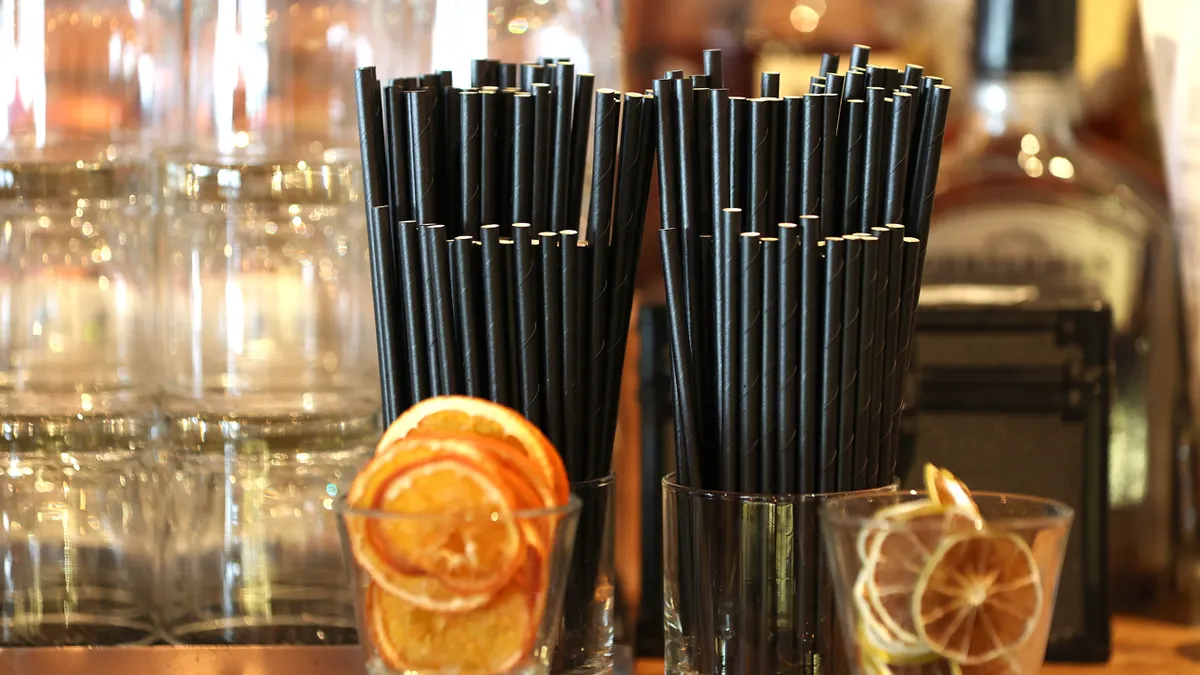
Paper straws scored higher than conventional plastic straws on one modeled measure related to cancer-causing effects, according to reports. (Justin Sullivan/Getty Images)
Continuing Health Concerns
Moreover, ongoing discussions about health concerns have been fueled by studies such as a 2023 University of Antwerp report that detected PFAS—commonly referred to as “forever chemicals”—in 27 out of 39 straw brands, with paper straws being the most frequently affected.
In a separate note, the European food-service packaging association 360° Foodservice has emphasized a commitment among its members to uphold food-contact safety by instituting a no-PFAS policy.
Fox News Digital has solicited comments from the Foodservice Packaging Institute and 360° Foodservice regarding these findings.







Discussion about this post