


The Birth of the Portable Computer
In April 1981, the West Coast Computer Faire in San Francisco was abuzz with hobbyists, engineers, and tech enthusiasts. Amid the sea of traditional desktop computers, one device stood out, capturing the attention of all present: a portable computer.
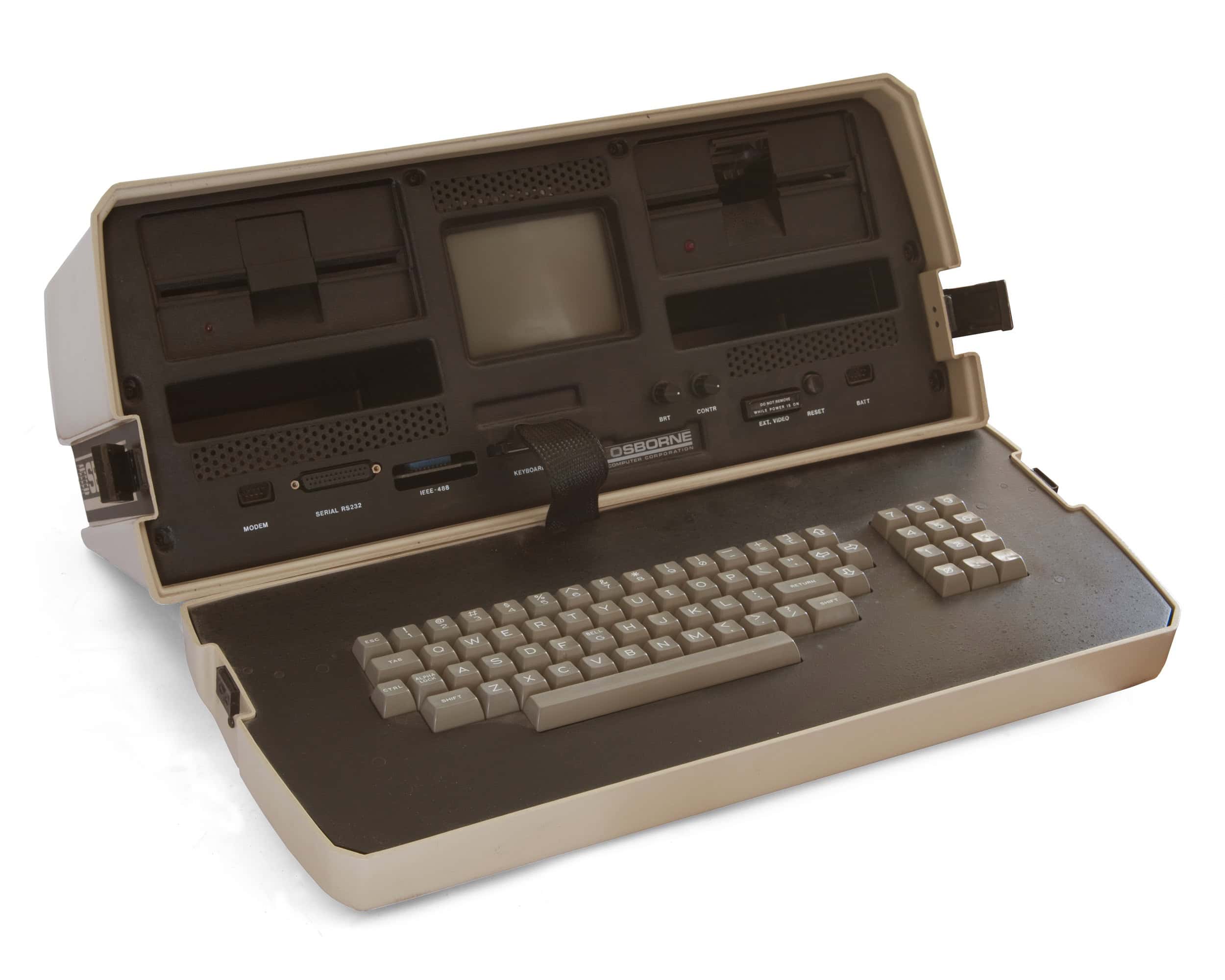
Despite Time Magazine’s description of it as resembling “a cross between a World War II field radio and a shrunken instrument panel of a DC-3,” the device created quite a stir. This was the Osborne 1, heralded by its creator, Adam Osborne, as the world’s first portable computer. While it provided a semblance of portability, weighing in at 24.5 pounds and requiring a wall socket for power, it enabled journalists to send stories from hotel rooms.
Initial reactions to the Osborne 1 were mixed. Attendees were skeptical of its five-inch display, which some compared to a toy, and jests regarding its “portable” designation were common. However, those who learned of its $1,795 price tag—along with the impressive software package—began to reconsider. Many were drawn in by the fact that it featured nearly $1,500 worth of included software.
By the second day of the fare, the Osborne Computer Corporation’s booth was a hive of activity, with InfoWorld confirming that the most common question was about the newcomer to the computing scene. What began with skepticism soon turned to enthusiasm, as the word spread about the Osborne 1’s value at a striking price point.
The Osborne 1 had, undeniably, taken center stage at the event.
The Office in a Portable Package
The design of the Osborne 1 emphasized its utility for travelers. Enclosed in an ABS plastic shell, the device was touted as the only computer compact enough to fit under an airline seat. While the term “portable” might have been somewhat misleading, it certainly piqued the interest of many.
Upon opening the front panel—technically, a detachable keyboard—users discovered a five-inch monochrome CRT screen accompanied by two 5.25-inch floppy disk drives. The keyboard attached securely when the unit was closed, making it an all-in-one solution.
The screen could display 52 characters across 24 lines of text. Despite its limitations, users could connect an external monitor for a broader 80-column view. Each floppy disk could hold 90 KB, suitable for modest files or small applications.
However, the real appeal lay in the software bundled with the unit. It came preloaded with the CP/M 2.2 operating system, essential applications like WordStar and SuperCalc, and both Microsoft BASIC and CBASIC programming languages. Later models even included dBase II, a leading database program. Although Osborne admitted that the device’s speed was merely adequate, its readiness for office tasks was a significant advantage.
The concept of portability quickly resonated with professionals. Journalists were early adopters; James Fallows from The Atlantic famously switched from a typewriter to the Osborne 1, even declaring he would “sell his computer before he’d sell his children.” David Kline ventured into the mountains of Afghanistan with the device to report on the Soviet-Afghan conflict.
For journalists, the Osborne 1 revolutionized work dynamics, transforming hotel rooms, jungles, and battlefields into makeshift newsrooms. Legal professionals utilized it in courtrooms for quick access to documents, while accountants performed on-site calculations for clientele using SuperCalc.
Rapid Ascent to Prominence
Osborne, a former technical writer, anchored his efforts on creating an affordable, all-in-one computer, and his gamble paid off dramatically. By June 1981, the first units were shipped, and by September, the company celebrated its first million-dollar month.
By early 1982, shipments soared to 10,000 units monthly, with first-year sales reaching $73 million and doubling the following year. Analysts remarked on Osborne’s meteoric rise, with some asserting his significance rivaled that of industry giants like Bill Gates and Steve Jobs.
The success of the Osborne 1 inspired numerous competitors. The Kaypro II was launched in 1982, featuring a larger screen and improved drives, while IBM-compatible models like the Compaq Portable soon emerged. By 1982, TIME Magazine noted the appearance of at least a dozen portable computers at an industry conference.
The Downfall and the Osborne Effect
As competition intensified, Osborne began developing successors: the Osborne Executive and a smaller model known as the Vixen. In January 1983, Osborne hinted to the media that these improved machines were on the horizon. As a result, dealers curbed orders for the original Osborne 1, dubious about investing in what seemed an outdated model.
The Executive, launched in April 1983, featured enhancements but still operated on the CP/M system. As the IBM PC became the standard, unsold Osborne 1 units accumulated, forcing Osborne to reduce prices in a desperate attempt to salvage the situation.
In June, reports of a cash crisis surfaced. The company faced layoffs, factory closures, and a canceled IPO. Ultimately, on September 13, 1983, Osborne Computer filed for bankruptcy, epitomized by an image of Adam Osborne shielding his face with a briefcase as he exited the building.
The term “Osborne Effect” became synonymous with the risks of premature product announcements. The company’s decline resulted from a combination of factors, including market shifts and an aggressive expansion strategy, compounded by management changes that stifled Osborne’s vision.
Legacy and Conclusion
Under bankruptcy protection, the Osborne 4 Vixen was introduced in 1984, but it failed to capture market interest. In 1986, the Osborne Computer Corporation ceased operations altogether.
In a reflective interview in 1984, Osborne acknowledged the industry had favored larger corporations and cautioned aspiring entrepreneurs. His memoir, Hypergrowth, detailed his experiences, attributing part of the downfall to banking issues and management shifts.
Eventually, he founded Paperback Software, aiming to offer budget-friendly business software, but legal challenges over design similarities stifled that venture as well.
Throughout the following decades, Osborne dabbled in various projects but remained somewhat obscured in the annals of computer history. After a series of strokes, he passed away in 2003 at the age of 64.
Today, the Osborne 1 is recognized in museums and collections, often still operational. Its significance is sometimes overlooked; it demonstrated the viability for portable computing, laying the groundwork for future laptops and tablets, and showcased a cautionary tale regarding rapid innovation and market adaptability.
For a fleeting moment, the Osborne 1 symbolized the future of computing. It revolutionized how and where computers could be utilized, only to fade nearly as quickly. This narrative melds inspiration with caution, highlighting the intricate relationship between innovation and obsolescence in technology.
This article originally appeared in August 2025 and has been updated for clarity before republishing.





Discussion about this post