








Published on
Visegrád Four Leaders Express Concerns Over EU Budget Proposal
At a meeting held in Bratislava on Monday, the prime ministers of the Visegrád Four (V4) countries raised significant concerns regarding the European Union’s proposed budget for the next seven years. The leaders criticized the budget’s spending priorities and the inclusion of financial support for Ukraine.
Economic Cooperation and Budget Discussions
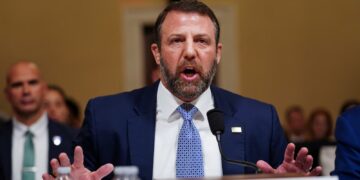
The V4 leaders convened alongside the Austrian Chancellor to discuss matters of economic collaboration, migration policies, and the draft budget. Hungarian Prime Minister Péter Magyar expressed strong disapproval of the budget proposal, labeling it an inadequate foundation for negotiations. He indicated that he has communicated with European Council President António Costa, suggesting that a scheduled special council meeting later in the week would likely yield no productive outcomes.
Czech Prime Minister Andrej Babiš echoed similar sentiments, expressing disappointment that the European Commission had not demonstrated a commitment to cost-saving measures. He questioned the necessity of maintaining multiple locations for the European Parliament, highlighting the associated financial burdens and raising concerns about member state contributions.
Slovak Prime Minister Robert Fico, who hosted the meeting, clarified that while a unified position on the budget was not established, the leaders generally aligned on the overarching issues at hand.
Debate Over Funding for Ukraine
Polish Prime Minister Donald Tusk focused primarily on security matters, stressing Poland’s dedication to peace and acknowledging the repercussions of Russia’s invasion of Ukraine on his country. Tusk emphasized the strategic importance of continued support for Kyiv, asserting that Ukraine’s ability to defend itself is critical for European security.
In contrast, Prime Minister Magyar cautioned against including support for Ukraine in the EU budget, arguing that while Ukraine deserves solidarity, financial assistance should not be made a mandatory contribution for all member states. He reaffirmed Hungary’s current efforts to aid Ukraine without binding financial obligations within the EU framework.
Tusk also expressed skepticism about the EU financing Ukraine through joint borrowing, a strategy Hungary has already rejected. This divergence in perspectives highlights the complexities surrounding the issue of financial support for Ukraine within the EU budget discussions.
Regional Cooperation and Migration Policies
During a press conference following their discussions, the V4 leaders underscored the importance and feasibility of regional cooperation, noting their common ground on several crucial topics. Fico remarked that the V4 countries and Austria share similar views on cohesion policy, migration, and agricultural strategies.
The leaders collectively addressed the pressing issue of illegal migration, advocating for stringent regulations and their consistent enforcement. Fico also commended a proposal for certain EU member states to establish immigration return hubs in Rwanda.
Austrian Chancellor Christian Stocker affirmed the significance of cooperating with neighboring countries, expressing a desire for Austria to align closely with the V4 nations. He noted that enhanced collaboration will aid in better informing the rest of the EU about developments in Central and Eastern Europe and the strategic priorities that influence the region.




Discussion about this post