








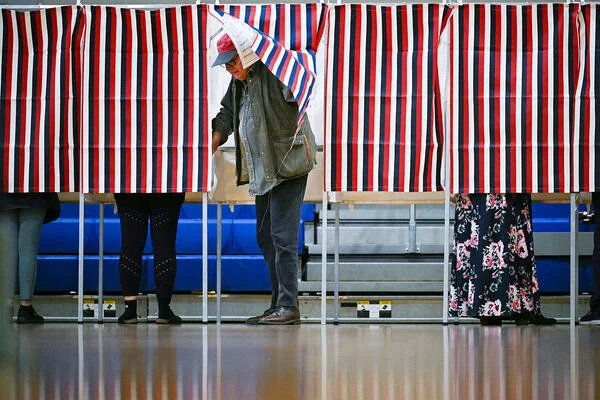
Historic Election Results Signal Shift in American Politics
The recent election and the subsequent Democratic surge highlight a growing dissatisfaction among the American electorate, particularly among younger and more educated voters, regarding the leadership of the Trump administration. This wave of voter sentiment is expected to have longstanding implications.
Voter turnout among those aged 18 to 29 played a pivotal role in the Democratic victories across the House, Senate, and various gubernatorial races, with 70% casting their votes for Democratic candidates, as reported by The New York Times. This marks a notable 17-point increase from the previous election cycle in 2024. Additionally, support from Black, Latino, and college-educated voters proved instrumental to Democratic success.
While votes are still being tallied in some races, preliminary results indicate that Democrats secured a 54-to-44 majority in the Senate and a 237-to-147 majority in the House. Moreover, the party successfully flipped several key governorships in states like Iowa, Ohio, and Texas, while also dismantling Republican supermajorities in multiple state legislatures. Experts suggest these results represent a significant generational power shift.
Implications for Higher Education
The outcomes of both state and national elections provide a favorable environment for advocates pushing for increased affordability in higher education, as well as for policies aimed at countering the Trump administration’s approach. Advocacy groups will be closely monitoring how the newly elected Democrats fulfill their campaign promises.
1. Key Republican Figures in Higher Education Defeated
In a dramatic shift in Congress, several prominent Republican lawmakers known for their influence on higher education policy were unseated. Notably, Susan Collins of Maine, the chair of the Senate Appropriations Committee, lost her seat.
Collins was known for her moderate stance on educational issues, often advocating for low-income and first-generation students. She successfully protected programs such as TRIO and the Pell Grant from budget reductions and worked with Democrats to prevent redirecting congressional funds. Her successor, Troy Jackson, has committed to addressing educational funding and college affordability.
Another significant loss for Republicans was Rep. Virginia Foxx from North Carolina, who faced a narrow defeat against Democrat Chuck Hubbard. Foxx, who had served as chair of the House Education Committee, was a staunch opponent of various bipartisan higher education legislative efforts and efforts to modernize education data tracking.
2. Changes in State Governance
Republicans have traditionally faced minimal opposition in their attempts to reshape public higher education policies. However, this election saw Democrats regain control in several statehouses, which could impact the governance and funding of universities significantly.
Democrats successfully flipped the governor’s mansions and gained major ground in key states, enabling them to potentially reverse harmful legislation affecting higher education. This shift is seen as an opportunity to restore collective bargaining rights and enhance university governance.
3. AAUP’s First-Endorsement Success
The American Association of University Professors (AAUP) made history by endorsing political candidates for the first time, backing a total of twelve Democrats across several states. Eleven of these candidates emerged victorious, signifying a successful debut for the organization’s political involvement.
Notably, Abdul El-Sayed, endorsed by AAUP, won the Senate seat in Michigan. This success reinforces the organization’s commitment to influencing higher education policies through political engagement.
4. Advances and Setbacks on Ballot Measures
Voters in multiple states took to the polls to decide on various ballot measures related to education and civil rights. States like Arizona and Nebraska approved prohibitions regarding the participation of transgender students in collegiate sports, while also introducing restrictions on access to facilities that align with their gender identity.
Conversely, voters in Wisconsin passed an amendment to the state Constitution that restricts preferential treatment based on race, sex, or ethnicity in public institutions. However, funding measures for higher education received robust support, particularly in Rhode Island and New Mexico.
5. Optimism for the Future of Higher Education
The recent election results spark hope among higher education advocates that a more Democratic Senate and House will lead to increased support for colleges and universities. Organizations emphasize the need to address rising costs and student debt, advocating for policies that enhance educational access for all Americans.
Mike Gavin, CEO of the Alliance for Higher Education, expressed optimism about the new Congress’s potential to make higher education more affordable and accessible. Advocates are holding the newly elected lawmakers accountable for addressing these pressing issues, signaling a renewed commitment to ensuring that education remains an attainable goal for working-class Americans.









Discussion about this post