The battery energy storage system (BESS) market is experiencing rapid growth, notably within the residential sector, with Germany emerging as a leader in this transition. However, apprehensions regarding battery safety are a stumbling block, hindering wider acceptance and continued growth in the BESS market.
A comprehensive report, compiled by industry experts of Sigenergy and THEnergy and backed by extensive research, sheds light on the current state of BESS safety and offers actionable insights to mitigate risks. Titled “Energy Storage Battery Safety in Residential Applications” the report delves into key measures to improve battery safety and regain trust among potential storage customers.
The battery energy storage system (BESS) market is experiencing rapid growth, notably within the residential sector, with Germany emerging as a leader in this transition. However, apprehensions regarding battery safety are a stumbling block, hindering wider acceptance and continued growth in the BESS market.
Recent incidents of battery-related fires and explosions in Germany have underscored the urgent need for enhanced safety standards in BESS installations. Despite a relatively low real fire risk, safety concerns are deterring a quicker adoption of energy storage solutions in many countries.
The report identifies a discrepancy between cost optimization and battery safety among the majority of manufacturers. While norms and certifications set market standards, they often fall short of addressing the top safety concerns of residential customers. The report emphasizes the critical importance of incorporating additional safety features beyond regulatory requirements to address these concerns effectively.
To empower installers and potential BESS customers in making informed decisions, the report provides a detailed comparison of energy storage solutions based on their safety features. It also highlights that many customers are willing to pay for enhanced safety measures that exceed market standards.
Furthermore, the report advocates for the evolution of norms, standards, and certifications to keep pace with technological advancements and emerging safety concerns. By encouraging BESS providers to adopt the safety measures outlined in the report, market pressure will mount for stricter safety regulations across the industry.
“Sigenergy, a new dynamic company for ESS set to redefine battery safety, is spearheading efforts to enhance safety standards and gain consumer confidence”, adds Dr. Thomas Hillig, co-author of the report and director of the consultancy THEnergy. He adds that, by publicly sharing their knowledge and insights gained from extensive testing and real-life applications, Sigenergy aims to set a benchmark for safety in the ESS market and drive positive change industry-wide.”
Tony Xu, Founder and CEO at Sigenergy adds that “this comprehensive safety report serves as a call to action for stakeholders across the battery energy storage sector to prioritize safety and innovation. Together, we can ensure the continued growth and sustainability of the BESS market while safeguarding the well-being of consumers and communities.”
For more information, have a look at the full report online at:
With over 30 years of dedicated service to the company, including his previous role as VP of Sales, Rick brings a wealth of experience and expertise to his new position.
LIVERMORE, CA – Quickscrews International/QuickBOLT is proud to announce the appointment of Rick Gentry as the Vice President of Product Development. With over 30 years of dedicated service to the company, including his previous role as VP of Sales, Rick brings a wealth of experience and expertise to his new position. In this capacity, Rick will lead the strategic development of innovative products tailored to the needs of woodworkers and solar installers.
Motivated by his extensive industry background and a passion for leading solutions-based development, Rick’s appointment aligns seamlessly with Quickscrews International/QuickBOLT’s vision of providing well-engineered, affordable, and readily available fasteners and mounts to solve industry challenges.
Rick’s unique skills and deep understanding of the market position him to make a significant impact by introducing ingenuity into product categories where Quickscrews International/QuickBOLT aims to expand its presence. His objective is to guide the product design team in streamlining installation processes, enhancing durability, and improving overall user experience.
This promotion reflects Rick’s outstanding contributions and expertise within the company, highlighting Quickscrews International/QuickBOLT’s commitment to fostering career growth and recognizing talent from within its ranks.
“I am excited about the opportunities ahead in leading product development at Quickscrews International/QuickBOLT,” said Rick Gentry. “I look forward to collaborating with our teams to drive innovation, deliver exceptional products, and exceed customer expectations.”
Quickscrews International/QuickBOLT congratulates Rick Gentry on his new role and looks forward to the continued success and growth under his leadership.
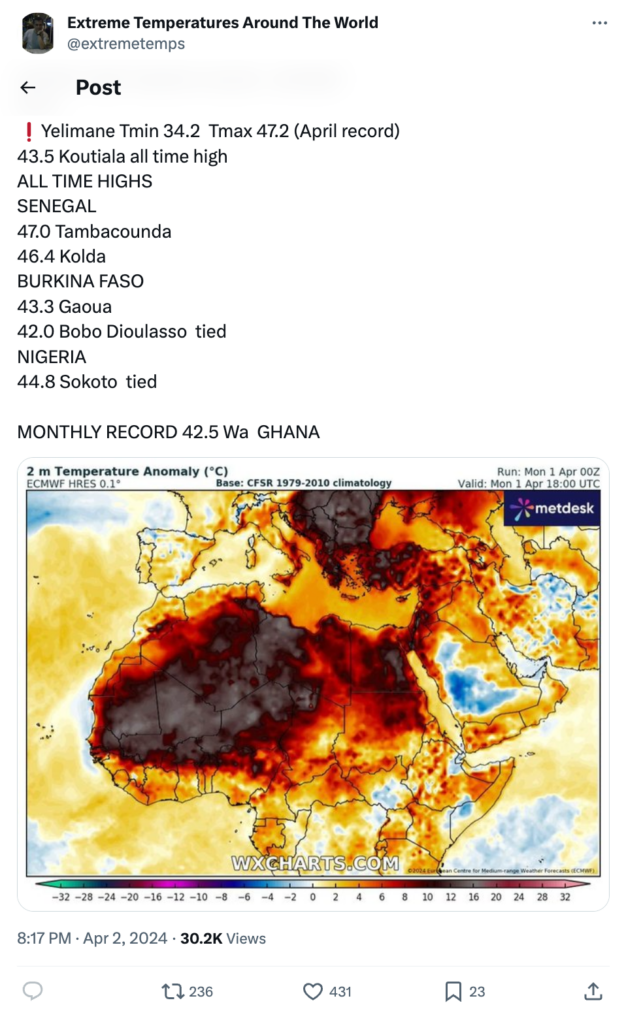
Since the start of this year, Africa’s most populous nation Nigeria has faced prolonged stretches of severe heat.
A recent quick-fire analysis found that the conditions in February, when temperatures exceeded 40C, were made 10 times more likely by human-caused climate change.
But the heat is still ongoing, with temperatures reaching a record 44.8C in Sokoto, a city in north-western Nigeria, on 1 April.
With records of heat and its impacts lacking in Nigeria, Carbon Brief speaks to doctors, farmers and meteorologists about how this episode of extreme weather is affecting the country.
Health impacts
The ongoing extreme heat in Nigeria is having a range of health impacts – and most of these are not being routinely recorded, experts tell Carbon Brief.
On 28 March, Nigeria’s national electricity grid collapsed, plunging the country into a general blackout for the second time during the heatwave.
Despite its wealth of oil and gas, blackouts are common in Nigeria and many people rely on petrol and diesel generators to cool their homes. However, fuel prices have skyrocketed in the past year, putting such alternatives out of the reach for many Nigerians.
The impact of the heat is “catastrophic”, Dr Ugo Uguwanyi, a doctor in Abuja, Nigeria’s capital city, tells Carbon Brief:
“Don’t even bother to step out from 10am to 6pm. And make sure you burn the diesel to power the air conditioning to be able to sleep at night.”
Information about the heatwave’s impact is limited, but this does not mean the weather conditions are not dangerous, according to the authors of the recent analysis into the role of climate change in Nigeria’s extreme heat. Rather, a lack of systematic reporting may obscure what they described as a “silent killer”.
The study’s authors called for “improved monitoring and research on the impacts and risks associated with heatwaves”.
Nigeria’s dry season runs approximately from December through to March – although it is longer in the north of the country and shorter in the south. Temperatures build during this season, typically bringing more reported cases of “meningitis, stress, stroke, blood pressure and stroke”, Dr Uguwanyi says.
Such cases are likely to increase during intense heatwaves, which are projected to become more common if global warming continues to accelerate, he adds.
Dr Ebbi Robinson, chairman of the Nigeria Medical Association in the oil-rich, southern state of Rivers, adds that while “there is no specific documentation”, extreme heat typically brings an increase in hospital visits to dermatologists, with symptoms such as rashes and itching.
He says that his association is rolling out new methods to warn people of the health impacts from extreme heat:
“We are making radio jingles and banners to let people know these heatwaves are real and sensitise them on how to mitigate against the direct and indirect consequences.”
In mid-February, the Nigerian Meteorological Agency (NiMet) issued a public forecast warning on the prolonged heatwave.
The agency advised citizens to stay hydrated, wear light clothing and avoid direct exposure to high temperatures during peak periods. A group of Nigerian doctors also issued safety tips.
Wasiu Adeniyi Ibrahim, a meteorologist at NiMet, tells Carbon Brief:
“Heatwaves, characterised by prolonged periods of excessively hot temperatures and humidity, are becoming more frequent and intense.
“We have observed a departure of 2-4C from normal (long-time average temperature, 1991-2020) in the month of February. It is clear that climate change is bringing more and more dangerously hot days to Africa.”
Workforce impacts
In February, NiMet’s director of weather forecast services, Vincent Weli, advised that a state of emergency be declared in states most affected by the heatwave and workers be allowed to take breaks between noon and 3pm. Speaking to Nigeria’s Channels Television, Weli said:
“Of course, you know, with high temperature, cognitive development will be affected and productivity will be affected. There will be a loss of concentration.”
The call was necessary as “the condition was favourable for an outbreak of meningitis”, Ibrahim explains to Carbon Brief:
“We observed high dust concentration combined with this excessive heat which could trigger a meningitis outbreak. Epileptic power supply, low ventilations and other factors could make the situation worse, if not properly controlled.”
Meningitis, an inflammation of the membranes covering the brain and the spinal cord, is more easily spread in extreme heat and dusty conditions.
However, no such directive has been issued by state governments.
“Many state governments in Nigeria are not taking weather and climate information very seriously,” Ibrahim says.
Meanwhile, in Lagos, Nigeria’s most populated city, ride-hailing drivers are operating under “melting” conditions, stuck between preserving their health or livelihood, according to a Rest of World report.
Agricultural impacts
The heatwave is also expected to reduce agricultural productivity, a sector that contributes about 22% to Nigeria’s gross domestic product (GDP) and accounts for more than a third of total employment. Ibrahim tells Carbon Brief:
“Heatwaves can reduce agricultural productivity by causing heat stress to crops and livestock.
“It could negatively affect crop growth and development by disrupting physiological processes, such as photosynthesis, respiration and water uptake. High temperatures can lead to wilting, leaf scorching and reduced nutrient uptake, impairing plant growth, fewer fruits and reducing yields.
“In animals, heatwaves may reduce feed intake, lower weight gain, decrease milk production, reduce reproductive performance and [cause] animal mortality, if proper mitigation measures are not in place.”
Cattle in the shade of a tree in Nigeria. Credit: Jorge Fernandez / Alamy Stock Photo
Again, there is not a lot of data on how the current heat is affecting agriculture in Nigeria.
However, the national secretary of the All Farmers Association of Nigeria, Yunusa Halidu, tells Carbon Brief its members expect the heatwave to affect productivity yield this year. He says:
“The heat is extreme this year,although we have been expecting it, as we work with the Nigerian Meteorological Agency. We know it is global warming and we are working to see how we can mitigate the effects.”
A shorter version of this article was first published in DeBriefed, Carbon Brief’s weekly climate newsletter, on 5 April. Subscribe for free.
Climate change made west Africa’s ‘dangerous humid heatwave’ 10 times more likely
Attribution
|
21.03.24
No ‘statistically significant’ link between climate change and Chile’s wildfires
Attribution
|
22.02.24
Climate change: Intensity of ongoing drought in Syria, Iraq and Iran ‘not rare anymore’
Attribution
|
08.11.23
Analysis: Africa’s extreme weather has killed at least 15,000 people in 2023
• Operating portfolio of 10,934 MW, largest in India
• 2,000 MW solar capacity at Khavda, contributes to this milestone
• 2,848 MW renewables capacity brought on stream in FY24
Ahmedabad, 3 April 2024: Adani Green Energy Limited (AGEL), India’s largest and one of the world’s leading renewable energy (RE) companies, has surpassed 10,000 megawatts (MW) of operational portfolio, delivering reliable, affordable, and clean power to the national grid. AGEL’s operational portfolio consists of 7,393 MW solar, 1,401 MW wind and 2,140 MW wind-solar hybrid capacity. The milestone is a testament to AGEL and its development partners firmly moving towards the goal of 45,000 GW renewable energy by 2030.
AGEL’s 10,934 MW operational portfolio will power more than 5.8 million homes and avoid about 21 million tonnes of CO2 emissions annually.
AGEL is setting a precedent for how innovative technology, execution capabilities, digitization, a robust supply chain network, and long-term infrastructure financing, combined with sustainable practices, can drive the clean energy transition and decarbonization on a giga scale.
“We are proud to be India’s first das hazari in the renewables space,” said Mr Gautam Adani, Chairman of the Adani Group. “In less than a decade, Adani Green Energy has not just envisioned a greener future but has actualised it, growing from a mere idea to explore clean energy to achieving a phenomenal 10,000 MW in installed capacity. This achievement is a demonstration of the rapidity and scale at which the Adani Group aims to facilitate India’s transition to clean, reliable and affordable energy. In our drive towards 45,000 MW by 2030, we are building the world’s largest renewable energy plant in Khavda — a 30,000 MW project unparalleled on the global stage. AGEL is not just setting benchmarks for the world but redefining them.”
In line with AGEL’s pledge to enhance natural and social capital, the company is pursuing sustainable practices across its operations. AGEL’s unwavering focus on energizing a sustainable future for all is aligned to the United Nations Sustainable Development Goals of affordable and clean energy, decent work and economic growth, industry, innovation and infrastructure, water stewardship, waste management and a circular economy, biodiversity management and climate action. AGEL’s operating portfolio is certified ‘single-use plastic free’, ‘zero waste-to-landfill’ and ‘water positive for plants with more than 200 MW capacity’.
AGEL’s 10,000 MW contribution to India’s RE goals
– Largest greenfield expansion in India’s RE sector
– Represents about 11% of India’s installed utility-scale solar and wind capacity
– Contributing over 15% of India’s utility-scale solar installations
– Over 3,200 direct green jobs created
Provided blueprint for giga-scale development globally
AGEL is developing the world’s largest renewable energy project of 30,000 MW on barren land at Khavda in Kutch, Gujarat. Built across 538 sq km, it is five times the size of Paris and almost as large as Mumbai city. AGEL has operationalized 2,000 MW cumulative solar capacity (i.e. over 6% of the planned 30,000 MW) within 12 months of commencing work. Work at Khavda continues at a fast pace, with AGEL leveraging the project execution capabilities of Adani Infra, the manufacturing expertise of Adani New Industries Limited, the operational excellence of Adani Infrastructure Management Services Ltd. and the robust supply chain of our strategic partners.
About Adani Green Energy Limited
Adani Green Energy Limited (AGEL) is India’s largest and one of the leading renewable energy companies in the world, enabling the clean energy transition. AGEL develops, owns, and operates utility scale grid-connected solar, wind and hybrid renewable power plants. With a locked-in growth trajectory up to 21.8 Gigawatt (GW), AGEL currently has an operating renewable portfolio of over 10.9 GW, the largest in India, spread across 12 states. AGEL is credited with developing several landmark renewable energy power plants. The company has set a target of achieving 45 GW by 2030 aligned to India’s decarbonization goals. AGEL is focused on leveraging technology to reduce the Levelized Cost of Energy (LCOE) in pursuit of enabling largescale adoption of affordable clean energy. AGEL’s operating portfolio is certified ‘water positive for plants of more than 200 MW capacity’, ‘single-use plastic free’ and ‘zero waste-to-landfill’, a testament to the company’s commitment of powering sustainable growth. Visit: www.adanigreenenergy.com
Sungrow, a global leading PV inverter and energy storage system supplier, will be premiering its thrilling new liquid-cooled energy storage system, PowerTitan 2.0. With over 10GWh of shipments, Sungrow’s energy storage systems have generated significant buzz among clients who are impressed with their capabilities.
Sungrow, a global leading PV inverter and energy storage system supplier, will be premiering its thrilling new liquid-cooled energy storage system, PowerTitan 2.0. With over 10GWh of shipments, Sungrow’s energy storage systems have generated significant buzz among clients who are impressed with their capabilities.
What truly distinguishes PowerTitan? The PowerTitan ESS series showcases Sungrow’s exceptional proficiency in power electronics, electrochemistry, and grid support. With the introduction of the PowerTitan 2.0 version, it transcends the boundaries of a mere all-in-one solution. It seamlessly integrates an innovative AC storage design, embedded PCS, standard 20-foot 5MWh full liquid cooling, and a robust 10MWh battery energy storage system. Throughout its lifespan, the string PCS facilitates independent charging and discharging of battery racks, leading to a noteworthy boost of over 8% in the system’s discharged energy capacity.
When it comes to safety, PowerTitan 2.0 takes no risks. Its extensive safety design, encompassing the cell, electrical, and system levels, guarantees that this energy storage system is fully equipped to handle any challenge.
As the ESS industry witnesses a surge in the Middle East region, Sungrow’s presentation arrived at an opportune moment, and we have made exclusive arrangements for our event.
For more information, stay tuned to our website or follow us on social media. We can’t wait to share this exciting journey with you!
Field study demonstrates that Genius Tracker 1P requires 28% less labor to construct than the average of three competitive, market-relevant 1P trackers.
GameChange Solar, a leading global supplier of solar tracking solutions for ground-mounted PV plants, has released the results of a comprehensive third-party time study on the installation of its Genius Tracker™ solar trackers. The study, conducted by Eclipse-M, an industry-leading provider of OEM time studies, concluded that the Genius Tracker™ required 28% less labor to construct than the average of three market-relevant 1P trackers.
The time study was based on observations in the field at a 456 MW solar power plant in Texas, at the GameChange Solar training facility, and several other projects Eclipse-M has performed on-site observations for over the past five years. This data was then compared to historical records of similar activities in the Eclipse-M database for other industry-relevant trackers. Charles Bishop, vice president of field operations at GameChange Solar, worked closely with Eclipse-M over the 3-month period to help ensure they were getting accurate data from the sites.
Key findings of the study include:
The Genius Tracker™ 1P system demonstrated significant productivity advantages over competitors, requiring 28% less labor to construct than the average of three market-relevant 1P trackers.
GameChange Solar’s emphasis on factory pre-assembly and relatively lower part count significantly streamlines installation processes, reducing labor requirements and simplifying logistics and materials handling operations.
The SpeedClamp™ system provides for module installation with only two bolts per module, including the attachment of the module clamp itself.
The drive system and structure of the Genius Tracker™ IP are deemed best-in-class regarding productivity per megawatt (MH/MW). At the same time, module installation is notably faster than other market-relevant 1P trackers.
Innovative features such as the two-piece post-top tube attachment system contribute to faster and more accurate installations, with potential adjustments in all required directions.
GameChange Solar provides customers with an advanced online shipment status portal, which provides real-time logistics information down to the container-content level and facilitates efficient shipment scheduling to align with construction timelines.
Key factors contributing to this productivity result include constructability enhancements, simplified tooling requirements, unique and simple-to-install components, and comprehensive construction support services provided by GameChange Solar.
Lean construction methods could reduce labor by up to 40% in standard wind sites.
“The findings of this time study demonstrate GameChange Solar’s commitment to our customers in the way we innovate both for construction and logistics efficiency of our solar trackers, said Derick Botha, chief commercial officer at GameChange Solar. “We are proud to offer our customers a solution that not only maximizes energy output but also minimizes construction time and labor costs.”
“The process of creating this report was greatly enhanced by the support of the entire GameChange team, from the field to the C-Suite,” said Bill Poulin, managing partner at Eclipse-M. “We appreciated the focus of the team, which helped us generate a comprehensive report.”
The complete report is available upon request by emailing info@gamechangesolar.com.
For more information about GameChange Solar and its Genius Tracker™ system, please visit https://gamechangesolar.com/tracker.
About GameChange Solar
GameChange is a leading global provider of solar tracker solutions used in utility-scale and ground-mounted distributed generation solar projects around the world. We have delivered over 30 GW of solar tracker and fixed tilt systems that combine fast installation, bankable quality, and unbeatable value through superior engineering, innovative design, and high-volume manufacturing. Our products enable solar panels at power plants to follow the sun’s movement across the sky and optimize plant performance while also protecting the array from damaging weather conditions.
About Eclipse-M
Eclipse-M is an industry leading provider of OEM time studies, lean construction systems and EPC training as well as project execution systems. Eclipse-M has served more than 6GW of projects.
Over the past year, there has been a vigorous debate among scientists – and more broadly – about whether global warming is “accelerating”.
This, in turn, has led to questions about whether the world is warming “faster than scientists expected”.
Here, Carbon Brief takes a detailed look at the issue and finds that there is increasing evidence of an acceleration in the rate of warming over the past 15 years.
However, this acceleration is broadly in line with projections from the latest generation of climate models and the recent sixth assessment report (AR6) from the Intergovernmental Panel on Climate Change (IPCC). They all expect the world to warm notably faster in both current and future decades than the rate the world has experienced since 1970.
Carbon Brief’s analysis also reveals that the speed up in warming projected in the latest climate models (known as CMIP6) is similar to the acceleration estimated by prominent climate scientist Dr James Hansen and colleagues in their much-discussed 2023 paper in Oxford Open Climate Change.
The IPCC’s AR6 also produced a set of “assessed warming projections” that incorporate multiple lines of evidence. While these project future warming levels a bit below the average of CMIP6 models, they still expect the rate of warming up to 2050 to be around 26% faster than the world has experienced to date since 1970.
Even with an apparent acceleration in recent warming, there remain major questions regarding drivers of 2023’s record-breaking heat relative to 2022, though annual temperatures still remain well within the range of climate-model projections.
An accelerating debate
Between 1970 and 2008, the world warmed at an approximately linear rate – by 0.18C per decade.
However, in recent years, the rise in global surface temperatures has climbed above this long-term trend, with eight of the past nine years showing warming levels above what would be expected given the historical warming rate.
In December 2022, former NASA scientist Dr James Hansen and colleagues published a preprint (later published as a peer-reviewed paper in 2023) projecting an acceleration in the rate of warming over the next few decades. Hansen and colleagues argued that the rate of warming would increase to between 0.27C and 0.36C per decade – or a 50-to-100% increase in the warming rate since 1970 – over the next 30 years.
These projections – coupled with the exceptional and unusual temperatures in 2023 – has fuelled a debate within the scientific community and among the broader public about a potential acceleration in warming in recent years.
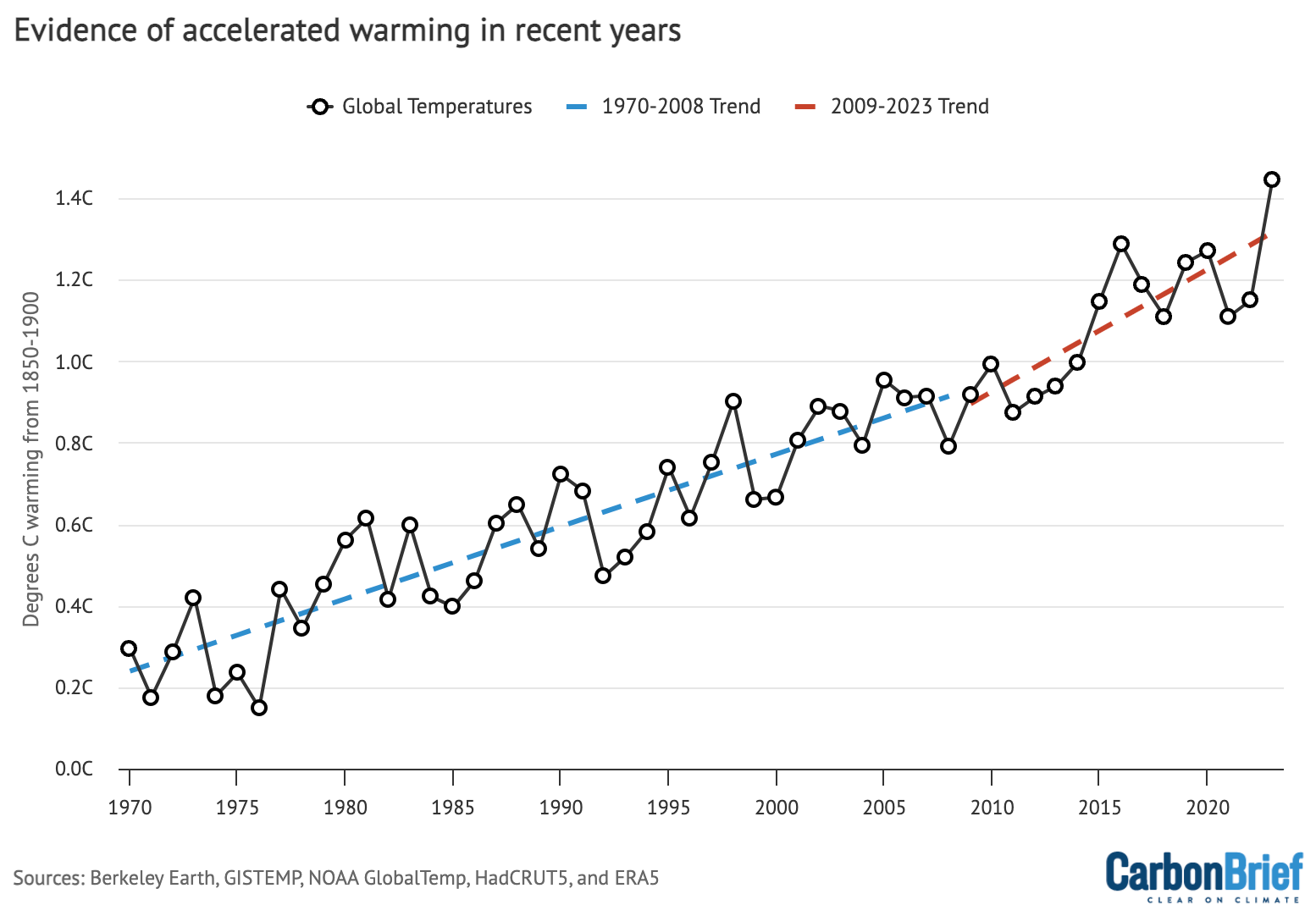
This potential acceleration is illustrated in the figure below, which shows a composite of global surface temperatures from five different groups – NASA GISTEMP, NOAA’s GlobalTemp, the UK Met Office/University of East Anglia’s HadCRUT5, Berkeley Earth and Copernicus’ ERA5 – following an approach used by the World Meteorological Organization.
The circles indicate individual years and the dashed lines show the trend over 1970-2008 (blue) and 2009-23 (red). (The past 15 years are highlighted here as that is the time period that has previously been used to assess potential changes in the underlying trend in the scientific literature.)
Annual global average surface temperatures from a composite of NASA GISTEMP, NOAA’s GlobalTemp, the UK MET Office/UEA’s HadCRUT5, Berkeley Earth, and Copernicus’ ERA5 following an approach used by the World Meteorological Organization, with linear trends between 1970 and 2008 (blue) and 2009 and 2023 (red) shown by the dashed lines. Chart by Carbon Brief.
The chart shows how the warming rate of 0.18C per decade seen since 1970 has almost doubled to roughly 0.3C per decade over the past 15 years.
Researchers have proposed a number of potential contributors to the increased rate of warming seen in recent years.
One is the significant decline in global air pollution over the past few decades, as well as a 2020 phase-out of sulphur in marine fuels, which have reduced the levels of cooling aerosols in the atmosphere.
Other suggested factors include an approaching peak in the 11-year solar cycle, the 2022 eruption of the Hunga Tonga volcano and the continued increases in atmospheric greenhouse gas concentrations.
The fact that the past 15 years ended on a particularly high point due to the current El Niño event might also result in higher warming rates – although the contribution of El Niño to overall 2023 temperatures remains an area of vigorous scientific debate.
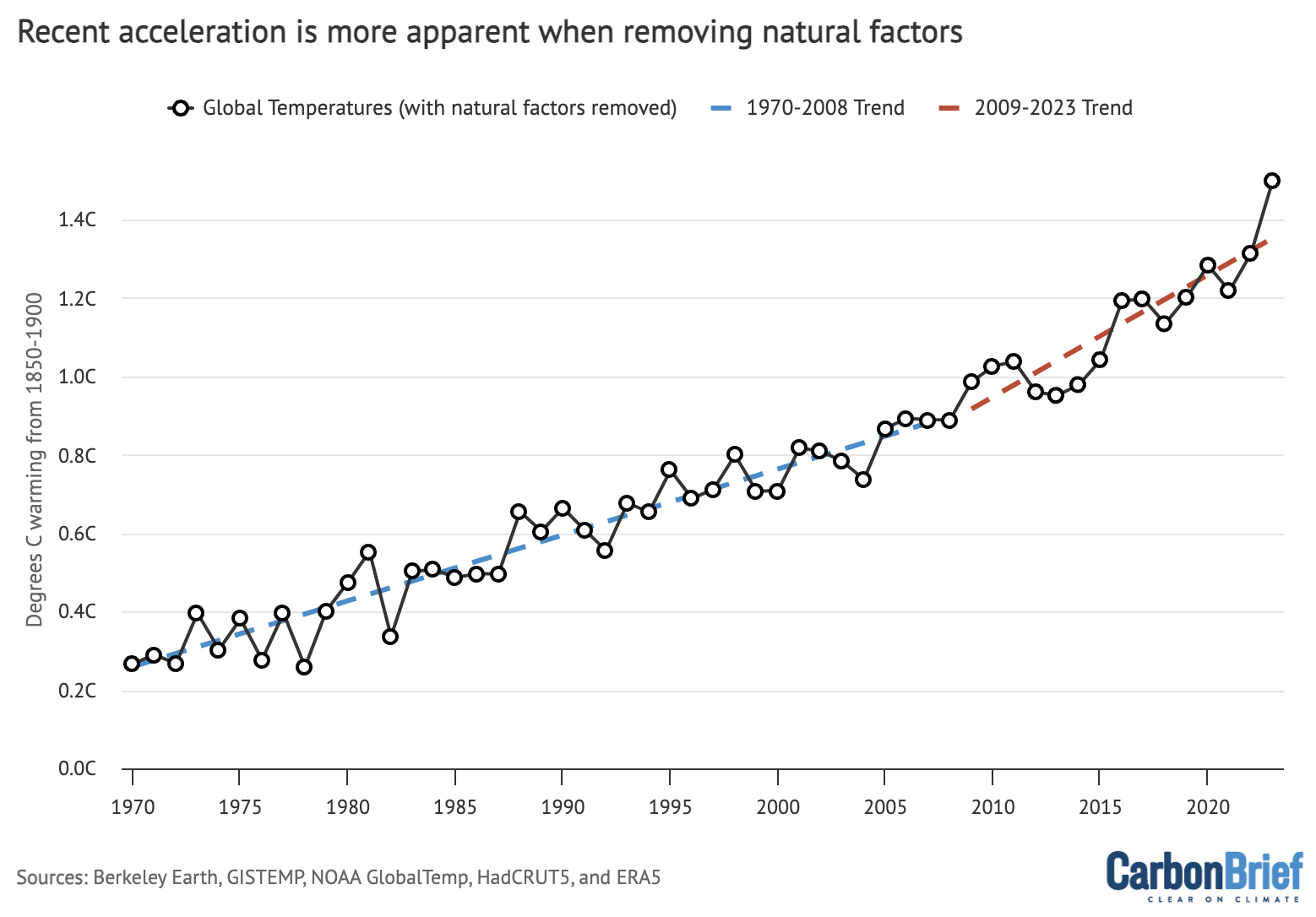
It is possible to remove the estimated influence of some of the natural factors – such as El Niño and La Niña events, volcanic eruptions and variations in solar output – from the global temperature record.
The figure below shows a version of the temperature record above where these natural factors are removed. The recent warming (red dashed line) is even more evident in this chart compared to the prior trend (blue).
@media (min-width: 450px){#mob{display:none}}
Composite of five annual global average surface temperature records with the El Niño-Southern Oscillation (ENSO), volcanic eruptions and solar variations removed. Linear trends between 1970 and 2008 (blue) and 2009 and 2023 (red) shown by dashed lines. Data from Tamino following an updated version of the methodology in Foster and Rahmstorf 2011. Chart by Carbon Brief.
However, despite this spate of very warm years, it is challenging to draw firm conclusions on the overall rate of global warming based on a time period as short as 15 years.
Even though recent trends appear to show significant acceleration, the long-term trend remains – just barely – within the full range of uncertainty in climate model projections.
There is a risk of conflating shorter-term climate variability with longer-term changes – a pitfall that the climate science community has encountered before.
Parallels with the warming ‘hiatus’
The debate around a potential acceleration in warming shares similarities with another scientific contretemps – the so-called “hiatus” in warming of the early 21st century.
During the 15-year period from 1998 to 2012, the rate of warming at the surface appeared to nearly “pause” – or at least slow down dramatically compared to climate-model projections.
The debate so consumed the scientific community – and some sections of the media – that there was a running joke among scientists that the journal Nature Climate Change should be renamed “Nature Hiatus” for the number of studies it published trying to explain the apparent slowdown.
In retrospect, the apparent hiatus and associated disagreement between climate models and observations was caused by a number of different factors. Key among them were natural variability (in the form of more heat uptake by the oceans), disparities in surface temperature records associated with a transition from ship engine room to automated buoy-based measurements of sea surface temperatures, and incomplete comparisons between climate models and observations that excluded areas such as the Arctic that had sparser observational coverage.
With the development of the 2015-16 “super” El Niño, any sign of a “pause” in warming quickly vanished and the argument faded away – though it made a brief return in climate-sceptic circles in more recent years. However, it left behind a lasting appreciation among many scientists for the danger of overinterpreting short-term climate variability and is one of the reasons why there has been reticence in some circles about current claims of an acceleration.
Nonetheless, there are a number of reasons to expect that what the world is currently experiencing is not just the influence of natural variability on top of human-caused warming. An acceleration of warming in recent decades also shows up in ocean heat content and in satellite measurements of the Earth’s energy imbalance.
And, perhaps most importantly, an acceleration in the rate of warming in recent years – and over the coming decades – is exactly what is seen in climate models under a scenario in keeping with current global policies (known as SSP2-4.5). Under this scenario, greenhouse gas emissions remain around current levels until the middle of the century, alongside a decline in emissions of planet-cooling aerosols such as sulphur dioxide.
An expected acceleration
The most notable thing about the current apparent acceleration in warming is that it was expected.
Climate models have long shown a faster rate of warming in current and future decades than has been observed to date, though there is some disagreement among modelling estimates.
The table below shows a compilation of both observed rates of warming to date and different model projections out to 2050.
Projection
Time period
Trend (C/decade)
Observed trend since 1970
1970-2023
0.19 (0.17 to 0.21)
Observed trend since 2009
2009-2023
0.30 (0.17 to 0.43)
Estimated human contribution (Forster et al, 2023)
2013-2022
0.23
IPCC AR6 assessed warming projections under SSP2-4.5
2015-2050
0.24 (0.17 to 0.34)
Full CMIP6 ensemble under SSP2-4.5
2015-2050
0.29 (0.2 to 0.4)
Hansen et al, 2023
2011-2050
0.32 (0.27 to 0.36)
Global surface temperatures have warmed at a rate of 0.19C per decade between 1970 and 2023. They have warmed at a faster rate (~0.3C per decade) over the past 15 years – though with large uncertainties of 0.17C to 0.43C given the shorter time period.
The estimated human contribution to global warming of 0.23C for the past decade (2013 to 2022), as published in Earth System Science Data by Prof Piers Forster and colleagues, is based on a climate model emulator that is driven by an updated estimate of factors including the influence of greenhouse gases and aerosols on the Earth’s climate in recent years.
The IPCC’s AR6 provided “assessed warming projections” based on CMIP6 models – weighted based on their ability to accurately reproduce historical temperatures – and the recent synthesis of climate sensitivity estimates. These assessed warming projections show 0.24C warming per decade between 2015 and 2050 with an uncertainty range of 0.17C to 0.34C in the current-policy-type SSP2-4.5 scenario. This represents approximately 26% faster warming than the world has experienced since 1970.
The full CMIP6 ensemble of models has notably more warming than the IPCC-assessed warming projections. CMIP6 models, on average, warm by 0.29C per decade with a range of 0.2C to 0.4C, or 53% faster than historical warming since 1970.
The recent projections by Dr James Hansen and colleagues has a very similar projection of future warming rates to the CMIP6 ensemble, estimating warming of around 0.32C per decade with an uncertainty of 0.27C to 0.36C.
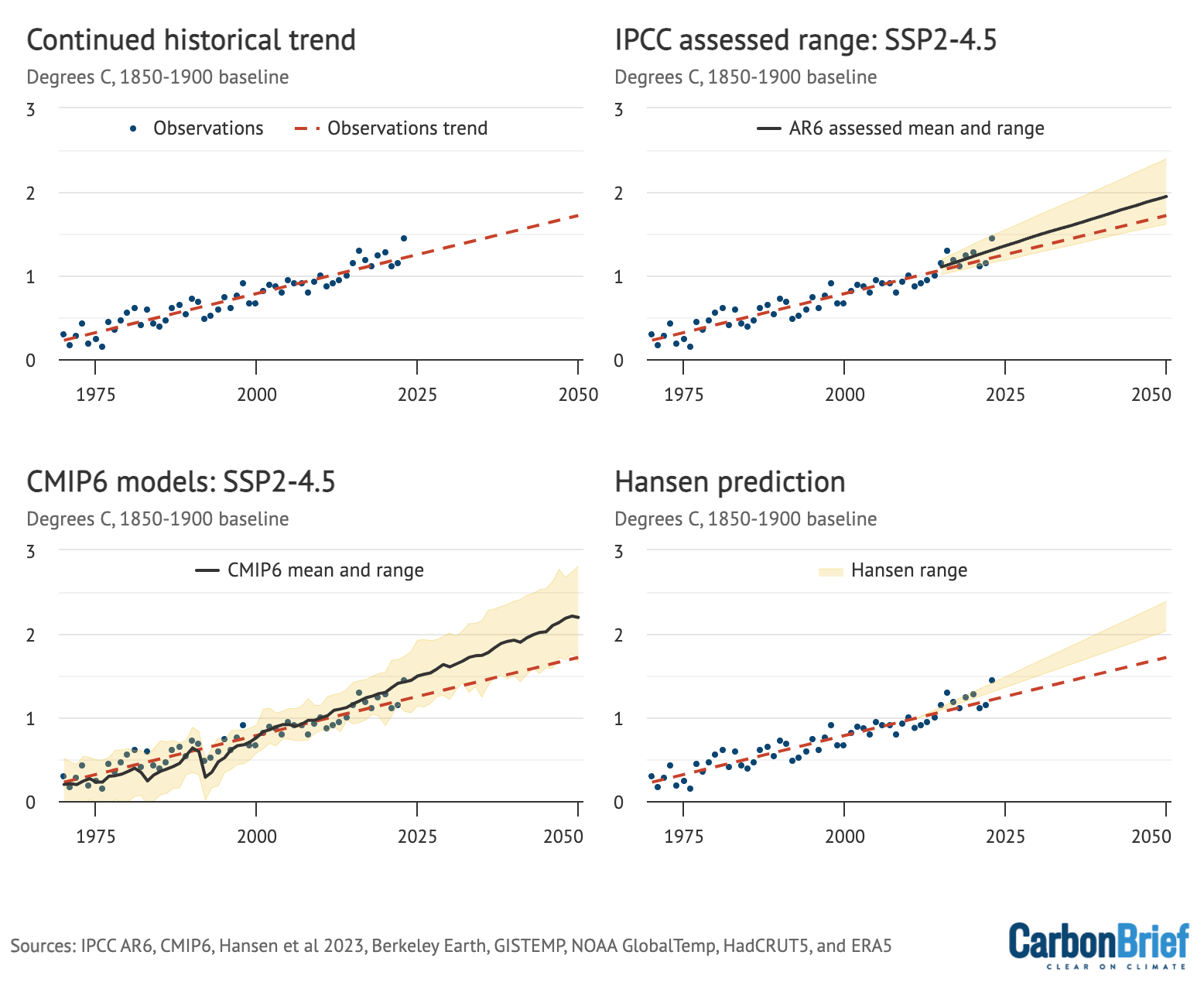
These estimates are summarised in the charts below, which show the historical warming rate (top left), the AR6 assessed range under SSP2-4.5 (top right), the CMIP6 models under SSP2-4.5 (bottom left) and Hansen et al’s future warming projection (bottom right). The blue dots and red dashed lines show observed data and the long-term trend, while the black lines and yellow shading show the average of model projections and their ranges.
@media (min-width: 450px){#mob{display:none}}
Comparison of historical and future warming projections from a continuation of the 1970-2023 linear trend (top left), the IPCC AR6 assessed warming range for SSP2-4.5 (top right), the CMIP6 multimodal mean and range for SSP2-4.5 (bottom left) and Hansen et al 2023 (bottom right). Blue dots and red dashed lines show observations and trends, while the black lines and yellow shading show model projections and their ranges. Chart by Carbon Brief.
In all three cases, there is an expectation of acceleration of warming both at present and in coming decades compared to the warming the world has experienced since 1970.
However, this does not mean that the world will pass climate limits such as 1.5C sooner than expected. The current best estimates of when these thresholds will be passed are based on climate models that include the near-term warming acceleration.
The apparent acceleration of warming in recent years is well in line with climate model projections, which lends confidence that what the world is experiencing is a result of human activity rather than a result of natural variability.
However, this does not mean that the world will not experience cool years in the future; the next La Niña year – likely in 2025 – will probably end up well below some of the prior record-setting years.
But, as long as global emissions of CO2 and other greenhouse gases fail to decline and the world continues to tackle aerosol pollution, the world will likely warm faster than experienced in the past.
Factcheck: 18 misleading myths about heat pumps
Energy
|
21.03.24
Factcheck: 21 misleading myths about electric vehicles
Factchecks
|
24.10.23
Factcheck: Scientists pour cold water on claims of ‘journal bias’ by author of wildfires study
Factchecks
|
08.09.23
Factcheck: Why fracking is not the answer to the UK’s energy crisis
-LG Energy Solution invites Arizona state government and local community officials for a construction progress update on its second U.S. stand-alone facility
-Completion and start of production expected in about two years, with full-scale hiring for thousands of new jobs to begin in the second-half of 2025
-The company to further strengthen market competitiveness in the U.S. underpinned by product and technology leadership
The construction of a major battery manufacturing complex in Arizona, announced by LG Energy Solution (KRX: 373220) last year, is on track to be completed in two years with the first round of hiring expected to begin at the end of this year. The company provided progress updates on its USD 5.5 billion (KRW 7.2 trillion) stand-alone facility during a stakeholder meeting on April 3 at Combs High School in San Tan Valley near the town of Queen Creek where the complex is located.
The attendees included Brian Oh, Head of Mobility & IT Battery Division at LG Energy Solution; Hyung Kim, Head of ESS Battery Division at LG Energy Solution; Richard Ra, President of LG Energy Solution Arizona; Gov. Katie Hobbs of Arizona; Sandra Watson, President and CEO of Arizona Commerce Authority; Mike Goodman, Supervisor and Chairman of Pinal County; Julia Wheatley, Mayor of Queen Creek, and other members of state government and local community officials.
The complex consists of two manufacturing facilities which are the company’s first stand-alone cylindrical and ESS battery plants in North America. The cylindrical battery plant, called LG Energy Solution Arizona, will produce 46-Series batteries for electric vehicles (EV). A crucial part of the company’s innovative product portfolio, 46-Series cylindrical batteries demonstrate LG Energy Solution’s advanced technological leadership throughout various applications for EVs. As the company plans the first mass production of 46-Series batteries at its Ochang plant in Korea in the second half of this year, which is the earliest among major global battery manufacturers, LG Energy Solution Arizona is expected to continue the momentum and reinforce the manufacturing capability.
The ESS battery manufacturing facility, called LG Energy Solution Arizona ESS, will produce lithium iron phosphate (LFP) pouch-type batteries for energy storage systems (ESS). It is one of the first ESS-exclusive battery production facilities in the world. By situating its stand-alone ESS battery facility in North America, the world’s biggest ESS market, LG Energy Solution aims for a timely response to the fast-growing needs for locally manufactured batteries on the back of the U.S. clean energy policies, providing ESS batteries with enhanced competitiveness in cost, battery life, and safety.
When fully operational, the complex’s average annual production capacity is expected to reach 53GWh (cylindrical batteries 36GWh, LFP ESS batteries 17GWh).
During the construction progress updates and site tour, Richard Ra, President of LG Energy Solution Arizona, said the project has been well underway since the groundbreaking last November, with initial land preparations completed and steel beams now being placed at the site. With the construction going as planned, the manufacturing facility for cylindrical EV batteries is expected to be completed in late 2025, and the facility for LFP pouch-type ESS batteries in the following year.
Once the construction is complete, both facilities are expected to start production in 2026. To secure high-quality workforce that will operate the state-of-the-art manufacturing complex, the company will also commit to hiring and fostering the next-generation battery professionals in the area, creating several thousand new quality jobs. “We expect the recruitment of our [launch team] members to begin late this year, and a full-scale recruitment to follow from the second half of 2025,” said Ra.
“Of many other sites, this Arizona facility has a special meaning to us. This is the second stand-alone facility to be built in the U.S. And it is also the first manufacturing facility to produce cylindrical batteries in the U.S. Right here, is where we can build quality cylindrical batteries, which will be used to power millions of EVs,” said Brian Oh, Head of Mobility & IT Battery Division at LG Energy Solution. “It gives me a great pleasure, knowing that this landmark project, here in Queen Creek will create thousands of new, quality-jobs that will contribute to building green economy.”
“ESS plays a vital role in green energy infrastructure as it utilizes power supply in a flexible manner,” said Hyung Kim, Head of ESS Battery Division. “There is no better place to build the source of our sustainable energy here in Arizona, where the abundant solar energy surrounds the region. Quality batteries, made right here in the Copper State, will reach every corner of America to provide power.”
“This transformative investment will have a lasting impact not only in Arizona, but across the country and moves us one step closer toward our clean energy goals,” said Governor Katie Hobbs. “These are the jobs of the future – and the State of Arizona is committed to being an active partner in ensuring Arizonans have the skills to fill these jobs.”
LG Energy Solution has another stand-alone facility in Michigan, which was built a decade ago and is currently undergoing expansion that would quintuple its average annual production capacity. The company also has five other joint venture facilities in the U.S. with major automakers, including General Motors, Honda, and Hyundai Motors Group, representing its full-fledged efforts to provide IRA-compliant batteries that will expedite the clean energy transition in the country.
With the Arizona complex, the company has now secured the most diverse and competitive product portfolio, which encompasses pouch-type and cylindrical batteries for EVs and LFP batteries for ESS, in North America.
“By further expanding our product portfolio and offering diverse options to our customers, we will continue to strengthen our market competitiveness,” said David Kim, CEO of LG Energy Solution. “We also expect to keep growing in the global market by maximizing customer value through unmatched technology leadership.”
About LG Energy Solution
LG Energy Solution (KRX: 373220), a split-off from LG Chem, is a leading global manufacturer of lithium-ion batteries for electric vehicles, mobility, IT, and energy storage systems. With 30 years of experience in revolutionary battery technology and extensive research and development (R&D), the company is the top battery-related patent holder in the world. Its robust global network, which spans North America, Europe, Asia, and Australia, includes battery manufacturing facilities established through joint ventures with major automakers such as General Motors, Stellantis N.V., Hyundai Motor Group, and Honda Motor Co., Ltd. At the forefront of green business and sustainability, LG Energy Solution aims to achieve carbon neutral operations by 2050, while embodying the value of shared growth and promoting diverse and inclusive corporate culture. To learn more about LG Energy Solution’s ideas and innovations, visit https://news.lgensol.com.
Welcome to Carbon Brief’s DeBriefed. An essential guide to the week’s key developments relating to climate change.
This week
Drought in southern Africa
NATIONAL DISASTERS: An ongoing extreme drought in southern Africa is threatening millions of people with hunger, Sky News reported. According to Reuters, Zimbabwe has declared the drought a national disaster. The drought has also reached crisis levels in neighbouring Zambia and Malawi, with both countries declaring national disasters, the Associated Press said. Botswana, Angola, Mozambique and Madagascar are also affected, it added.
EL-NIÑO: Dry weather conditions linked to the El Niño weather pattern have worsened the drought, which emerged in its latest phase in mid-2023, Deutsche Welle reported. El Niño reached a peak in December, according to the World Meteorological Organization, but is still expected to result in above-normal temperatures until May, the outlet added. Scientists told Sky News that El Niño could be “amplifying the existing impacts of climate change”.
CALL FOR AID: Zimbabwe president Emmerson Mnangagwa said the country needs more than $2bn in aid to feed the millions of people facing hunger, the Associated Press reported. It added that the United Nations’ World Food Programme has already rolled out a food assistance programme targeting 2.7 million people.
Electric car sales slump
POOR QUARTER: The world’s top sellers of electric vehicles (EV), Elon Musk’s Tesla and Chinese rival BYD, reported sharp falls in sales in the first financial quarter of this year, adding to “concerns over the slowing shifts towards EVs”, the Financial Times reported. It added that both carmakers have repeatedly cut prices since the start of the year in a bid to stimulate demand.
DIRE FUTURE?: Tesla’s shares fell following the news, extending their 2024 slide to 33%, the second-worst showing in the S&P 500 stock market index, Bloomberg reported. The dip in sales comes amid a “sharp deterioration in growth” for US EVs, the New York Times said. However, Musk is mulling over the possibility of building a £3bn Tesla EV factory in India, the Daily Telegraph reported.
ELECTRIC SUBSIDIES: Only seven out of 500,000 EV charging stations have been built under a $7.5bn US government subsidy programme launched in 2021 and scheduled for completion by 2030, the Independent reported. The Federal Highway Administration told the Independent that “the slow pace has been deliberate, to avoid costly mistakes while navigating a brand-new law and building a network from scratch”.
Around the world
SEARING HEAT: India’s national weather service has forecast “hotter-than-usual” temperatures for April to June, raising the risk of water shortages and crop damages, Bloomberg reported.
UNUSUAL FIRES: Venezuela is battling a record number of wildfires – with satellites detecting more than 30,200 fires between January and March – as a climate change-driven drought consumes the Amazon rainforest region, according to Reuters.
CLIMATE JUSTICE: Shell began its appeal against a ruling at The Hague that compelled it to slash its emissions by 45% by 2030, relative to 2019, the Financial Times reported. A judgement is expected in the second half of this year, the paper added.
AID BY FOSSIL: White House officials have suggested that they are open to ending president Joe Biden’s pause on approvals of new liquefied natural gas (LNG) export terminals in order to get a Ukraine aid package through Congress, Reuters reported. A White House spokesperson denied the story.
WARNING BELLS: According to a new study reported by the Guardian, a boom in mining projects for minerals needed in renewable energy technologies is now threatening up to a third of apes in Africa.
STANDING TALL: A new analysis found that the number of trees lost in Brazil and Colombia was down “dramatically” in 2023 – falling by 39% – largely due to changes in political leadership in these nations, according to BBC News.
57
The number of fossil fuel and cement producers responsible for 80% of the world’s CO2 emissions from 2016-2022, according to the Carbon Majors project by non-profit thinktank InfluenceMap.
Latest climate research
A study in npj Climate Action evaluated the perceptions of climate change among a selection of academics at a local university in Cameroon and suggested a framework to support educators as they help to foster critical thinking.
The optimal location for North American birds has shifted northward by an average rate of 1.5km each year in response to climate change, a new study in Proceedings of the National Academy of Sciences found, representing a total distance moved of 82.5km over the past 55 years.
A new study in Climate and Development investigated the “policy blind spots” around the contribution of women to rangeland cultivation in Tunisia and the effects of climate change on their livelihoods.
(For more, see Carbon Brief’s in-depth daily summaries of the top climate news stories on Tuesday, Wednesday, Thursday and Friday.)
Captured
The UN climate change body, the UNFCCC, is largely funded by industrialised nations, such as the US, China, Japan, UK and France. However, these nations have not yet paid anything towards the UNFCCC’s core budget for this year, according to Carbon Brief analysis of UN data. This shortfall could be impacting the body’s functioning. For example, the UNFCCC recently cancelled this year’s Regional Climate Weeks, which are a “vital platform to express the concerns of people and communities most affected by climate change,” according to a comment piece by WaterAid’s Dulce Marrumbe published on Climate Home News. “The suspension of the Regional Climate Weeks is hugely disappointing news,” Marrumbe said.
Spotlight
How is Nigeria coping with extreme heat fuelled by climate change?
This week, Carbon Brief zooms in on how Nigerians are responding to the extreme heat affecting west Africa.
Since the start of this year, Africa’s most populous nation Nigeria has faced prolonged stretches of severe heat.
A recent quick-fire analysis found that the conditions in February, when temperatures exceeded 40C, were made 10 times more likely by human-caused climate change.
But the heat is still ongoing, with temperatures reaching a record 44.8C in Sokoto, a city in north-western Nigeria, on 1 April.
With comprehensive record-keeping of heat and its impacts lacking in Nigeria, Carbon Brief spoke to doctors, farmers and meteorologists about how this episode of extreme weather is affecting the country.
Health impacts
The impact of the heat is “catastrophic”, Dr Ugo Uguwanyi, a doctor in Abuja, Nigeria’s capital city, told Carbon Brief:
“Don’t even bother to step out from 10am to 6pm. And make sure you burn the diesel to power the air conditioning to be able to sleep at night.”
Information about the heatwave’s impact is limited, but this does not mean the weather conditions are not dangerous, according to the authors of the recent analysis into the role of climate change in Nigeria’s extreme heat. Rather, a lack of systematic reporting may obscure what they described as a “silent killer”.
In mid-February, the Nigerian Meteorological Agency (NiMet) issued a public forecast warning on the prolonged heatwave.
The agency advised citizens to stay hydrated, wear light clothing and avoid direct exposure to high temperatures during peak periods. A group of Nigerian doctors also issued safety tips.
NiMet’s director of Weather Forecast Services, Vincent Weli, had advised that a state of emergency be declared in states most affected by the heatwave and workers be allowed to take breaks between noon and 3pm. Speaking to Nigeria’s Channels Television, Weli said:
“Of course, you know, with high temperature, cognitive development will be affected and productivity will be affected. There will be a loss of concentration.”
However, no such directive has yet been issued by state governments.
Agricultural and workforce impacts
Meanwhile, in Lagos, Nigeria’s most populated city, ride-hailing drivers are operating under melting conditions, stuck between preserving their health or livelihood, according to a Rest of World report.
The heatwave is also expected to reduce agricultural productivity, a sector that contributes about 22% to Nigeria’s gross domestic product (GDP) and accounts for more than a third of total employment.
Wasiu Adeniyi Ibrahim, a meteorologist from NiMet, told Carbon Brief:
“Heatwaves can reduce agricultural productivity by causing heat stress to crops and livestock.”
There is not a lot of data on how the current heat is affecting agriculture in Nigeria.
However, the national secretary of the All Farmers Association of Nigeria, Yunusa Halidu, told Carbon Brief that its members expect the heatwave to affect productivity yield this year. He said:
“The heat is extreme this year, although we have been expecting it, as we work with the Nigerian Meteorological Agency. We know it is global warming and we are working to see how we can mitigate the effects.”
Watch, read, listen
STRATEGIC DOMINANCE: Eric Olander and Cobus van Staden of the China-Global South Podcast interviewed automotive analyst Lei Xing on Chinese EV brands’ plans to dominate global-south car markets.
CLIMATE FUTURES: The New York Times investigated whether Guyana’s oil is a “blessing or a curse”.
CARBON POLITICS: In a new episode of Political Heat, environmental campaigner Amy Mount spoke to Prof Rebecca Willis about democracy and the challenge of responding to climate change.
Coming up
10 April: South Korea parliamentary elections
12 April: Launch of the International Energy Agency (IEA) oil market report
12-13 April: Second G20 environment and climate sustainability working group, Brasilia
International Centre for Integrated Mountain Development (ICIMOD), senior cryosphere specialist | Salary: Unknown. Location: Kathmandu, Nepal
Business and Human Rights Resource Centre, senior researcher, just energy transition and natural resources | Salary: £37,500-40,000. Location: UK, Germany or remote
DeBriefed is edited by Daisy Dunne. Please send any tips or feedback to debriefed@carbonbrief.org. This is an online version of Carbon Brief’s weekly DeBriefed email newsletter. Subscribe for free here.
DeBriefed 28 March 2024: Amazon fund; China faces trade storm; How lifestyle changes could slash EU emissions
DeBriefed
|
28.03.24
DeBriefed 22 March 2024: ‘Red alert’ for Earth; Heat-pump myths factchecked; Myanmar’s rare-earth mining crisis
DeBriefed
|
22.03.24
DeBriefed 15 March 2024: Global methane surge; Europe faces ‘urgent’ climate risks; Surprising origin of Trump’s ‘drill, baby, drill’
DeBriefed
|
15.03.24
DeBriefed 8 March 2024: Climate cost of a Trump victory calculated; ‘Weird’ winter heat; China’s pivotal ‘two sessions’ meeting; Young female activist interview
The post DeBriefed 5 April 2024: Southern Africa’s drought ‘disaster’; Top electric car sales slump; Is Nigeria coping with extreme heat? appeared first on Carbon Brief.
Wevo is a software startup specializing in EV charging optimization and management for sites with large quantities of EV chargers such as apartment buildings, workplace carparks and public charging locations.
SolarEdge Technologies, Inc. (“SolarEdge”) (NASDAQ: SEDG), a global leader in smart energy technology, today announced that it completed the acquisition of the entire share capital of Wevo Energy Ltd. (“Wevo”). Wevo is a software startup specializing in EV charging optimization and management for sites with large quantities of EV chargers such as apartment buildings, workplace carparks and public charging locations.
Wevo’s software is designed to be vendor agnostic and supports industry leading open protocols, enabling multi-user pricing and billing, tiered prioritization of charging schedules, predictive load management, and a range of additional services. To date, Wevo has electrified many thousands of parking spaces across North America, Europe and the Middle East. Wevo is already integrated with SolarEdge’s EV chargers, solar inverters and meters, for a holistic real-time view of solar production, grid consumption and EV charging.
The Wevo solution will also be part of the SolarEdge ONE energy optimization system for the Commercial and Industrial (C&I) segment, designed to offer SolarEdge customers a single energy optimization solution that orchestrates and integrates between on-site solar generation, battery storage and large-scale EV charging.
Zvi Lando, CEO, SolarEdge Technologies, said: “This acquisition represents the continuation of SolarEdge’s strategy to enhance its software portfolio for the C&I segment. We are excited for Wevo to join the SolarEdge team following our initial investment and the impressive progress it has demonstrated over the past year. As the EV market continues to grow, distributed renewable energy will be key to unlocking the full potential of the electrification of mobility. Wevo’s software capabilities and know-how represent a building block for EV-attached solar, and today it becomes a part of SolarEdge’s energy ecosystem.”
Teddy Flatau, CEO, Wevo Energy, said: “Wevo’s mission is to make EV charging accessible by electrifying every parking space. As a subsidiary of SolarEdge, we will be able to develop a combined solution, offering a seamless experience for EV drivers by optimizing charging with clean, solar-powered energy and maximizing cost savings. This will allow a significant step forward to achieving a low-carbon future.”
About SolarEdge
SolarEdge is a global leader in smart energy technology. By leveraging world-class engineering capabilities and with a relentless focus on innovation, SolarEdge creates smart energy solutions that power our lives and drive future progress. SolarEdge developed an intelligent inverter solution that changed the way power is harvested and managed in photovoltaic (PV) systems. The SolarEdge DC optimized inverter seeks to maximize power generation while lowering the cost of energy produced by the PV system. Continuing to advance smart energy, SolarEdge addresses a broad range of energy market segments through its PV, storage, EV charging, batteries, and grid services solutions. Visit us at: solaredge.com
About Wevo Energy
Wevo Energy was founded in 2021 to bring simple, efficient, and cost-effective EV charging to the most energy-demanding environments. Since then, it has developed AI-powered, energy management software capabilities that are already electrifying thousands of parking spaces globally. For more information about Wevo Energy and its EV charging platform, please visit www.wevo.energy.