

Kenya Railways Introduces Dedicated Vehicle Freight Service
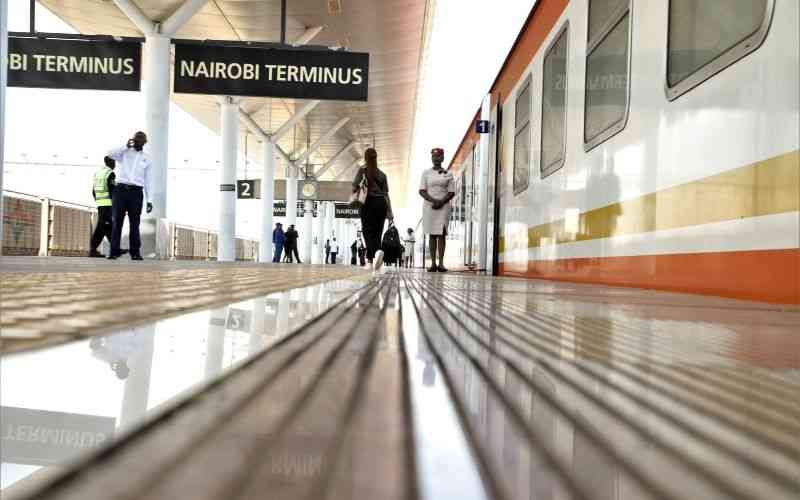
Kenya Railways Corporation (KRC) has officially launched a dedicated vehicle freight service connecting Mombasa and Nairobi, with further links to Naivasha via the Standard Gauge Railway (SGR).
During the inauguration at the Nairobi Inland Container Depot, KRC Managing Director Philip Mainga highlighted that the new initiative represents a significant advancement in the country’s vehicle transport sector.
“These are very exciting times for the railway business in Kenya,” Mainga stated, mentioning that the corporation had been conducting trials since the previous year.
The inaugural transport was facilitated in collaboration with Autobarn East Africa, a prominent vehicle dealer. KRC is encouraging more stakeholders within the motor vehicle industry to take advantage of this new service.
“We urge importers and clearing agents to collaborate with us,” Mainga added.
The vehicles are transported using specialized freight wagons, each capable of carrying six cars. Autobarn aims to transport around 700 vehicles monthly from Mombasa to Nairobi with this service.
Mainga emphasized the service’s benefits as a safe, efficient, and economical alternative to traditional road transport for dealers, importers, distributors, and businesses requiring bulk vehicle movements.
“Rather than depending solely on road transportation, customers can now consider rail as a reliable option for safely and effectively moving their vehicles. This change also helps decrease the number of vehicles on long-distance routes,” he commented.
Additionally, the new service promises that vehicles will arrive in optimal condition, free from the dirt and dents often associated with road travel. Transit times are significantly reduced from over a day by road to approximately eight hours by rail.
The vehicle freight service also caters to holidaymakers traveling between Nairobi, Naivasha, and Mombasa. Under this project, travelers can have their personal vehicles transported via SGR, retrieve them upon arrival, and utilize the same service for their return journey.
Mainga noted that this option is expected to mitigate fatigue-related road accidents, encouraging motorists to avoid the burdens of long-distance driving.







Discussion about this post