


Food Shortages in Siberian Town Reminiscent of Soviet Times
In mid-October, residents of Tura, a secluded town nestled within Siberia’s expansive taiga, faced dire circumstances that prompted some to reflect on the era of the U.S.S.R. One local remarked that the current situation was even “worse than it was under the Soviets.”
Extreme Conditions and Long Lines for Basic Supplies
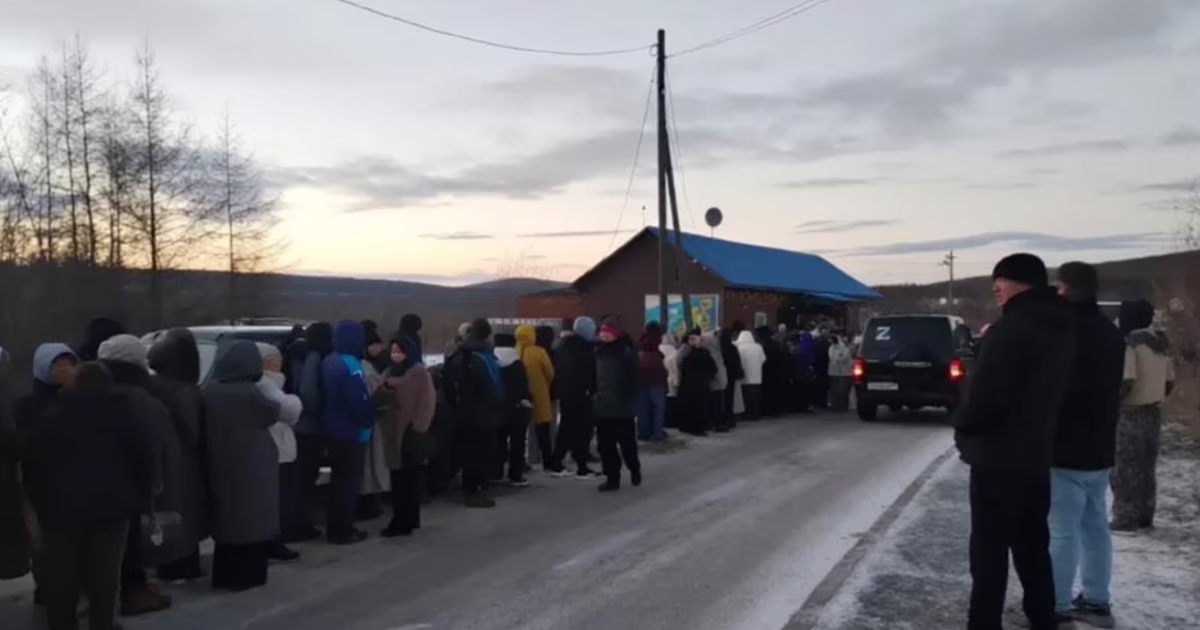
With temperatures plummeting to minus 15 Celsius, locals of all ages queued for hours outside the main grocery store, desperately seeking essential items like potatoes, cabbage, eggs, and milk. Those fortunate enough to reach the counter were confronted with staggering prices.
A proposed system that would allow customers to wait in their homes until their numbers were called—a common practice during Soviet food shortages—failed to materialize. “The vendors said, ‘If you want to eat, you have to wait in line,'” reported Svetlana, a local woman whose surname is withheld for her privacy. “There were no exceptions for children or the elderly.”
Limitations on quantity exacerbated the issue; each person was allowed to purchase no more than 1 kilogram of food, essentially translating to “a single potato for each family member,” Svetlana added.
Logistical Challenges and Criminal Investigation
The root of these shortages lies not in the ongoing Russia-Ukraine conflict, but rather a combination of severe logistical hurdles and inadequate planning—issues that have become distressingly common in the country.
Tura relies primarily on the Nizhnyaya Tuguska River for supplies, as no roads connect the town to its regional capital, Krasnoyarsk, located over 1,000 kilometers to the southwest. When low water levels rendered the river unusable in July, authorities failed to implement a suitable alternative supply route, leading to significant food shortages this month.
Prosecutors are now investigating multiple officials for suspected negligence concerning the crisis.
Staple items such as fruits, meat, dairy products, flour, and bottled water have become nearly nonexistent, and prices have reportedly soared by more than three times their normal rates.
“Look at these prices: 1,100 to 1,300 rubles (approximately $13-16) for a kilo of cucumbers,” Svetlana lamented, noting that cucumbers were out of stock by the time she reached the counter.
Impact on Families and Community Dynamics
Another resident, Olga, recounted how her mother was required to visit the store in person because attendants would not allow her to purchase the elderly woman’s allotted share. Many families faced similar challenges, often bringing young children to ensure they could collect rations for each family member.
“We didn’t experience such hardships even during the Soviet era,” Olga reflected. Following a severe crunch in mid-October, food is now being airlifted into Tura, with strict limits on individual purchase amounts.
Unfortunately, the most recent shipment lacked essential items like potatoes, onions, and cabbage due to adverse weather conditions that delayed two planned flights, leading to ongoing shortages.
Winter Approaches with Uncertainty
On October 21, local authorities announced that food supplies at several schools would be depleted by the end of the month. Residents expressed concern as flown-in provisions rapidly sold out, raising fears about surviving the winter months.
“The shop assistants are trying to console us, saying there’s still some grain and canned goods,” Svetlana said. “But will we really be feeding the children canned food all winter?”
Historical Context and Economic Decline
For many, Tura’s current struggles are a direct result of historical changes that have altered life in the region significantly over the years. “In the past, we fed ourselves by hunting and fishing. Supplies were ample,” Olga reminisced about the Soviet era. “Now, there are no fish in the river, no reindeer.”
Once inhabited mostly by the Evenks, a nomadic reindeer herding ethnic group, Tura saw demographic changes after being established in 1927 on an Evenk camp site. It was designated as the capital of the Evenk Autonomous District until 2007, when the district was absorbed into Krasnoyarsk Krai, a move critics argue marginalized indigenous cultures.
Effects of Conflict and Economic Hardship
Since the commencement of the full-scale invasion of Ukraine in February 2022, the Russian state has enticed men to enlist in the military with attractive financial incentives, particularly in economically disadvantaged regions where job opportunities are scarce.
A report from the Wilson Center highlighted that men from Russia’s indigenous communities have been recruited at elevated rates and suffered higher-than-average casualties. “About 20-25 of us Evenks have gone to war over the past four years,” noted local resident Kachikan, indicating that a significant number have already perished.
As Tura grapples with food shortages and the ramifications of a protracted conflict, residents reflect on a community and way of life that is rapidly changing. “What kind of life is this?” asked Vladimir, a local. “Folk crafts have been obliterated. Fishing has effectively ceased as a source of income, largely due to pollution in the Tunguska River.”






Discussion about this post