






Scottish Conservatives Call for Halt on Rwanda Funding
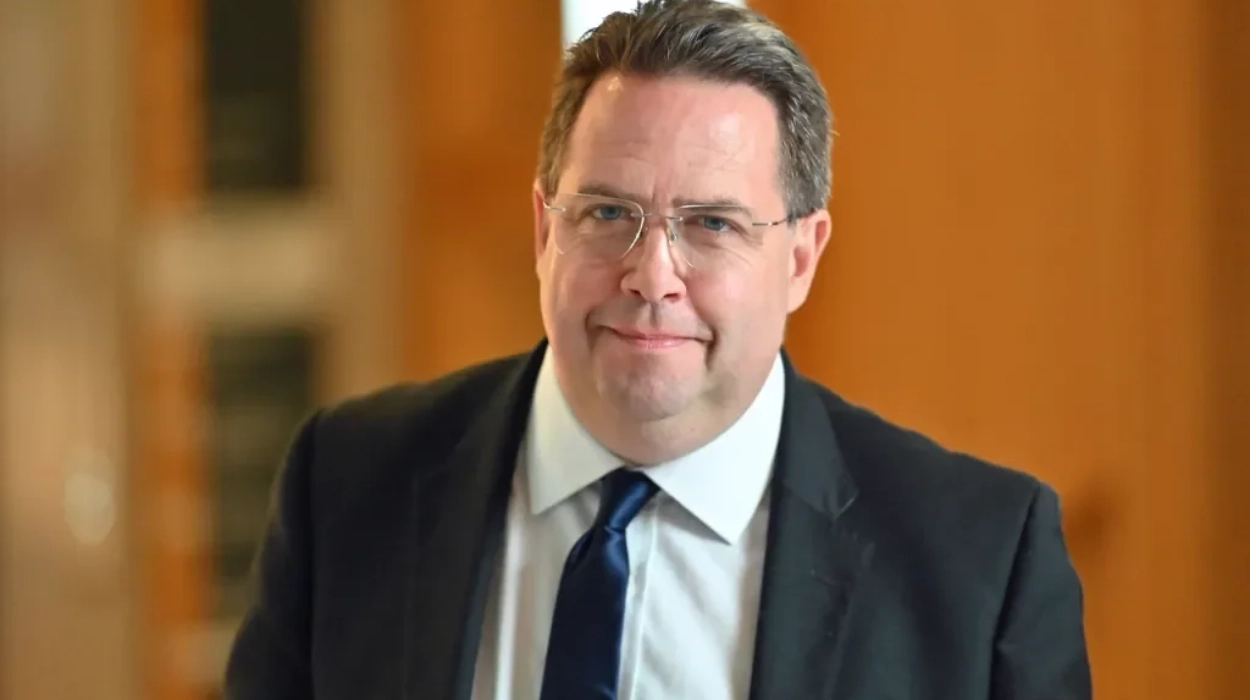
Craig Hoy, finance spokesman for the Scottish Conservatives, has urged the Scottish government to terminate financial aid to Rwanda. This appeal coincides with recent sanctions imposed by Washington on Rwanda’s defense ministry and the withdrawal of certain trade benefits.
Call for Aid Reassessment
Hoy’s request, aimed at First Minister John Swinney, comes as concerns grow over Rwanda’s substantial investments in high-profile sports endeavors, including sponsorship deals with prominent football clubs and a planned Formula 1 circuit. He argues that these expenditures reflect a misallocation of funds that could be better utilized to support public services in Scotland.
“It is John Swinney facilitating the reputation laundering,” Hoy asserted in a piece for the Scottish Daily Express on October 31.
Hoy highlighted that since the partnership began, over £16 million in aid has been channeled to Rwanda, raising questions about the effectiveness and value of such financial commitments.
Rwanda’s Recent Sports Investments
Rwanda recently secured a 10-year agreement to host an African Grand Prix at a custom-built circuit in Bugesera, projected to cost upwards of £200 million. Overall expenses may escalate toward the £1 billion mark, according to reports.
Additionally, Rwanda’s promotional campaign, “Visit Rwanda,” has led to shirt sponsorships with well-known football clubs such as Arsenal, Paris Saint-Germain, and Aston Villa, with the latter deal valued at approximately £20 million annually. Hoy cited Human Rights Watch’s characterization of Rwanda’s sports engagements as attempts to divert attention from its negative human rights reputation, especially in light of the Formula 1 deal.
Rwanda Faces Increased International Scrutiny
This week proved particularly challenging for Rwanda as the US Treasury imposed sanctions on its Ministry of Defence and a financial institution associated with its security forces. These sanctions were due to their alleged support of the M23 rebel group in the Democratic Republic of Congo.
Following these developments, a further spate of sanctions was announced, leading to a loss of duty-free access to the US market under the African Growth and Opportunity Act (AGOA), effective January 1, 2027. The US Trade Representative highlighted mounting concerns regarding trade barriers, rule of law, and human rights practices in Rwanda.
Migration Policy Discussions Underline Concerns
Amid the US sanctions, discussions involving several European nations, including Germany and Greece, regarding the deportation of rejected asylum seekers to Rwanda surfaced the same week. These negotiations were reportedly influenced by facilities originally intended for the UK’s now-abandoned asylum plan.
However, such plans reignited scrutiny over human rights in Rwanda, echoing the concerns previously cited by the UK Supreme Court, which ruled that Rwanda was not a safe destination for refugees due to the risk of persecution.
“We really fear for people getting stuck in a legal limbo there,” warned Tineke Strik, a Dutch Green MEP.
Other officials expressed a belief that nations should focus on strengthening their own asylum processes rather than outsourcing this responsibility.
Anticipated Pressure and Future Developments
As pressure mounts on Rwanda, discussions regarding a potential agreement between the five European nations are expected to progress during a migration conference in Vienna in mid-November. Greece’s migration minister hinted that an agreement could be finalized by January, with the first deportations potentially occurring by April or May.
With the US trade suspension set to take effect and the Bugesera circuit yet to be constructed, Craig Hoy’s demands raise critical questions regarding the ongoing financial support for Rwanda in light of the growing array of human rights issues. Should Scottish taxpayers continue to fund a regime entangled in such controversies?





Discussion about this post