









Ukraine Explores Model for Humanitarian Cease-fires Following Oleshky Operation
WASHINGTON — Ukrainian officials express optimism that a recent temporary cease-fire, which facilitated humanitarian aid deliveries and civilian evacuations from the Russian-occupied city of Oleshky, could serve as a blueprint for broader de-escalation efforts across the region.
During a press briefing at the Ukrainian Embassy on November 6, prominent Ukrainian representatives discussed the operation as a practical demonstration of cease-fire mechanisms that could be adapted for wider applications. Dmytro Lubinets, the nation’s human rights ombudsman, along with David Arakhamia, the leader of President Volodyr Zelenskyy’s parliamentary faction, noted that this six-day humanitarian initiative proved that localized cease-fires could be negotiated and implemented even amidst ongoing conflict, particularly with international involvement.
The Humanitarian Initiative
The temporary cease-fire, which took effect at 3 a.m. Kyiv time on October 27 and lasted until November 1, was the longest such arrangement since Russia’s full-scale invasion began in February 2022. Lubinets described this initiative as a significant achievement, not only for the humanitarian assistance it provided but also for establishing a framework to negotiate, monitor, and verify cease-fires in the future.
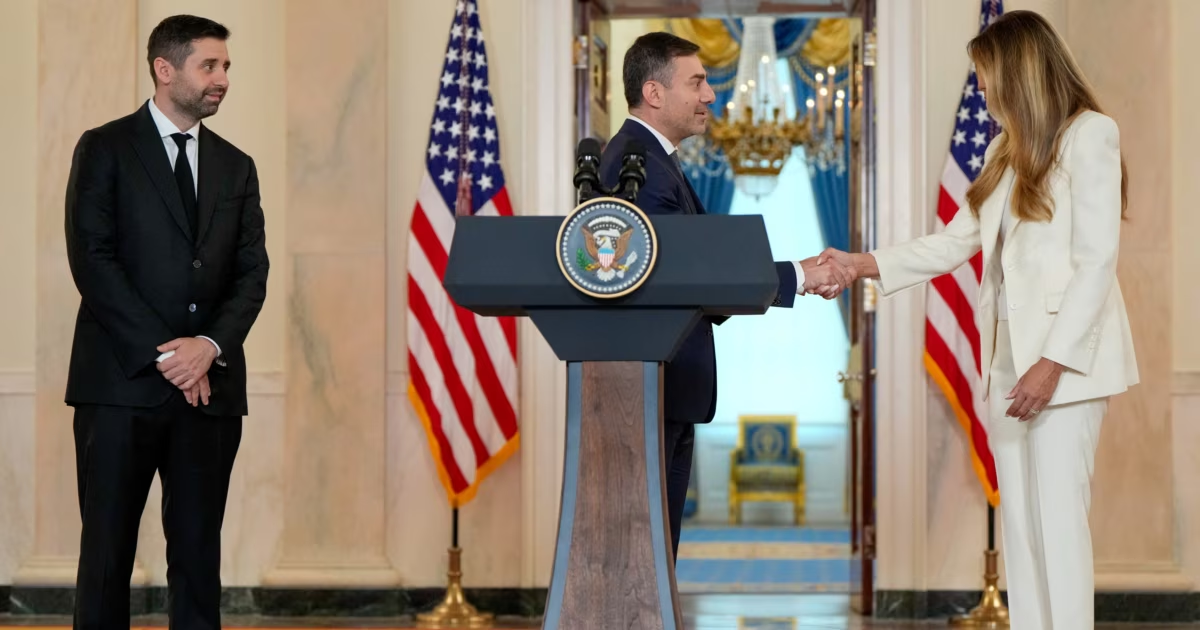
Facilitated by Melania Trump, the operation allowed for the safe evacuation of civilians and the delivery of essential supplies such as food, medicine, and water. “We have chosen humanity over war,” Trump stated during a White House event on November 5, acknowledging the success of the initiative.
Following the cease-fire, Russian forces initiated a demining operation to clear roads leading into Oleshky, which continued until October 29. Subsequently, Lubinets and his Russian counterpart Yana Lantratova, along with journalists from various countries, entered Oleshky to oversee aid distribution and assist residents with evacuation procedures.
Options for Residents
Oleshky residents were presented with three choices: to remain in the city and receive aid, to evacuate to Ukrainian-controlled areas, or to relocate to Russia or other Russian-occupied territories. Lubinets confirmed that all residents who sought evacuation to Ukraine have successfully made the journey.
While some residents chose to stay despite inadequate living conditions, others initially hesitated due to doubts about the mission’s success. Lubinets mentioned that his office had received additional evacuation requests and expressed hope for further operations in the future.
Expanding the Humanitarian Approach
Arakhamia revealed that the Ukrainian delegation is contemplating extending this humanitarian approach to other challenging areas, although he refrained from naming specific locations to protect negotiations with Moscow. He highlighted two main priorities: reuniting families separated by the conflict and replicating the Oleshky initiative in other inaccessible territories.
He emphasized the necessity of separating humanitarian efforts from broader political discussions to ensure that disputes over peace negotiations do not hinder aid to civilians.
Monitoring Cease-fires
Beyond its immediate humanitarian impact, Arakhamia noted the operation served as a “pilot” for monitoring cease-fires, based on principles discussed during previous trilateral negotiations involving Ukraine, Russia, and the United States. This allowed for practical applications of monitoring technologies, including drone surveillance, to verify compliance.
Lubinets stressed the significance of being the first Ukrainian official to enter Russian-occupied territory since the start of the war as part of an official humanitarian mission. The Ukrainian delegation also tested direct communication channels between military representatives to ensure adherence to cease-fire terms.
Political Dynamics and Evacuations
The officials also addressed recent diplomatic interactions involving President Donald Trump and Russian envoy Kirill Dmitriev, which occurred without a corresponding dialogue with Ukrainian representatives. Arakhamia stated that the Ukrainian delegation did not anticipate or seek a meeting with Trump, viewing the encounter as a separate, diplomatic initiative.
The officials maintained close communication with U.S. and European security representatives, ensuring they are kept informed of discussions relating to Ukrainian issues. Queries regarding the return of Ukrainian and Russian children were met with firm rebuttals, emphasizing that Ukraine has never restricted the exit of Russian nationals, including minors.
Upcoming Challenges
Despite cautious optimism surrounding the Oleshky humanitarian initiative and forthcoming negotiations, Arakhamia warned of an intensifying conflict and a challenging winter ahead. He pointed to ongoing Russian assaults on Ukraine’s electrical infrastructure as potential threats to public health and safety.
Pushing for renewed diplomatic efforts, Arakhamia outlined Ukraine’s readiness for additional negotiations in Abu Dhabi aimed at achieving further de-escalation while expressing hope for increased U.S. military and financial assistance.
Tales of Urgency
In a poignant reflection on the operation’s urgency, Lubinets recounted a heartbreaking story of a woman desperate to evacuate her terminally ill mother. The mother’s successful evacuation to Kyiv allowed for timely medical care and a long-awaited reunion with her daughter.
“We must do everything to save our people,” Lubinets implored, underscoring the magnitude of diplomatic negotiations amidst a backdrop of ongoing conflict. While skepticism remains among many Ukrainians regarding diplomacy with Russia, Arakhamia reiterated that even modest reductions in violence could pave the way for more substantial resolutions in the future.








Discussion about this post